
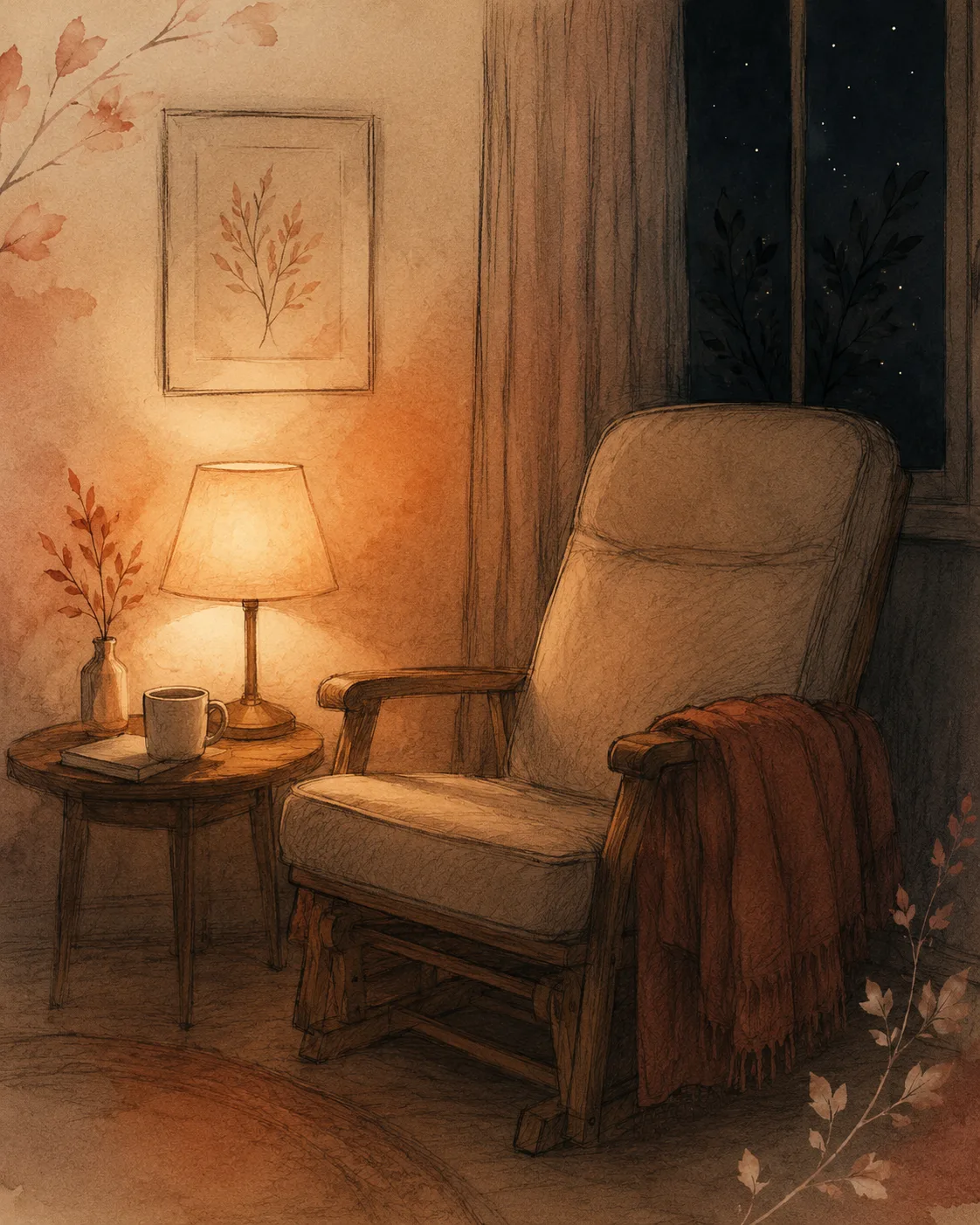
Written using a global meta-analysis of postpartum depression prevalence across 80 countries, a meta-analysis of co-morbid perinatal anxiety and depression, an actigraphy meta-analysis of parental sleep, and dermatology guidance from the Cleveland Clinic and the American Academy of Dermatology. Where research on postpartum skin picking specifically does not exist, this article says so.
Something has changed since the birth, your hands are doing more than they used to, and there is nobody obvious to tell. That is the situation this article is written for, and the first useful thing to say is that the postpartum period stacks almost every known risk factor for picking on top of each other inside about six weeks.
Sleep collapses. Two hormones fall off a cliff. You are awake in the dark for long stretches with one hand free. And the hour you used to have alone, which is often where recovery work actually happened, is gone.
None of that is a comment on you as a parent. It is a description of conditions.
Nobody has studied this properly, and that matters
The state of the evidence is thin. One research group has looked at hair pulling and skin picking across pregnancy and the postpartum period, and their finding was that most people reported no change or a reduction rather than an escalation. That study is covered in full in the article on what changes during pregnancy, and it was retrospective, meaning people were remembering rather than reporting in the moment.
So "often gets worse" is not the majority experience. It is a real and substantial minority experience, and if you are in it, you have been handed almost nothing. There is no postpartum BFRB guidance. There is postpartum skincare content that spends four words telling you not to pick, and there is general skin picking content written as though you have an unobserved evening and a full night's sleep available to you.
What follows is the part that can be described specifically: what actually changed, and what you can do inside the constraints you now have.
The five things that actually changed
The hormone drop is not gradual
During pregnancy, estrogen and progesterone climb for nine months. After the placenta is delivered, both fall within days. This is not the slow taper of a menstrual cycle, and it is not comparable to anything else your body does.
Two consequences land on skin. Sebum production shifts, which is why postpartum acne is common and often appears weeks after the birth rather than immediately. And falling estrogen pushes a large share of hair follicles into the shedding phase, which is why hair comes out in handfuls somewhere around the two to four month mark.
Both of those change what your fingers find.
Sleep does not just get shorter, it gets broken
This is measurable, and it has been measured with actigraphy rather than self-report.
Wake after sleep onset is the one that matters most for picking, because it describes exactly the state where picking happens: awake, in the dark, in bed, with nothing to do.
Short and fragmented sleep also makes urges harder to sit with. That is true outside the postpartum period too, but nowhere else does it run for months without a break.
The night feed is a picking window with a schedule
This is the mechanism nobody writes about, and it is probably the most important one on this page.
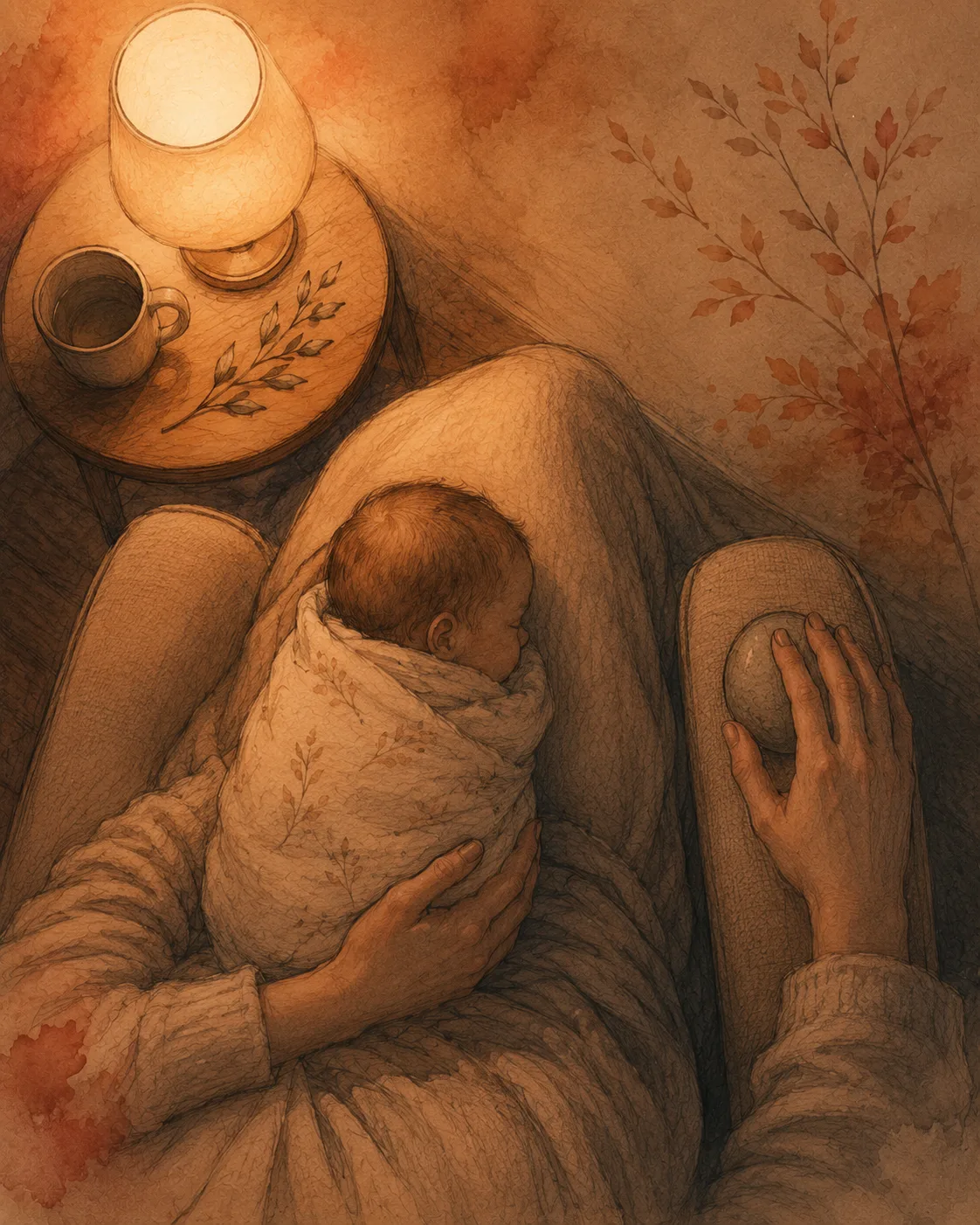
A night feed puts you in a chair or propped in bed, in low light, for twenty to forty minutes, two or three times a night, with one hand occupied by a baby and the other hand entirely free. Your attention is elsewhere. There is no observer. It repeats on a fixed schedule, several times a night, for months.
If you were designing conditions to produce automatic picking, you would design that.
The private hour is gone
Recovery work of any kind assumes some slack. Ten minutes to do a competing response properly. An evening to redesign. The mental space to notice an urge before acting on it.
A newborn removes that, and it removes it for longer than people expect. This is why a plan that worked in month seven of pregnancy can stop working in week two postpartum without anything about your motivation changing.
There is more skin to inspect, and new reasons to inspect it
Postpartum acne, a healing caesarean scar, perineal stitches, cracked nipples if you are feeding, dry hands from washing them forty times a day. Some of these come with medical instructions to check them regularly, which hands you a sanctioned reason to have your fingertips on skin that is healing.
The mood question, which matters more than the picking
This is the section to read even if you skip the rest.
Postpartum depression is not rare and it is not a minor variant of feeling tired.
A picking escalation is often the visible edge of something else. Anxiety and depression are both well-established drivers of picking, and postpartum is when both are most likely.
There is a specific trap here. Picking is embarrassing, so people describe the picking to nobody. Meanwhile low mood in a new parent gets filed under normal exhaustion. Both symptoms end up unreported, and the thing that is actually treatable goes untreated.
You do not need to know which is causing which. You need to say both things out loud to one person who can do something about it.
The script for the postnatal check
Appointments are short, and a struggling new parent tends to answer "how are you doing" with "fine." A sentence prepared in advance survives that better than good intentions do.
Say this, or something close to it:
"I want to flag two things. My mood has been low most days since the birth, not just tired. And I have a skin picking problem that has got a lot worse since he was born, mostly at night when I'm feeding. I'd like to talk about both."
If you are worried it will not be taken seriously, add the sentence that makes it concrete:
"It's on my face and arms and I've been covering it. It's taking up around an hour most nights."
Medication and feeding: a conversation, not a rule
If you stopped psychiatric medication during pregnancy, or are on something now and wondering whether to continue while breastfeeding, the answer is not on the internet and it is not in this article.
Two things are true and both belong in a conversation with your prescriber. Drug-specific information does exist, and it varies considerably between medications. The NHS entry for sertraline, as one example, states it "can often be used while breastfeeding, but it's best to check because the medicine can pass into your breast milk in small amounts." That level of nuance is exactly why the decision is individual rather than general.
And the balance is genuinely two-sided. Untreated postpartum depression carries its own risks. Stopping is not automatically the cautious option, and nobody who has not read your history can tell you which way it falls.
Bring your prescriber the whole picture, feeding plans included:
"I'm breastfeeding and I want to talk about whether to start, continue or change anything. Here's how I'm feeding, here's what my mood has been like, and here's what happened last time I stopped."
What to actually do about the feeds
Everything above is context. This is the part that changes anything.
The behavioural approach with the best evidence for picking is habit reversal, and it has one large advantage right now: there is no drug involved, so no feeding question attached. The mechanics are covered properly in the step-by-step guide to habit reversal. What needs adapting for a newborn is smaller than you would think.
Give the free hand a job before the feed starts, not during. Once the feed is underway and your attention has gone, you will not initiate anything. Put the object in the chair beforehand: a smooth stone, a textured cloth, a fidget ring on the hand that is free. It has to already be within reach of a person who cannot get up.
Change the light, not the behaviour. Most feeding setups use a dim lamp, which is enough to see a bump on an arm but not enough to make you feel observed. Some people do better with the light off entirely and a phone screen face down. Others do better with it brighter. Test both for a week and keep the one with fewer episodes.
Log with one thumb, during the feed. A postpartum log does not need to be detailed. Body site and whether you picked or resisted is enough to show you where it is happening. If you have to remember it until morning, you will not.
Pick one feed, not all of them. Trying to change every feed at once fails. Change the 3 a.m. one, which is usually the worst, and leave the rest alone until that one is steady.
Expect this to move. Feeds change, sleep changes, the baby changes. A setup that works at six weeks may need rebuilding at four months. That is the plan working, not failing.
Ask for one night

The single most useful thing available is not a technique. It is a night where somebody else does the feeds.
That is hard to ask for and harder if you have not told anyone why. The article on telling a partner about picking covers the wider conversation. The postpartum version can be much shorter:
"I need one night a week where you do the feeds and I sleep through. It's not just tiredness. I'm picking badly during the night feeds and it's getting worse, and sleep is the thing that helps most."
If there is no partner, or no partner who can, the same ask works on a family member, a friend staying over, or a postnatal doula if that is available to you. It does not need to be every week to help.
A log you can do with one thumb, mid-feed
SkinAware records picked and resisted episodes in seconds with the body site attached, so a pattern that only shows up at 3 a.m. is still visible in the morning. The habit reversal course is there whatever else is on hold right now.
Available on iOS, Android and in your browser.
The skin, and the hair
Two specific things will show up, and both are worth knowing about in advance so they do not arrive as a shock.
Postpartum acne. Caused by the hormone shift as your body adjusts to not being pregnant. It can appear immediately or weeks later, and the Cleveland Clinic notes it may worsen again when you stop breastfeeding or when periods return. If you are feeding, check any topical treatment with your provider first, because the advice you would have followed before pregnancy does not automatically apply.
Hair shedding. Around two to four months after birth, a large share of hair follicles shed at once. The American Academy of Dermatology is clear that the shedding "is caused by falling estrogen levels" and that most people see their hair return to its normal fullness by their child's first birthday.
When it started after the birth rather than before
Some people find that picking begins postpartum, having never done it before. It is uncommon enough that there is very little written about it, and common enough that you are not the only one.
It changes nothing about what helps. New-onset picking responds to the same behavioural work as long-standing picking, and it is worth mentioning to a clinician for the same reason any new symptom is: a new compulsive behaviour appearing alongside a mood change is useful information for whoever is looking after you.
If this month has been bad
Picking more during the hardest physical and emotional stretch of your adult life is not a relapse in any meaningful sense. It is what happens when the conditions get extreme.
Recovery in the postpartum year is measured differently. Not fewer episodes than last month, because last month may have had more sleep in it. The realistic targets are noticing one feed as it happens, telling one person the truth, and getting the mood question in front of somebody qualified. Setbacks are covered properly elsewhere, and every word of it applies with more force here.
The evidence that matters most right now is not about skin. It is that depression and picking travel together, that postpartum depression is very treatable, and that the appointment where you mention both is the most useful twenty minutes available to you.
Frequently Asked Questions
It is common enough to be well recognised, though it has been poorly studied. The postpartum period stacks several known picking risk factors at once: a sharp hormone drop, badly fragmented sleep, long night feeds with one hand free, and a loss of private time. The one study to examine BFRBs across pregnancy and the postpartum period found most people reported no change or a reduction, so worsening is not the default. If yours has worsened, that is a recognised pattern rather than a personal failure.
Because a feed is close to a perfect setup for automatic picking. You are in low light for twenty to forty minutes, several times a night, with one hand occupied and the other free, attention elsewhere, and no observer. It repeats on a schedule for months. Many people find their daytime picking is unchanged and the whole escalation is happening in that window.
That decision belongs with your prescriber, and it depends on the specific medication, your history, and how you are feeding. Drug-specific breastfeeding information exists and varies considerably between medications. Stopping is not automatically the safer choice, because untreated postpartum depression carries its own risks. Bring your feeding plans to the appointment so the whole picture is on the table.
It could be related. Postpartum depression affects around 17% of women globally, postpartum anxiety runs alongside it, and both are established drivers of picking. You do not need to work out which is causing which. Mention the low mood and the picking to your midwife, health visitor, GP or OB at the same appointment. Thoughts of harming yourself or your baby, or being unable to care for your baby, need same-day contact rather than a scheduled appointment.
Shedding two to four months after birth is telogen effluvium, caused by falling estrogen levels pushing many follicles into the shedding phase at once. It is temporary, and most people regain their normal fullness by their child's first birthday. If you also pull, the shedding can make it very hard to tell what is what, and it hands you frequent legitimate reasons to have your hands in your hair. Worth flagging to a doctor if it is severe or has not settled by around a year.
By shrinking it. Pick one feed rather than all of them, usually the worst one. Put the competing-response object in the chair before the feed starts, because you will not go and get it once you are sitting down. Log with one thumb during the feed rather than trying to remember it. Rebuild the setup when the baby's routine changes, which will happen several times in the first year.
New onset in the postpartum period happens, and there is very little research on it. It does not change what helps, since new-onset picking responds to the same behavioural work. A new compulsive behaviour appearing alongside a mood change is worth mentioning to a clinician, because it is useful information about how you are doing overall.
Continue Reading
References
- Wang, Z., Liu, J., Shuai, H., Cai, Z., Fu, X., Liu, Y., Xiao, X., Zhang, W., Krabbendam, E., Liu, S., Liu, Z., Li, Z., & Yang, B. X. (2021). Mapping global prevalence of depression among postpartum women. Translational Psychiatry, 11, 543.
- Prevalence of co-morbid anxiety and depression in pregnancy and postpartum: a systematic review and meta-analysis. Psychological Medicine.
- Parsons, L., Howes, A., Jones, C. A., & Surtees, A. D. R. (2023). Changes in parental sleep from pregnancy to postpartum: A meta-analytic review of actigraphy studies. Sleep Medicine Reviews, 68, 101719.
- Grant, J. E., Neelapu, M., Avila, L., Boutouis, S., & Chamberlain, S. R. (2025). Trichotillomania, skin picking disorder, and pregnancy. Comprehensive Psychiatry, 152647.
- Cleveland Clinic. Postpartum Acne: Causes, Prevention & Treatment.
- American Academy of Dermatology. Hair loss in new moms: Dermatologist tips.
- NHS. Pregnancy, breastfeeding and fertility while taking sertraline.
- Jones, A. Trichotillomania & Dermatillomania: On Hair Pulling and Skin Picking. Postpartum Progress.