

Written using published research on symptom accommodation and interpersonal functioning in body-focused repetitive behaviors, including a 670-person survey published in Comprehensive Psychiatry and family-accommodation work from McLean Hospital presented via the International OCD Foundation, alongside partner-facing guidance from Skin Picking Support and BFRB-specialist counselling sources.
Someone you love picks their skin, and most of what you instinctively want to do about it will make it worse. Not slightly. Measurably.
Watching them. Reminding them. Moving the tweezers. Telling them their skin looks better this week. Asking them, kindly, to please just leave it alone. All of it comes from care, and all of it feeds the two things the behavior already runs on: being observed, and being ashamed.
What works is disappointing, because it mostly consists of not doing things. Not commenting on their skin in either direction. Not writing their recovery plan for them. Not treating them differently after a bad week than after a good one. It looks like doing nothing, which is exactly why so few people manage it.
This page is written to you. If your partner hasn't actually told you yet and you worked it out on your own, the disclosure is still theirs to make.
Why Watching Makes It Worse

Skin picking isn't a grooming habit that got out of hand. It sits with the obsessive-compulsive and related disorders, and a large share of it happens outside conscious attention. Your partner can surface from twenty minutes of it with no memory of starting, which is the part that makes it a disorder rather than a preference.
That matters for you specifically, because it means the mechanism you're reaching for doesn't exist. You're trying to interrupt a decision. There often isn't one.
What your attention does instead is convert an ordinary room into an observed room. Observation is not neutral here. Shame isn't a side effect that shows up after an episode; it's fuel that goes back into the cycle. Adding a witness adds fuel.
There's a subtler cost too. Once you've appointed yourself the person who notices, every uncommented episode becomes something you're letting slide, and you start keeping a tally in your head. You'll hear that tally in your own voice within a month.
The Three Things That Work
None of these are satisfying. That isn't a flaw in the list.
Say nothing about their skin, in either direction
The negative version is obvious. The positive version is the one that catches people out, and it's the most common well-meant mistake in this whole area. "Your skin looks so much better" tells them you've been assessing it. It sets a scoreboard, and it guarantees that the next bad patch arrives with your disappointment attached, which makes the next bad patch the thing they least want to mention to you.
Notice the person instead. Their energy, their mood, that they slept properly, that they laughed at something. All of it is real, none of it turns their body into a scoreboard. The phrase-level version of this covers fourteen other sentences worth retiring.
Follow their plan, don't build one
Recovery here is behavioral work, and it moves at the pace of the person doing it. If they've asked you for a specific job, do that job precisely and don't extend it. If they haven't asked for anything, the right number of strategies for you to introduce is zero, and the right question is a single one, asked once: what would actually help?
Stay the same after a setback
This separates useful partners from exhausting ones. Slips are an ordinary feature of this rather than evidence the whole thing has failed, which the research on setbacks is fairly clear about. If a bad week visibly changes how you behave toward them, you've taught them that bad weeks must be concealed, and concealment is what turns a bad week into a bad month.
When They Ask You to Do It
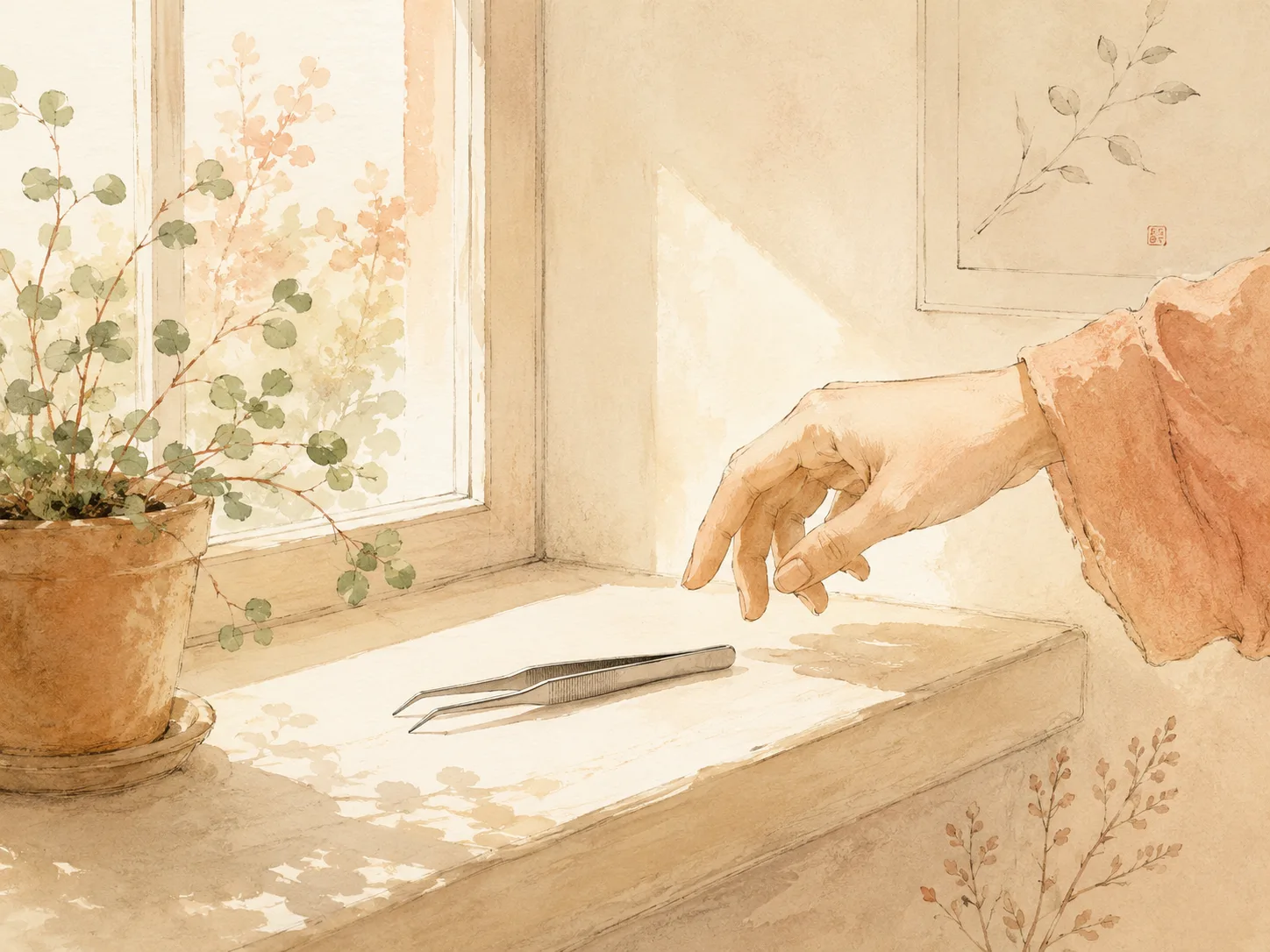
At some point your partner may ask you to pick something for them. Get this one. Just this bit, I can't reach it. It's phrased as a small favour, it doesn't feel like a clinical event, and if you've never heard of it happening you'll either do it without thinking or refuse in a way that lands as disgust.
Two things follow from that.
Granting the request isn't a neutral kindness. It's an outsourced episode. The urge got satisfied, the tissue got damaged, and it arrived with your participation attached, which makes it harder for either of you to talk about afterwards.
Refusing badly does its own damage. A flinch, a face, or a "that's disgusting" costs more than the picking would have. What you're being handed in that moment is trust, awkwardly.
The narrow exception is medical. If something looks infected rather than sore, spreading redness, swelling, warmth or pus, that's a doctor rather than you, and it's worth saying so plainly and privately.
Your Side of It
Almost nothing written for partners takes this seriously, so here it is directly: it's genuinely hard to watch someone you love damage themselves, and your frustration about it isn't a character defect.
You're allowed to find it distressing, and to be tired of it. A flash of something ugly when a good month ends is normal. So is quietly resenting that a topic exists in your house which you can't raise without making it worse. None of that means you love them less, and pretending you feel none of it isn't a strategy, because it will leak.
That's the part worth being precise about. Frustration doesn't stay put. It comes out as a sigh when they go into the bathroom, a slightly clipped tone, a pause before you answer.
So the question isn't whether you feel it. It's where it goes, and the answer is usually not them.
A therapist of your own is the cleanest version. A BFRB family or partner community is the cheaper one, and it exists precisely so you can say the unvarnished thing to someone who won't be hurt by it. What doesn't work is venting to a friend who knows them. Their condition isn't yours to hand around, and finding out that a mutual friend was briefed can end the trust that made telling you possible in the first place.
One more thing about your side. You did not cause this and you cannot end it. This typically starts in the early teens, long before you existed in their life, and recovery moves on their timeline regardless of how much you want it to move on yours. Holding that clearly is a relief rather than a defeat. It takes the whole thing off your list of failures.
Support, Accommodation, Policing
Three different things get called helping. Two of them go wrong.
Policing is anything you do to them without agreement. Watching, signalling, moving their tools, checking the bin, asking how long it's been. Covered above.
Accommodation is subtler and far more common. It's anything you do that reduces their distress in the moment while quietly making the behavior easier to keep. Making the phone call they don't want to make because their face is bad. Telling their family they're ill. Buying the tweezers because they asked and you'd rather not have the argument. Rearranging an evening around it and saying nothing.
The trap is that accommodation feels like love. It's what you do to spare them a hard moment, and it works, briefly, on the moment. Then it becomes the arrangement.
Support is the third one, and it's narrower than most people expect. It's the things they asked for, done reliably, and nothing past that. It's making the evening easier to get through rather than making the consequences easier to avoid. It's cooking together instead of commenting. It's driving them to the appointment they booked and not asking what was said.
Four Moments You'll Face

You walk in on it. Say nothing about it. Don't back out of the room either, because a visible retreat reads as revulsion. Do the ordinary thing you came in to do. If you want to offer an exit, offer an activity rather than a correction, and something that needs both their hands beats anything you can say.
They cancel. A bad flare-up means some plans don't happen, and the useful response is a low-drama one. Take it at face value, don't ask them to reconsider, and don't make them explain in front of anyone. If you can go alone without it becoming an event, go alone. If you'd rather stay in, say so as a preference and not a sacrifice, because a sacrifice has to be paid back later.
They ask if it looks bad. Both obvious answers fail. "It looks fine" is a lie they can check in a mirror, and "yes, a bit" hands them the assessment they asked you not to make. The way out is to decline the frame rather than answer it: you're not going to grade it, you're not looking at them that way, and you'd rather know how they're doing. If they need to know whether something is visible for a practical reason, that's a different question and worth answering straight.
A good month ends. This is where your reaction matters most and is hardest to control, because you'd started to relax. Say the same things you say in a good week, in the same tone. Don't reference the streak. Don't ask what happened. The one useful sentence is a version of "what do you need", and the one to avoid is "but you were doing so well".
What Your Job Actually Is
Take the shape of the role rather than any single tactic from this page. Your job is to be the person they don't have to hide from. Every useful thing above follows from that, and every mistake in this article is a version of making yourself someone to hide from.
The role has a real clinical basis, which is worth knowing because it stops the whole thing feeling passive. Social support sits inside habit reversal training, the behavioral treatment with the strongest evidence behind it. There's a defined job in there for another person. It just isn't the job most partners appoint themselves to.
If you want somewhere concrete to put it, ask once whether they'd like to work through that treatment together, then let the answer stand. No is information, not rejection. Some apps for this, ours included, let someone add an accountability friend, which has the useful property that what gets shared is what they chose to share rather than what you noticed. That distinction is the whole article in one setting.
And if they'd rather the support role sat with someone who isn't you, that's a reasonable thing to want. A therapist who works with body-focused repetitive behaviors can hold it, and it costs you nothing except the version of this where you were the one who fixed it.
FAQs
Only if they've asked you to. Consent is the entire difference between an awareness cue and surveillance. If they have asked, agree the signal in advance, keep it small and preferably wordless, stay neutral when you use it, and never use it in front of other people. If they haven't asked, the answer is no, and asking them once whether they'd like you to is a better use of the impulse.
Not unilaterally. Changing the environment is a real strategy, but done without agreement it reads as confiscation and reliably produces secrecy plus a new hiding place. Offer instead: ask whether they'd like the magnifying mirror gone or the bathroom light softened, and let them decide. Anything you removed on your own initiative should probably go back.
Better not to. Doing it satisfies the urge and does the damage with your hands, which makes the whole subject harder to discuss afterwards. Say no to the act without any reaction to the person, and offer to do something else together. Agree the position once while you're both calm rather than in the moment. The exception is anything that looks infected, which needs a doctor rather than either of you.
Yes, and pretending otherwise doesn't work, because frustration comes out in tone and timing whether or not you say anything. The useful move is putting it somewhere that isn't them: your own therapist, or a BFRB family and partner community. Not a mutual friend, since their condition isn't yours to share.
Encouraging is fine. Managing it isn't. Recovery leans heavily on the person's own motivation, and treating it as your project tends to stall both the treatment and the relationship. Make help easy to reach and say so once: the International OCD Foundation (iocdf.org), which now hosts the TLC Foundation's BFRB resources, keeps a therapist directory. Then let it sit. Ultimatums, including the picking-or-me kind, reliably make things worse.
Follow the boundary exactly, don't test it, and don't read it as being about you. Areas that are off limits can change week to week, and the useful thing is making it cheap for them to say so rather than something they have to justify each time. Same for lights, clothes staying on, or not wanting to be looked at closely in daylight. If it's affecting your relationship in a way you can't hold quietly, that's a conversation to have as your own feeling, at a calm moment, and not during or after an episode.
Barely. The mechanisms overlap heavily and the treatment is largely the same, so surveillance, appearance comments and unrequested strategies backfire in identical ways. The one practical difference is visibility. Hair loss is often harder to conceal than picking damage, so appearance comments land harder and more often, and the by-proxy request is better documented on the pulling side.
Continue Reading
References
- Falkenstein MJ, Haaga DAF. Symptom accommodation, trichotillomania-by-proxy, and interpersonal functioning in trichotillomania (hair-pulling disorder). Comprehensive Psychiatry. 2016;65:88–97.
- Woodson O, Kuckertz JM, Falkenstein MJ. Family Accommodation and Body Focused Repetitive Behaviors. McLean Hospital / Harvard Medical School, presented via the International OCD Foundation.
- Skin Picking Support. FAQ for Relationships: Resources for Partners.
- Courage Counseling. 15 Do's and Don'ts for Significant Others of People with Skin Picking or Trichotillomania.
- TLC Foundation for BFRBs. bfrb.org
Last updated: July 2026