
Written using the DSM-5 criteria for excoriation (skin-picking) disorder and non-suicidal self-injury, alongside peer-reviewed research including Mathew et al. (2020, Journal of Psychiatric Research), Grant and Chamberlain (2024, CNS Spectrums), Gallinat et al. (2021, Frontiers in Psychiatry) and Moritz et al. (2024, Comprehensive Psychiatry), plus published guidance from the TLC Foundation for BFRBs.
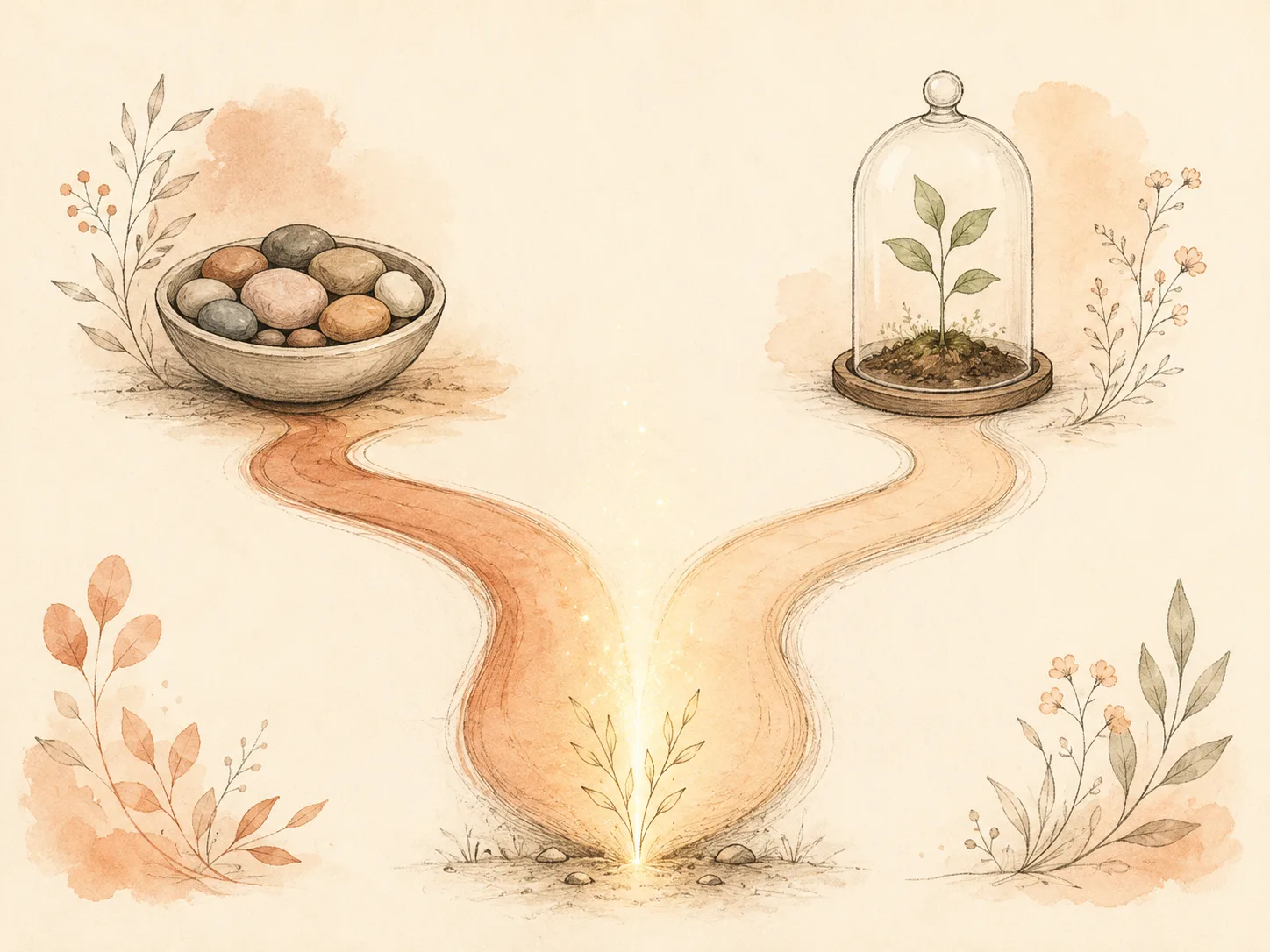
No. Skin picking disorder and non-suicidal self-injury are separate conditions in the diagnostic manual, and what separates them is not how bad the damage looks. It's what the behavior is for.
Self-injury is done to injure. The wound, or the pain, is the point of the act. Picking is a grooming behavior that has run past the point of usefulness. The hand goes up to remove something, smooth something, finish something, and the damage that follows is a byproduct rather than an aim. A large share of episodes are barely conscious while they're happening.
That difference decides which treatment you're offered, which is the whole reason it's worth getting right rather than arguing about. It also has two edges that most pages on this question leave off, and both matter more than the classification itself. Some picking does carry a punishing edge. And roughly half of people with a picking or pulling disorder have self-injured at some point, separately from the picking. Both are covered below, because a clean answer that leaves them out isn't much use to the person who needed to ask.
Why Function Sorts It, Not Severity
The instinct most people have is to sort these by damage. Deep wounds, therefore self-harm. Small scabs, therefore a habit. Severity doesn't sort them at all, and clinicians don't use it that way.
The strongest direct evidence comes from a 2020 study that put the two side by side rather than describing them separately. It compared 1,523 people: 165 with moderate to severe non-suicidal self-injury, against groups doing each of the body-focused behaviors, including 216 who picked their skin and 102 who pulled their hair.
"Automatically, without reflective awareness" is the phrase to sit with. It describes a behavior you're running before you've registered starting it, which is a poor fit for any account of what you were trying to achieve. You can't be pursuing an aim in an act you haven't noticed yet.
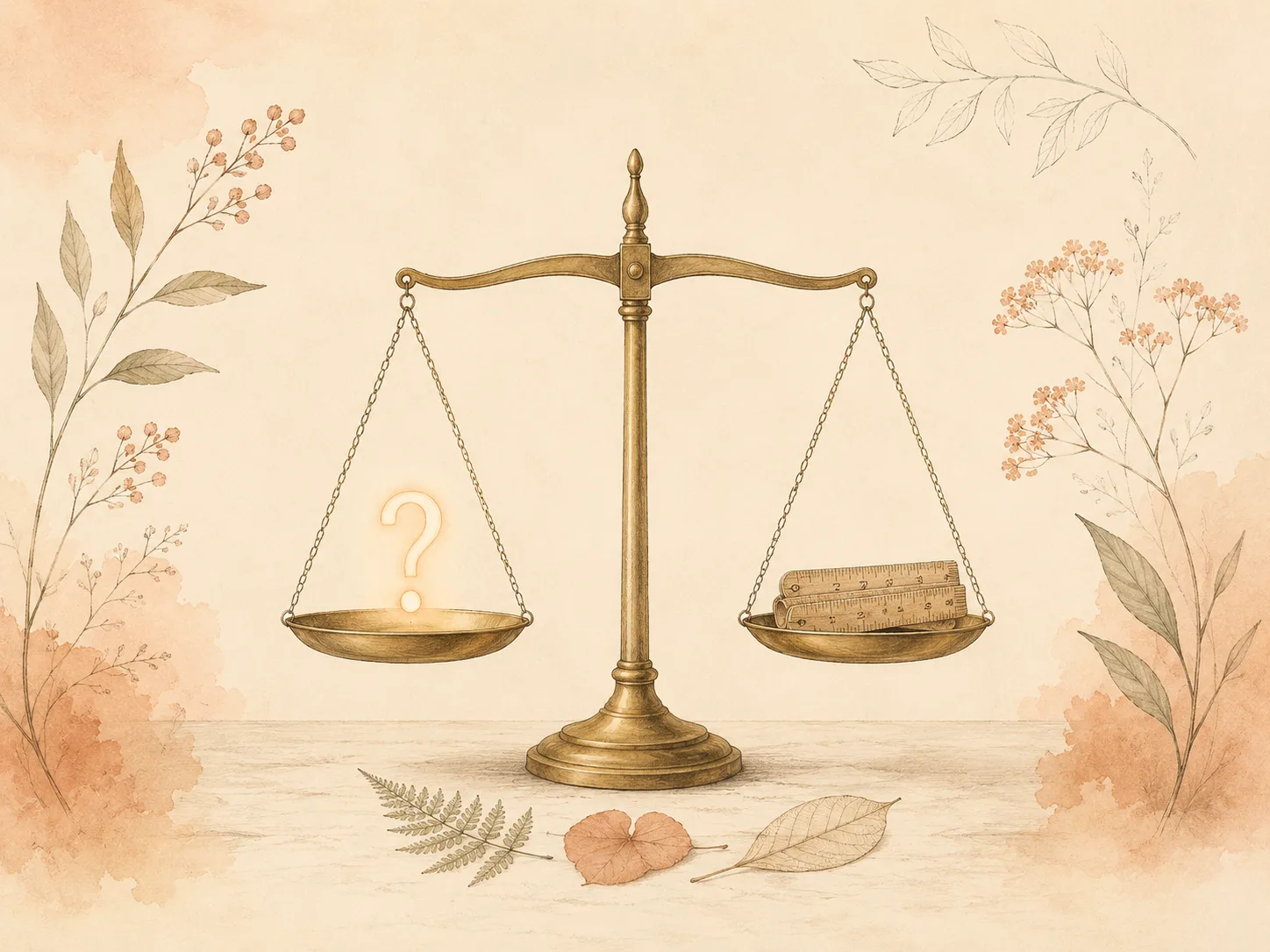
The diagnostic manual codes this directly. Skin picking disorder has an exclusion criterion stating the picking must not be better explained by another condition, and non-suicidal self-injury is one of the conditions named. The two are written to be alternative explanations for the same behavior, which means a clinician is meant to work out which account fits before applying either label.
The TLC Foundation for BFRBs, long the field's main patient organization and now folded into the International OCD Foundation, puts its position in four words: BFRBs are not self-harm. Their framing of the damage is that it's an unintentional result of the repetitive behavior rather than its goal.
That's all tidier on paper than in a room, and the field says so itself. When 50 BFRB researchers and clinicians were surveyed in 2024 about what the next edition of the manual should change, telling these conditions apart from self-injury came up as a live problem.
What the Wrong Label Costs
This is the part that makes the question practical rather than semantic, and it goes wrong in both directions.
Applied where it doesn't belong, the self-harm framework sends the treatment somewhere useless. Care for self-injury reasonably concentrates on the distress underneath it, on emotional regulation, on safety. Care for a body-focused repetitive behavior starts somewhere else entirely: with awareness training, because you can't interrupt something you haven't noticed, then a competing response your hands can do instead, then changes to the environment that cues it. That's habit reversal training, and it's the first-line treatment with the largest effect sizes in this literature.
Run a self-harm plan against picking and you get months of work on distress that may not be what's driving the behavior, while nobody ever trains the hand. The plausible outcome is that you conclude therapy doesn't work for you, which is one of the most common and most fixable ways this treatment stalls. It's the same failure mode as being handed an OCD framework for picking, which the comparison with OCD covers in more detail.
There's a second cost, quieter and harder to undo. If someone with authority tells you that a behavior you experience as compulsive and automatic is actually you trying to hurt yourself, and you know that isn't what it is, the rational responses are to stop describing it accurately or to stop turning up. Neither of those helps you. Plenty of people have made both choices and then blamed themselves for it.
Applied nowhere at all, the reverse failure is just as real. A clinician who hears "skin picking" and files it as a BFRB without asking anything further will miss the person for whom a punishing strand genuinely is present. Assessing for it costs one question. Assuming in either direction costs considerably more.
The Overlap Nobody Quotes
Both versions of this argument leave out the same number.
A 2024 study looked at 280 adults with hair pulling disorder, skin picking disorder, or both. It asked about self-injury separate from the pulling and picking. 141 of them, 50.1%, reported a history of it.
That group also had measurably worse pulling and picking symptoms, and significantly higher rates of alcohol problems, borderline personality disorder, gambling disorder, compulsive sexual behavior, buying disorder and binge eating disorder. The authors' reading was that self-injury here may sit inside a broader pattern of impulse-control or reward-related difficulty rather than being a feature of the picking itself.
So both statements hold at once, and neither cancels the other. Your picking is not self-harm. And about half of people with these conditions have also self-injured, as a separate thing, which is worth saying out loud to a clinician rather than filing away as unrelated history.
Anyone telling you the two conditions have nothing to do with each other is skipping that number. Anyone telling you picking simply is self-harm is skipping the function research above it. The accurate position is less satisfying than either and considerably more useful. The wider set of myths about these conditions runs into the same problem repeatedly: the correction to a bad claim usually overshoots.
When Picking Carries a Punishing Edge
Some people recognize something in their picking that doesn't fit the grooming account, and the pages answering this question tend to leave them stranded.
A 2021 study of 363 people, 163 of whom scored above the threshold for pathological skin picking, mapped what episodes feel like from the inside. Before: boredom, bodily tension, strong negative feelings. During: a loss of control, a trance-like quality, and positive feelings. Afterwards: shame, guilt, anger, and anger directed at themselves.
That last one is worth naming plainly, because the shame-and-anger aftermath is close to universal in these conditions and doesn't mean the picking was self-punishment. Feeling furious with yourself after an episode is the standard shape of the cycle, not evidence about what started it.
What would be different is punishment showing up before the hand moves rather than after it. Not "I feel awful about having picked," but picking that follows a specific thought about deserving it, or picking that continues past the point where it stopped doing anything, because stopping felt like letting yourself off.
If any of that describes you, the useful move is not to relabel yourself. It's to say the specific thing to a professional, in those words, and let them assess it. That sentence is genuinely hard to get out, and it's also the single most diagnostically useful thing you can say. Clinicians who work with these conditions have heard it before, and nothing about saying it commits you to a diagnosis.
If you're having thoughts of hurting yourself beyond the picking, or thoughts of suicide, that isn't a question to keep researching. Please talk to someone now.
How to Describe It So It Gets Assessed

Most people, asked about their picking, describe the aftermath: how much they pick, where, how bad it looks. That's the part that isn't diagnostic. Three other things are, and they take about a minute.
What happens in the ten seconds before your hand moves. Was there a thought, a feeling, a texture, or nothing you can name? Nothing you can name is a real answer and a useful one.
What the behavior does for you. Relief, stimulation, a finished feeling, a fixed appearance, or pain. That's the question the whole distinction turns on, and it's the one least likely to be asked directly.
Whether you knew you were doing it. Automatic and focused picking often coexist in the same person. Say if both happen, and roughly in what proportion.
If you're looking for someone equipped to read that record properly, the guide to finding a BFRB therapist covers where the training is concentrated and what to ask on a first call. A plan built entirely on self-harm framing, with no mention of habit reversal and no question about what happens before your hand moves, is the mismatch worth catching in week one rather than week twelve.
Log the before, not just the after
SkinAware records episodes and resisted urges for skin picking, hair pulling and nail biting, capturing the trigger and the mood on either side of each one. That's the record a clinician needs to tell these conditions apart.
Available on iOS, Android and in your browser.
When Someone Else Has Already Applied the Label
Often the reason people search this question is that a partner, a parent, or a doctor has said it out loud, and it landed badly.
Worth knowing before the conversation: the person saying it is almost always frightened rather than accusing. They've seen damage on someone they care about, and "self-harm" is the only category they have for damage a person does to themselves. It's a vocabulary problem wearing the costume of a judgment.
Which means correcting the category tends to work better than defending yourself. Something close to:
"I know it looks like that. It's a different thing, and it has a name. It's a grooming behavior that got stuck, not me trying to hurt myself. The treatment for it is different too."
If they push, the sentence that usually lands is that you mostly don't notice you're doing it until it's already happening. That's the detail people find hardest to square with deliberate self-injury, and it's true for most picking.
If it was a clinician rather than a family member, add one request: ask them to assess rather than assume, and ask specifically whether they'd start you on habit reversal training. A good clinician will take that well. One who won't has told you something useful for free.
And if part of what they said did land, if there's a strand of this that isn't only grooming, you can say both things. "It's mostly automatic, and sometimes it isn't, and I'd like to talk about the second part." That sentence holds the whole truth and costs you nothing.
Frequently Asked Questions
No. Skin picking disorder sits with the obsessive-compulsive and related disorders in the DSM-5, while non-suicidal self-injury is a separate category. The criteria for skin picking disorder include an exclusion stating it shouldn't be diagnosed where the behavior is better explained by another condition, and non-suicidal self-injury is named among them. The distinction rests on what the behavior is for, not on how much damage it causes.
Function. Self-injury is performed to injure, with the pain or the wound as the aim. Picking is a grooming behavior that has escalated, with damage as a byproduct. A 2020 comparison of 1,523 people found the self-injury group were more likely to act to regulate tension or emptiness and to feel relief during the act, while the picking and pulling groups were more likely to act automatically without reflective awareness, to reduce boredom, or to fix their appearance.
For some, a self-punitive strand is genuinely present, and the diagnostic manual accounts for this by treating the two as alternative explanations to be assessed rather than assumed. Shame and anger at yourself after an episode is close to universal in skin picking disorder and isn't the marker. What's worth raising with a professional is punishment appearing before the behavior starts, or picking that continues past the point of doing anything because stopping felt like letting yourself off.
Yes, and it's common. A 2024 study of 280 adults with hair pulling disorder, skin picking disorder or both found 141 of them, 50.1%, reported a history of self-injury separate from their picking or pulling. That group had more severe symptoms and higher rates of several other impulse-control conditions. Having both is worth telling a clinician, and it doesn't mean the picking was self-harm all along.
Because the treatments differ. Care for self-injury concentrates on the distress underneath it. Habit reversal training, the first-line treatment for picking and pulling, starts with awareness training, then a competing response, then changing the environment that cues the behavior. Running the wrong plan usually ends with the person concluding therapy doesn't work for them, when what actually happened is that a plan for a different condition was applied to theirs.
Possibly, and it's worth asking rather than accepting or dismissing. The reasonable request is that they assess it rather than assume it: ask what they'd want to know about what happens immediately before you pick and what the behavior does for you, and whether they'd start you on habit reversal training. A survey of 50 BFRB experts in 2024 concluded that the criteria distinguishing these conditions from self-injury still need refinement, so a clinician getting it wrong is a known problem rather than a rare one.
Usually not the way people expect, and that gap is part of what separates it from self-injury, where pain is often the point. In a 2021 study of skin picking phenomenology, what people reported during episodes was a loss of control, a trance-like quality and positive feelings. The shame, guilt and anger arrived afterwards. Pain generally isn't what's motivating the behavior, which is one reason the accusation of wanting to hurt yourself lands so strangely on people who pick.
Continue Reading
References
- American Psychiatric Association. Diagnostic and Statistical Manual of Mental Disorders, Fifth Edition. Excoriation (skin-picking) disorder criteria and non-suicidal self-injury.
- Mathew AS, Davine TP, Snorrason I, Houghton DC, Woods DW, Lee HJ. Body-focused repetitive behaviors and non-suicidal self-injury: A comparison of clinical characteristics and symptom features. Journal of Psychiatric Research. 2020;124:115-122.
- Grant JE, Chamberlain SR. Non-suicidal self-injury in trichotillomania and skin picking disorder. CNS Spectrums. 2024.
- Gallinat C, Stürmlinger LL, Schaber S, Bauer S. Pathological Skin Picking: Phenomenology and Associations With Emotions, Self-Esteem, Body Image, and Subjective Physical Well-Being. Frontiers in Psychiatry. 2021;12:732717.
- Moritz S, et al. Quo vadis DSM-6? An expert survey on the classification, diagnosis, and differential diagnosis of body-focused repetitive behaviors. Comprehensive Psychiatry. 2024;136:152534.
- TLC Foundation for BFRBs. What Is a BFRB? bfrb.org
Last updated: July 2026