
Scale structure, scoring ranges and cut-off values verified July 2026 against the Skin Picking Scale-Revised validation literature (Snorrason et al., 2022; Polish SPS-R validation, 2022), the Skin Picking Scale and Skin Picking Impact Scale as described in The Professional Counselor, and Grant and Chamberlain's severity-correlates study of 125 adults with skin-picking disorder.
Twelve questions, built from the dimensions clinical severity scales actually measure: time, tissue damage, distress, how far picking reaches into the rest of your life, and how much control you have once a session starts. This is not a validated instrument and it diagnoses nothing. What it can do is turn a vague sense that things are getting worse into something specific enough to act on.
The assessment
Self-assessment
Question 1 of 12
Answer for the last month. Nothing here is recorded, sent anywhere, or scored by anyone but you.
On a typical day, do you spend thirty minutes or more picking, counting the time you spend searching for spots and cleaning up afterwards?
What your result points to
Which questions you said yes to matters more than how many. What follows is the general read on each range, and the level of help that tends to match it.
Nine or more
Several dimensions are giving way at once here. That's the pattern that moves the conversation from self-help to treatment, and the useful next move is a clinician who knows what excoriation disorder is. That's a narrower group than "a therapist," and finding one takes a particular approach: how to vet a therapist who actually knows BFRBs covers the directories and the questions worth asking on the first call.
If you've already had a proper course of weekly behavioral treatment and it didn't hold, that's a different situation with its own answer. The rungs that exist above weekly therapy covers what intensive outpatient and the levels above it actually involve, and what they cost.
Five to eight
The widest band, and the one where a self-directed protocol still has real reach. Picking takes time and leaves damage, but you're mostly still going to the things you want to go to, and your sleep is intact.
Habit reversal training has more evidence behind it than any other treatment for body-focused repetitive behaviors, and it's one of the few protocols a person can genuinely run without a therapist. The full step-by-step version for skin is worth working through properly rather than skimming. Give it six to eight weeks with real logging behind it. If nothing has moved by then, that's the signal to add a clinician, not to try harder at the same thing.
Fewer than five
Picking is happening without the loading these scales are built to detect. Watching beats treating here.
Severity tends to drift through one dimension at a time, and the usual order is time first, damage second, avoidance last. If a hard few months arrive, take this again. A number you have from today is worth something later.
The five dimensions, and why they're scored separately
The most widely used severity measure here is the Skin Picking Scale-Revised: eight items, total range 0 to 32. What makes it more interesting than a checklist is its shape. It splits into two subscales that are scored independently. One covers symptom severity, meaning urge frequency, urge intensity, time spent picking, and control over stopping. The other covers impairment, meaning distress, interference with work and social life, avoidance, and skin damage.
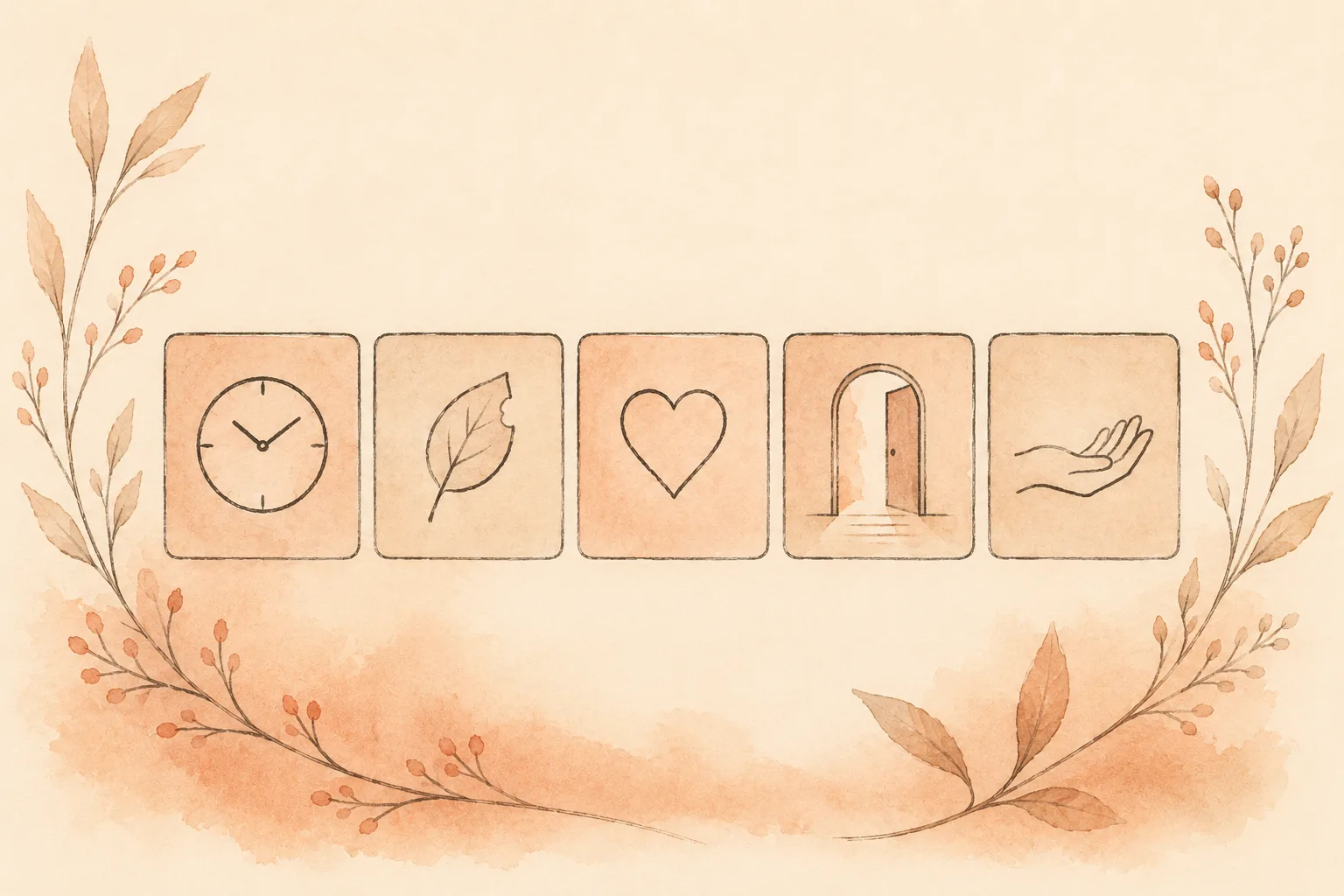
Time. The dimension people underestimate most, because picking time doesn't feel like time. Counted properly it includes the searching, the standing at the mirror, the aftermath, and the concealment. A session that felt like ten minutes is routinely forty.
Quick Check
On a typical day, how much time goes to picking, start to finish?
Tissue damage. What the skin is actually carrying: open wounds, healing time, scarring, infections. This is the dimension most likely to need a second kind of appointment, since skin that heals slowly keeps producing things to pick at. What's worth taking seriously medically, and what isn't covers where that line sits.
Distress. What the picking and its results cost you emotionally. Distress tracks the behavior loosely at best. Plenty of people with heavy damage report feeling fine about it, and plenty with light damage carry a great deal.
Functional impairment. The things you don't do because of your skin. Swimming, dating, the gym, photographs, going in to the office on a bad week. This is the dimension that most reliably predicts whether anyone seeks treatment, largely because it's the one other people notice.
Control. Whether stopping is available to you once a session has begun. Of the five, loss of control separates a habit from a disorder most cleanly.
Why two people with the same score need different things
Three profiles come up often enough to be worth naming.
Heavy damage, little distress. Long-standing picking that's been absorbed into the daily routine. The skin is carrying a lot; the person reports feeling largely fine. This profile under-seeks help, because distress is what drives people to book appointments and there isn't much of it here. It's also the profile where the dermatological side does the most work.
Heavy distress, little damage. Someone who picks less than they assume, at a real emotional cost, often with a body-image thread running underneath. The picking itself responds well to standard behavioral work, but treating only the picking leaves most of the problem sitting where it was.
Control gone, everything else moderate. Time and damage sit in the middle, but sessions genuinely can't be stopped once they start. This is the profile most often told it's not that bad, and it's the one that most often needs proper treatment anyway, because control is what predicts where the other four dimensions go next.
What severity travels with
Severity in skin picking rarely sits by itself.
The practical reading: when a score is high and something underneath it is untreated, the picking is being fed. Behavioral work aimed only at the hands, running alongside an anxiety disorder nobody is treating, tends to underperform and then get recorded as another failed attempt. It usually wasn't the protocol that failed.
Measuring it again
One score is a snapshot. The second one is where the information is.
Clinical trials re-administer these scales every few weeks for that reason. Change in this condition shows up as a downward drift with plateaus and slips, not as a clean stop, and a month with twelve picking days instead of twenty-two is progress that a single-score mindset reads as failure. What recovery realistically looks like over months and years is a more useful yardstick than a number going to zero.
Two things make a retest worth taking. Use a fixed interval, four to six weeks, and answer for the same length of window each time. And keep some record in between, because answering "how much time on a typical day" from memory is where the accuracy goes.
Answer It From Data Next Time
SkinAware handles the logging layer: episodes, urges, duration and the state you were in beforehand, for picking, pulling and biting, with a habit reversal course alongside it. It isn't treatment and it doesn't score you. It's how the next version of this assessment gets answered from a record instead of a guess.
Available on iOS, Android and in your browser.
Frequently asked questions
No. The SPS-R is an eight-item validated instrument with graded 0-to-4 responses, scored across a severity subscale and an impairment subscale. This page borrows its dimensions and its logic, but yes/no questions can't reproduce a graded scale and this isn't validated against anything. If you want the real measure, a clinician can administer it, and several BFRB-informed therapists do so at intake and then every few weeks after.
Not on its own, and no scale claims to. What it can do is tell you which dimensions are loaded, which is the information a clinician would want anyway. The functional questions, the ones about work, sleep, avoidance and time lost, carry the most weight in practice, because levels of care are matched to function rather than to how bad something feels.
Yes. Severity scales are calibrated to detect a specific kind of loading, and distress that hasn't yet produced time cost or tissue damage sits below their threshold by design. That's a statement about the instrument, not about you. Distress alone is a reasonable thing to bring to a therapist, and it's a good deal easier to treat before the other dimensions catch up.
Every four to six weeks is the interval most trials use, and it's short enough to catch drift without turning into daily self-monitoring. Answering more often than that mostly measures the last bad week. Answer for the same window each time, or the comparison means nothing.
Higher severity generally means longer treatment rather than worse odds. What predicts a harder course is what sits alongside the picking: untreated anxiety, depression, or impulsivity all correlate with greater severity, and leaving those untreated while working on the behavior is what usually stalls progress. The behavior itself responds to treatment across the range.
Bring the answers, not the total. A GP or a therapist can do very little with "I scored ten." They can do a great deal with "roughly ninety minutes a day, two sores that haven't closed in a month, I've stopped swimming, and I can't stop once I've started." Those four sentences are what an intake assessment is trying to extract anyway.