
Written using guidance from the American Academy of Ophthalmology, peer-reviewed research including Woods & Houghton (2014, Psychiatric Clinics of North America), Masud et al. (2019, Medical Hypothesis, Discovery & Innovation in Ophthalmology), Peabody et al. (2013, Optometry and Vision Science), and the FDA prescribing information for bimatoprost.
An eyelash grows about 0.15 mm a day, reaches full length in roughly eight to ten weeks, then sits in place for five or six months before shedding on its own. Eyebrow hairs run on a similar short clock. Scalp hair, by comparison, stays in its growth phase for years.
That difference drives almost everything about eye-region pulling, and it cuts both ways.
The good half: a follicle that hasn't been permanently damaged usually shows new growth in weeks, not the long wait scalp pullers face. The hard half: new lashes come in blunt and stiff, right at the lid margin, where every blink registers them. For a lot of people the regrowth itself becomes the next cue to pull.
That loop is where this page starts, because most advice written for hair pulling never gets to it.
Why the eye area is its own problem
Most people who pull from their lashes or brows didn't choose the area. It chose them, usually through a physical cue rather than an emotional one.
The American Academy of Ophthalmology describes the mechanism plainly: people who pull out their eyelashes often say that one or more lashes bothers them when they blink, and the hunt for that one lash is what leads to the pulling. That's not a rationalization. A lash growing at a slightly wrong angle genuinely does contact the eye surface, and the cornea is one of the most densely innervated tissues in the body. It reports.
Brow pulling tends to run differently again. It's more often visual and symmetry-driven: one side reads heavier than the other, so you correct it, then correct the correction. Grooming tools blur the line here, and plenty of people move between tweezing and pulling without registering a switch.
Onset for eye-region pulling clusters early, most commonly between about ages 9 and 13, which means many adults reading this have been doing it since before they had a word for it. That word is trichotillomania, and the full picture of what it is and how it's diagnosed sits here.
Will they grow back?
Usually, yes. What determines the answer is whether the follicle is scarred.
Ophthalmology splits lash and brow loss into two categories. Non-scarring loss means the follicle is intact and the machinery still works, so removing the cause brings the hair back. Scarring loss means the follicle structure has been destroyed and no longer produces a hair at all. Pulling produces the first kind far more often than the second, which is why most people who stop see regrowth.
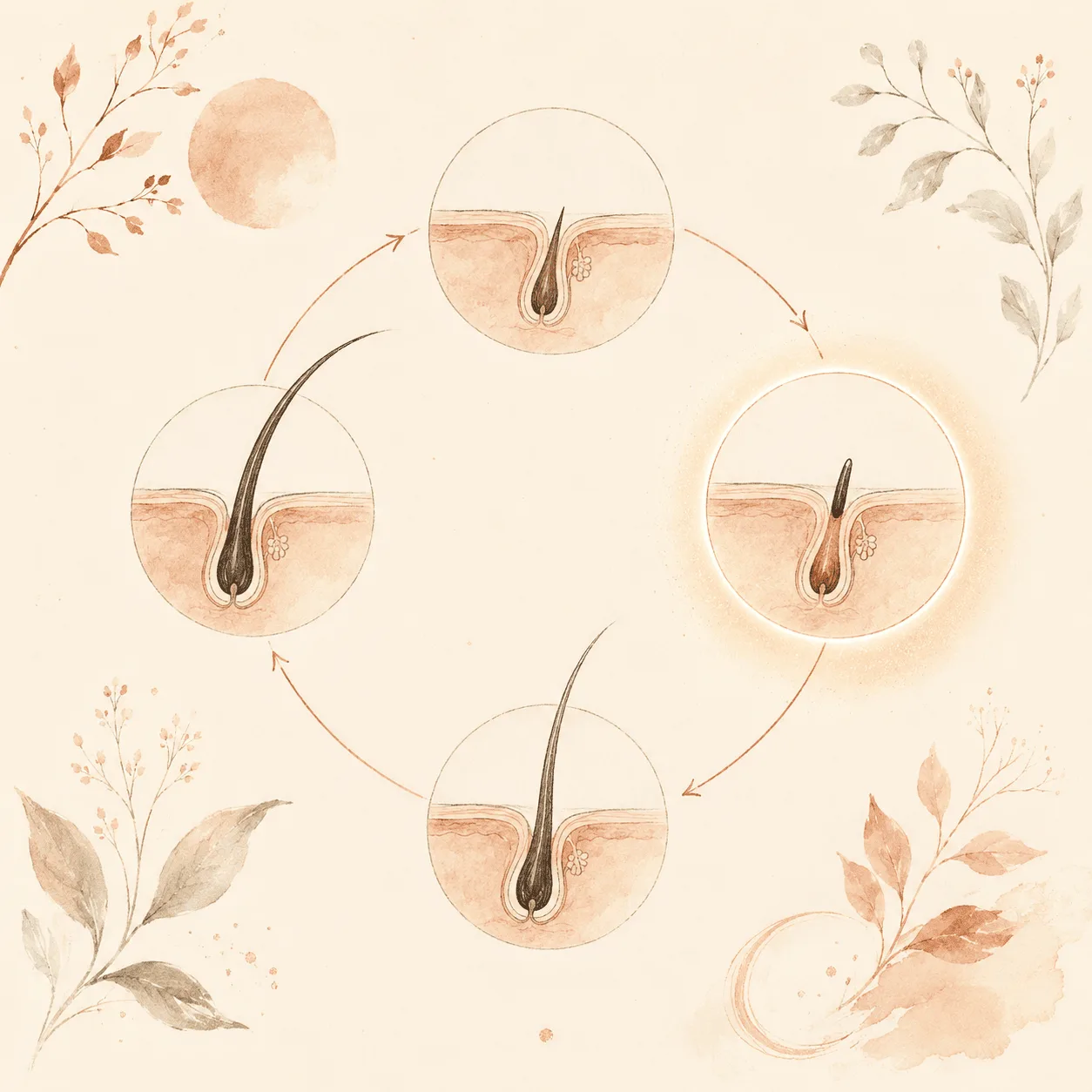
The realistic timeline, drawn from clinical practice rather than product marketing: first visible regrowth in roughly 6 to 12 weeks, with cosmetic fill-in taking 3 to 6 months. Brows generally take longer to look complete than lashes, and decades of pulling from the same spots can leave some areas permanently thin.
The AAO is direct about the long-term risk: repeated pulling makes lashes grow back more slowly, to the point where they may not grow back at all. Read that as a reason to start now, not as a verdict on what you've already lost. Follicles are more durable than the mirror suggests, and an eye doctor or dermatologist looking at your actual lid margin can tell you what's happening there, which is nearly always less final than you've been assuming.
SkinAware, the app behind this site, lets you log urges and episodes for free and start a habit reversal course.
Get the appThe regrowth window that catches people out
Weeks four through twelve of not pulling are the highest-risk stretch of the whole process, and almost nothing written on this topic says so.
A regrowing lash is short, blunt-tipped and stiff, and it sits at exactly the height where it contacts the eye. It is, physically, the most irritating thing your lash line will ever produce. If your pulling was driven by the sensation of a lash bothering your eye, recovery hands you a lid full of lashes that bother your eye.
Plan for it rather than discovering it:
- Expect the sensation. Knowing that week six will feel worse than week two removes most of its power to convince you that stopping isn't working.
- Use preservative-free artificial tears. They reduce the friction the stubble creates, which reduces the signal that starts the search.
- Keep hands off the lid margin entirely during this window, including checking. Checking is the first move of the sequence, not a neutral act.
- Set the standard as "I don't touch the lid line" rather than "I don't pull." The touch is the part you can actually catch.
What pulling actually does to your eyes
Not to alarm you, and not to hand you another reason to feel bad. This is the part of the topic where accurate information is genuinely protective, and where most results either skip it or overstate it.
Lashes aren't decorative. They keep dust, debris and sweat out of the eye and help trigger the blink reflex when something comes close. A sparse lash line means more of that reaches the eye surface. The AAO notes that people who repeatedly pluck lashes may damage the skin of their eyelids and carry a greater risk of eye injury, scarring and infection.
The lid margin is also where the meibomian glands open, the glands producing the oily layer that keeps your tear film from evaporating. Repeated trauma to that strip is associated with lid-margin inflammation and dry eye, which produces irritation, which feeds the same cue that starts the pulling.
You also don't have to disclose the pulling to get the eye treated. Most people do eventually, and most report the reaction was more matter-of-fact than they'd braced for, but the lid can be dealt with on its own terms.
Tactics built for this specific area
The behavioral core of treating hair pulling is the same wherever you pull, and the full protocol is worth reading in its own right. What follows is only the eye-region layer on top of it.
Give the irritation a legitimate answer. Since the cue is often a real sensation, resolving the sensation is fair game rather than avoidance. Preservative-free lubricating drops, a clean warm compress held over closed lids, or a rinse with cool water gives the eye something that settles the feeling without removing the lash.
Change the lighting, not your willpower. Magnifying mirrors and bright bathroom lighting make individual lashes and brow hairs visible in a way ordinary life never does. A standard mirror in normal light removes most of the targets before you get to them.
Occupy the approach, not the destination. The hand travels toward the face long before it reaches the lash line. Glasses, even plain non-prescription frames, put a physical object in the path and buy you a moment of interruption. Some people find a fingertip of thick eye cream or petroleum jelly along the brow makes the hairs too slippery to grip, which is a real barrier rather than a symbolic one.
Skip mascara during the stubble phase. Clumped mascara on short lashes creates something to pick at and turns removal into a tugging exercise. Soft eyeliner gives most of the definition with none of the handling.
Log by area and by cue. Eyebrows and eyelashes behave differently enough that lumping them together hides the pattern.
Log the area, not just the day
SkinAware logs pulls and resisted urges with eyebrows and eyelashes as separate body areas, and teaches habit reversal training module by module. Free to download, with a two-week trial on iOS.
Available on iOS, Android and in your browser.
Makeup, tinting, extensions and serums: what each one costs you
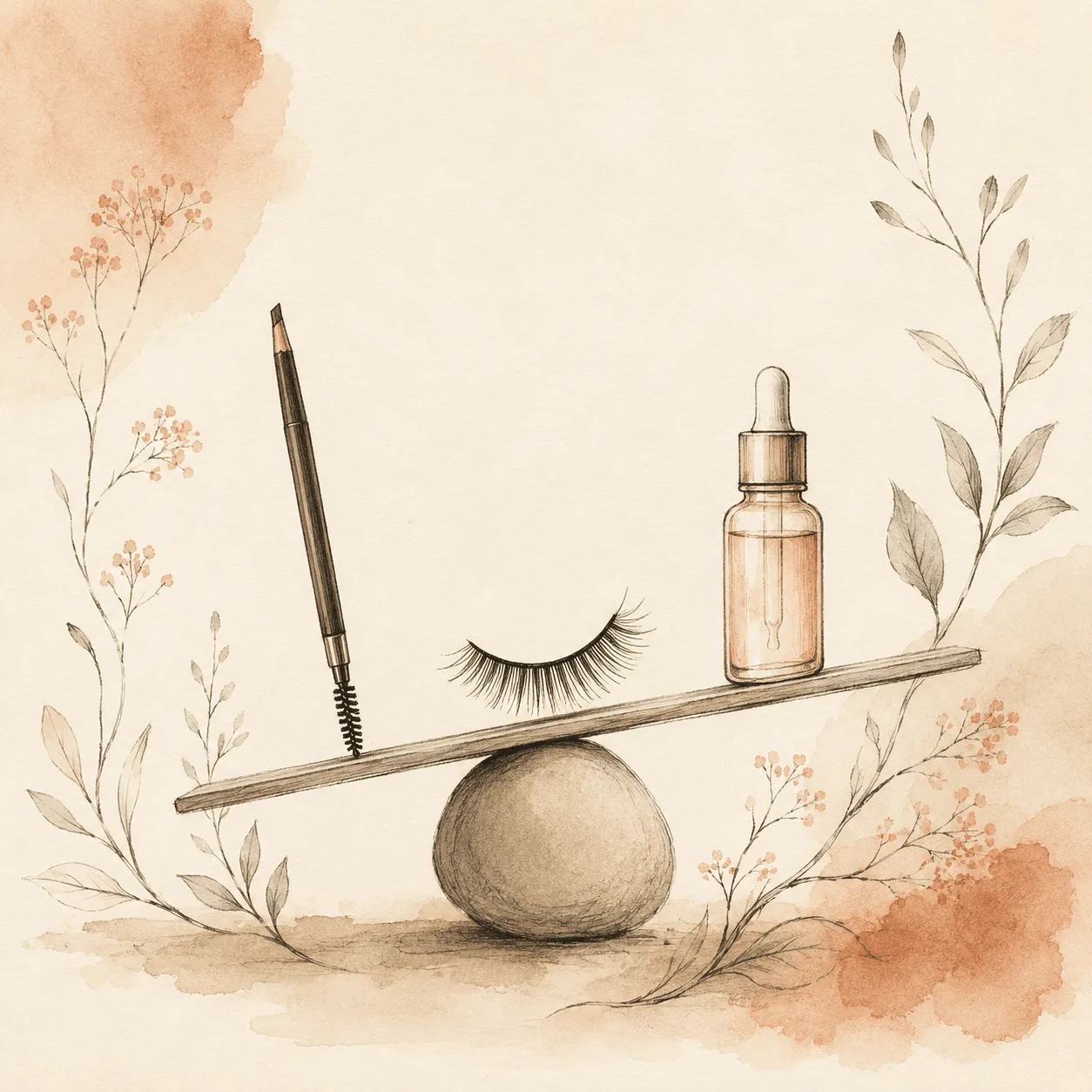
Concealment isn't a moral failure, and being told to simply accept the appearance while your face is the thing you're anxious about is not useful advice. But these options aren't equivalent when the underlying behavior is pulling, and a few of them work against regrowth.
| Option | What it gives you | The catch for someone who pulls |
|---|---|---|
| Eyeliner, brow pencil, powder | Immediate, reversible, no contact with the follicle | Removal involves handling the lid margin. Press and hold a soaked pad rather than wiping |
| Brow or lash tinting | Makes fine existing hairs visible, lasts weeks | Dye on the lid is the highest-allergy option here. In one review of eyelid cosmetic procedures, allergic contact dermatitis was the most commonly reported adverse effect. Patch test, always |
| Lash extensions | The most dramatic cosmetic result | The one to think hardest about. Extensions add weight and adhesive tension to follicles that are already stressed, and they give you a new texture to pick at |
| Strip or cluster false lashes | Removable, no long-term adhesive load | The adhesive sits on the lash line, so nightly removal means nightly handling of the exact area you're trying not to touch |
| Microblading or cosmetic brow tattoo | Removes the daily brow decision entirely | Semi-permanent, so it commits you to a shape while your brows are at their thinnest. Some people find it cuts brow pulling by removing the symmetry cue; others find the healed result reads wrong once real hair returns |
| Bimatoprost (Latisse) | Prescription, the only lash-growth option with real trial data | Pigmentation side effects, and it treats the consequence rather than the urge. See below |
| Over-the-counter lash serums | Cheap and widely sold | Wildly variable. Some contain prostaglandin analogues without saying so; some are conditioners with no growth effect. Ask what's actually in it |
On bimatoprost specifically. In randomized trials for eyelash hypotrichosis, roughly 40% of people responded compared with about 7% on vehicle, and the effect fades within a few months of stopping. A 2013 case report followed a 55-year-old woman who had pulled her lashes since age 12 and showed clear bilateral regrowth over four months on bimatoprost alongside treatment for her mood. That's one case, not evidence the drug treats pulling. The FDA label carries real cautions: increased brown iris pigmentation is likely to be permanent, eyelid skin darkening is usually reversible after stopping, and around 3 to 4% of users get eye itching, redness or skin pigment changes. It belongs in a conversation with an eye doctor, not in a shopping cart.
Cosmetic help doesn't replace behavioral treatment, and it isn't opposed to it either. For plenty of people, visible improvement lowers the shame enough to make the behavioral work possible at all. The trap is only when the cosmetic option adds mechanical stress to follicles that are already recovering, which is why extensions sit in a different category from a brow pencil.
What actually moves the behavior
The evidence base doesn't change by body site. Habit reversal training combined with stimulus control is the best-supported treatment for hair pulling, and it's where a therapist who knows BFRBs will start.
The short version: build awareness of when and where the pull happens, install a competing response your hands can do instead, and change the environment so the pull is harder to start. Applied to the eye region, stimulus control means the mirror lighting, the tweezers, the magnification and the makeup routine, roughly in that order of impact. The step-by-step habit reversal protocol is here.
If you do one thing this week, make it awareness. Log every pull and every resisted urge with the area and the cue attached, then read the week as a whole instead of judging any single evening. Most people find the picture differs from the story they've been telling themselves, and that gap is what the rest of the work is built on.
Frequently Asked Questions
Most likely, though possibly not to their original density. Pulling usually leaves the follicle intact, which means it can still produce hair. Long-term repeated trauma to the same follicles can eventually stop regrowth in some spots, so the sooner you stop, the more you keep. An eye doctor can look at your lid margin and tell you what's actually there rather than what you've been imagining.
Expect first visible regrowth in about 6 to 12 weeks, and cosmetic fill-in over 3 to 6 months. Brows generally take longer to look complete than lashes, and they don't come back evenly, so patchy regrowth at month two is normal rather than a sign it isn't working.
It can. Lashes keep debris out and help trigger the blink reflex, so a sparse lash line leaves the eye surface more exposed. Repeated trauma to the lid margin is linked to lid inflammation and dry eye. Vision loss from pulling alone is not typical. Persistent redness, grittiness, crusting, swelling, light sensitivity or any vision change warrants an eye appointment.
It's the option to be most careful with. Extensions add weight and adhesive tension to follicles that are already stressed, carry a documented rate of ocular side effects including allergic blepharitis, and give you a new texture to pick at. If the reason is a specific event, that's understandable. As an ongoing strategy during recovery, eyeliner and a brow pencil cost you far less.
No. They act on growth, not on behavior. Bimatoprost has real trial data for lash growth and a published case report in an eyelash puller, but it treats the visible consequence rather than the urge, and it carries pigmentation side effects worth understanding first. Regrowth can genuinely help by reducing shame, which makes the behavioral work easier, but on its own it tends to give the pulling more material.
Because it probably does feel wrong. Lashes growing at an off angle physically contact the eye surface, and the cornea is extremely sensitive. That's a real sensation, not something you invented. The work isn't convincing yourself it isn't there. It's giving the sensation an answer that isn't removal, usually lubricating drops or a warm compress.
Both, in whatever order you can manage. If your eyes are red, gritty or sore, book the eye appointment now, because that's treatable within weeks and the irritation is feeding the pulling. For the behavior itself, look for someone who lists BFRBs, trichotillomania or habit reversal training specifically. The International OCD Foundation (iocdf.org), which now carries on the TLC Foundation's BFRB work, keeps a therapist directory.
Where to get help
International OCD Foundation (iocdf.org). Now the home of the BFRB work the TLC Foundation built, with a therapist directory and a BFRB special interest group.
An optometrist or ophthalmologist. For the lid margin, dryness and irritation. You don't need to lead with the pulling to get the eye treated, and treating it removes one of the cues.
SkinAware. Logs pulls and resisted urges with eyebrows and eyelashes as separate body areas, teaches habit reversal training module by module, and connects you with others working on the same thing. Free to download; premium is $7.99 a month or $39.99 a year ($5.99 a month on Android), with a two-week trial on iOS.