
Written against an umbrella review of 1,039 physical activity trials (Singh et al., 2023), two randomized trials of exercise in OCD (Abrantes et al., 2017; Katz et al., 2023), and a meta-analytic review of exercise and sleep (Kredlow et al., 2015). Full references at the end.
Probably a little, indirectly, and not in the way most articles on this promise.
No trial has ever tested it. There is no randomized study, no controlled study, and no published case series of running, lifting, swimming or yoga as an intervention for skin picking disorder, trichotillomania or nail biting. What exists is evidence about neighbouring problems: anxiety, depression, sleep, and OCD. That evidence is real, and some of it is strong. It just isn't about picking or pulling.
So the useful question isn't whether exercise helps. It's how much, through what, and where it quietly makes things worse.
Where exercise sits in a treatment plan
Underneath the behavioral work, in the same tier as sleep and daylight.
Habit reversal training is the treatment. Exercise is one of the conditions that makes the treatment easier to run. If you have twenty units of effort to spend this month, most of them belong in awareness training and competing responses, not in a gym membership.
It's most likely to do something for you if your picking or pulling clusters around stressed days, bad sleep, or a long unstructured evening. It's least likely to do anything if most of your episodes are automatic: the ones that start while you're reading and get noticed forty minutes later.
Nobody has studied this on people who pick or pull
The evidence sits three rings out from the thing you actually want to know about.
Ring one: exercise for anxiety, depression and distress
This is the strongest link in the chain, and it is genuinely strong.
Ring two: exercise for OCD
BFRBs sit in the obsessive-compulsive and related disorders chapter of the DSM-5, so OCD is the nearest diagnostic neighbour with actual trials. The results there are more sobering.
A pilot randomized trial gave 56 people with persistent OCD symptoms twelve weeks of supervised aerobic exercise or twelve weeks of health education sessions. There was no significant difference between the two conditions. Both groups improved. The exercise group produced more treatment responders (30.4% versus 7.7%), but that gap didn't reach statistical significance.
A later four-arm trial with 125 participants was clearer still: CBT alone and CBT plus exercise both beat exercise alone, and exercise alone did not separate from the control condition. Within the exercise arms, how often people actually exercised did predict improvement, which is a hint rather than a finding.
Ring three: exercise and repetitive behaviors elsewhere
A 2025 meta-analysis of 20 trials in 671 people with autism found physical exercise improved repetitive stereotyped behaviors, with a pooled effect of −0.37.
Put together: exercise reliably lowers the emotional load that many people pick on top of. Whether that translates into fewer episodes has never been measured in anyone with a BFRB.
The four things it plausibly does
1. It occupies your hands for a fixed block
For the forty minutes you're on a bike or under a bar, picking is physically off the table. That isn't a small thing if your episodes run long. It's also the least interesting item on this list, because it only covers the time you're actually training.
2. It gives you something to put inside the high-risk window
Most people's picking isn't spread evenly across the day. It clusters, and the cluster usually has an address: after work, after dinner, the last hour before bed.
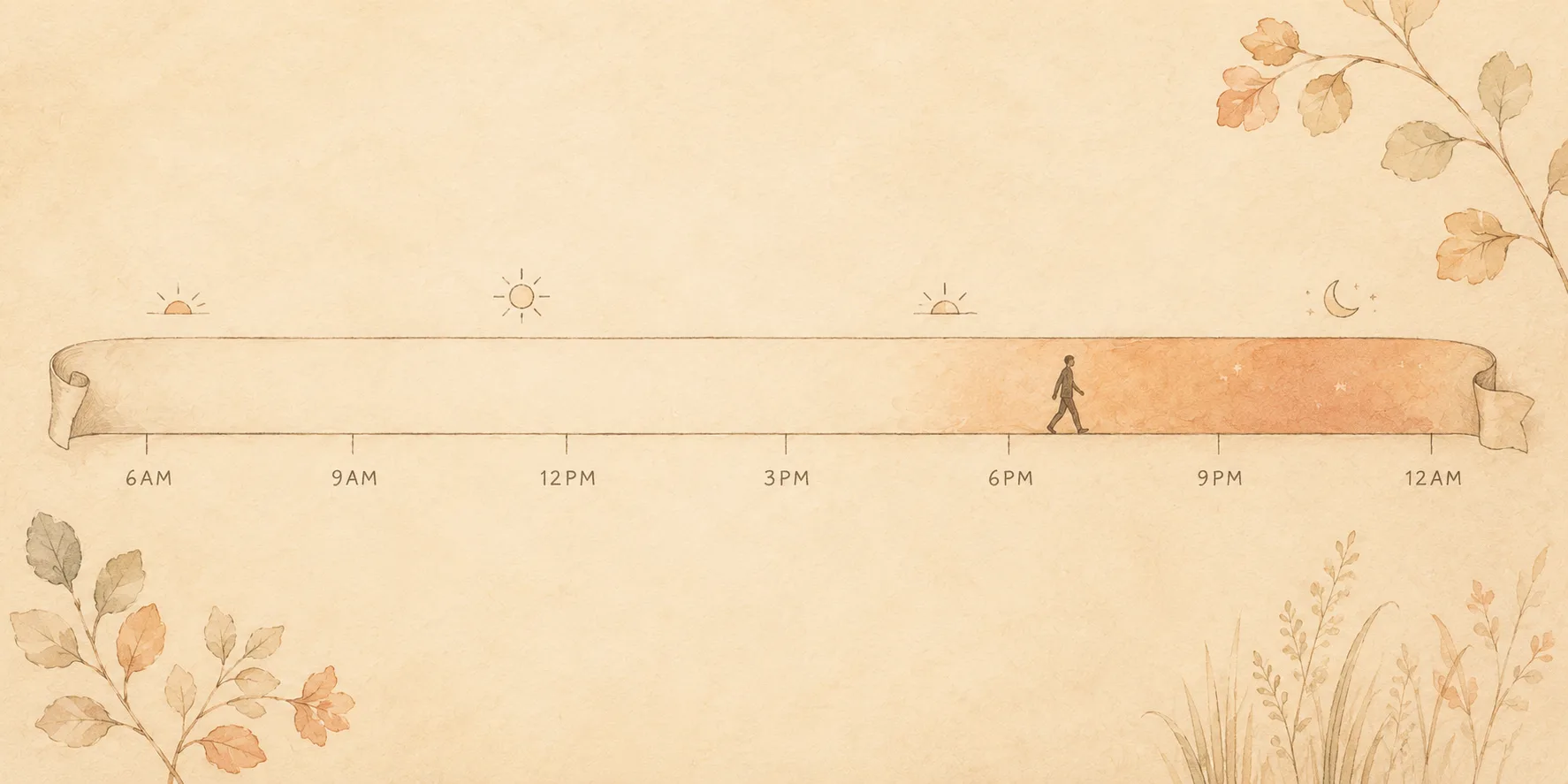
This is the one lever here that's genuinely under your control, and it's the reason a fifteen-minute walk at 8:30pm can outperform an hour at the gym at noon. Evening picking in particular tends to live in a predictable slot.
3. It improves sleep, and sleep changes the next day
Short sleep tends to raise urge intensity and lower the amount of self-control available for resisting them the following day.
4. It lowers the background anxiety load
This is ring one applied to you. Be careful how much weight you put on it, though: the relationship between anxiety and picking is looser than most articles claim, and plenty of people pick most on calm days.
Why it can't stop an episode you're already in
Habit reversal has specific criteria for a competing response. It has to be physically incompatible with the behavior, sustainable for about a minute, inconspicuous enough to use in public, and available in the exact situation where the urge arrives.
Exercise fails the last one badly. You cannot go for a run in a 3:40pm meeting. You cannot do a set of squats in the middle of a lecture, in bed at 11pm, or in the passenger seat of a car. The urge shows up where it shows up, and a competing response is only useful if it can be deployed there, in that chair, within a few seconds.
The automatic episode makes this worse. If you don't notice you've started, no strategy of any kind fires, because there's nothing to interrupt. That's what awareness training exists for, and no amount of cardio substitutes for it.
Exercise changes the odds you walk into the day with. It does nothing about the hand that's already at your face.
When exercise makes picking worse
This part is missing from every article that recommends exercise, and it matters, because the risk isn't during the session. It's in the twenty minutes after.

The post-workout shower. Hot water and steam soften skin, open pores and make everything look more textured and more removable than it did an hour earlier. Wet fingers also get better grip on a hair than dry ones. For a lot of people the shower is already the highest-risk location in the house, and exercise adds one to the day.
Locker rooms and gym mirrors. Gyms are built out of bright overhead lighting, full-length mirrors and unfamiliar angles, which is close to a worst-case setup if visual scanning is what starts your episodes. Bathroom lighting is a well-documented trigger surface. A changing room is the same problem with more mirrors and less privacy.
Sweat and friction produce new targets. Acne mechanica is a real dermatological diagnosis: breakouts caused by repeated friction, pressure, heat and occlusion of the skin. Sports bra straps, helmet chin straps, backpacks, tight kit and sweat left sitting on the skin all produce it, usually along the exact lines where the gear sits. If your picking is target-driven, a training habit can hand you a fresh supply of targets every week.
Body checking. For some people, especially anyone whose picking is tangled up with appearance, a mirrored room full of other bodies raises the appearance load rather than lowering it.
If someone has told you exercise would fix this
Push back on the framing, not on the exercise.
Picking and pulling are not a self-care deficit. There are marathon runners with severe trichotillomania and yoga teachers who pick their faces for an hour at a time. Fitness is not protective, and treating it as though it were turns a neurological and behavioral condition into a personal-discipline story, which is the same story you've probably been telling yourself for years and which has never once made it stop.
If a clinician offers exercise, sleep hygiene and stress reduction instead of habit reversal training, that's under-treatment. Those things are the floor of the house. They aren't the house.
How to use it without overrating it
Put it inside your high-risk window, not at whatever time is most virtuous. Find the window first. A week or two of logging the time of day each episode starts will show you the cluster, and the cluster is where the session belongs.
Test it on your own data rather than on faith. Count episodes for two weeks before you start and two weeks after. If nothing moves, you've learned something real about your own pattern, and you've still bought the sleep and mood benefits, which were worth having anyway.
Build a post-session routine before you need one. Shower with the overhead light off and a lower lamp on if you have one. Get dressed away from the mirror. Rinse sweat off promptly and moisturise rather than inspecting. Set a rule about how long you're allowed to stand in front of the mirror, and leave when it's up.
Don't chase a dose that doesn't exist. The trials in adjacent conditions used roughly 150 minutes of moderate activity a week, which is also the standard public health target. There's no BFRB-specific number, and anyone quoting one is making it up.
Expect a modest, slow effect, or none. The realistic ceiling here is a better baseline, not fewer urges. Judge it on that and you'll probably keep doing it. Judge it on whether it stopped the picking and you'll quit in three weeks.
The before-and-after count is the part that decides whether any of this was worth it, and it's easier when the timestamps aren't down to memory. SkinAware's episode log records when an episode started and how long it ran, so a fortnight either side of a change shows up as a comparison rather than a feeling.
Get support for picking, pulling and biting
SkinAware helps you log episodes, identify patterns, and see real progress over time.
Available on iOS, Android and in your browser.
Frequently asked questions
There's no evidence either way, because nobody has measured it in people with a BFRB. What's better established is that exercise reduces anxiety, depressive symptoms and general distress, which for some people are the conditions that make urges more frequent and harder to resist. Urge intensity itself has never been studied in this population.
Nothing supports one over the other for BFRBs specifically. Yoga has the practical advantage of no sweat, no bright changing room and no mirror, which removes three of the ways exercise can backfire. If your picking is visually triggered, that's a real reason to prefer it, but it's a reason about the environment rather than about the exercise.
No. The one trial that tested this design in a related condition found CBT alone and CBT plus exercise both outperformed exercise alone, and exercise alone did not separate from the control group. Exercise is an adjunct at best.
Most likely a combination of the shower, the mirrors and the skin itself. Hot water softens skin and makes texture more visible, changing rooms are brightly lit and full of mirrors, and friction from kit plus trapped sweat can cause genuine breakouts along strap and seam lines. The session isn't the problem. The half hour after it is.
The exercise trials in adjacent conditions ran twelve weeks. If you're testing this on yourself, give it at least six to eight weeks of consistent activity before drawing conclusions, and compare counted episodes rather than impressions.
The evidence gap is identical for both, so there's no basis for saying one benefits more. The backfire risks differ, though. Pulling isn't usually triggered by the post-shower skin inspection, but wet hair, scalp attention while washing and drying, and a well-lit mirror afterwards create their own version of the same window.
Continue Reading
References
- Singh, B., Olds, T., Curtis, R., et al. (2023). Effectiveness of physical activity interventions for improving depression, anxiety and distress: an overview of systematic reviews. British Journal of Sports Medicine, 57(18), 1203–1209.
- Abrantes, A. M., Brown, R. A., Strong, D. R., et al. (2017). A pilot randomized controlled trial of aerobic exercise as an adjunct to OCD treatment. General Hospital Psychiatry, 49, 51–55.
- Katz, D. E., Rector, N. A., McCabe, R. E., et al. (2023). The effect of aerobic exercise alone and in combination with cognitive behavioural therapy on obsessive compulsive disorder: A randomized control study. Journal of Anxiety Disorders, 98, 102746.
- Yang, J., & Li, R. (2025). Systematic review and randomized controlled trial meta-analysis of the effects of physical activity interventions and their components on repetitive stereotyped behaviors in patients with autism spectrum disorder. Frontiers in Psychology, 16, 1579345.
- Kredlow, M. A., Capozzoli, M. C., Hearon, B. A., Calkins, A. W., & Otto, M. W. (2015). The effects of physical activity on sleep: a meta-analytic review. Journal of Behavioral Medicine, 38(3), 427–449.
- Azrin, N. H., & Nunn, R. G. (1973). Habit-reversal: a method of eliminating nervous habits and tics. Behaviour Research and Therapy, 11(4), 619–628.