
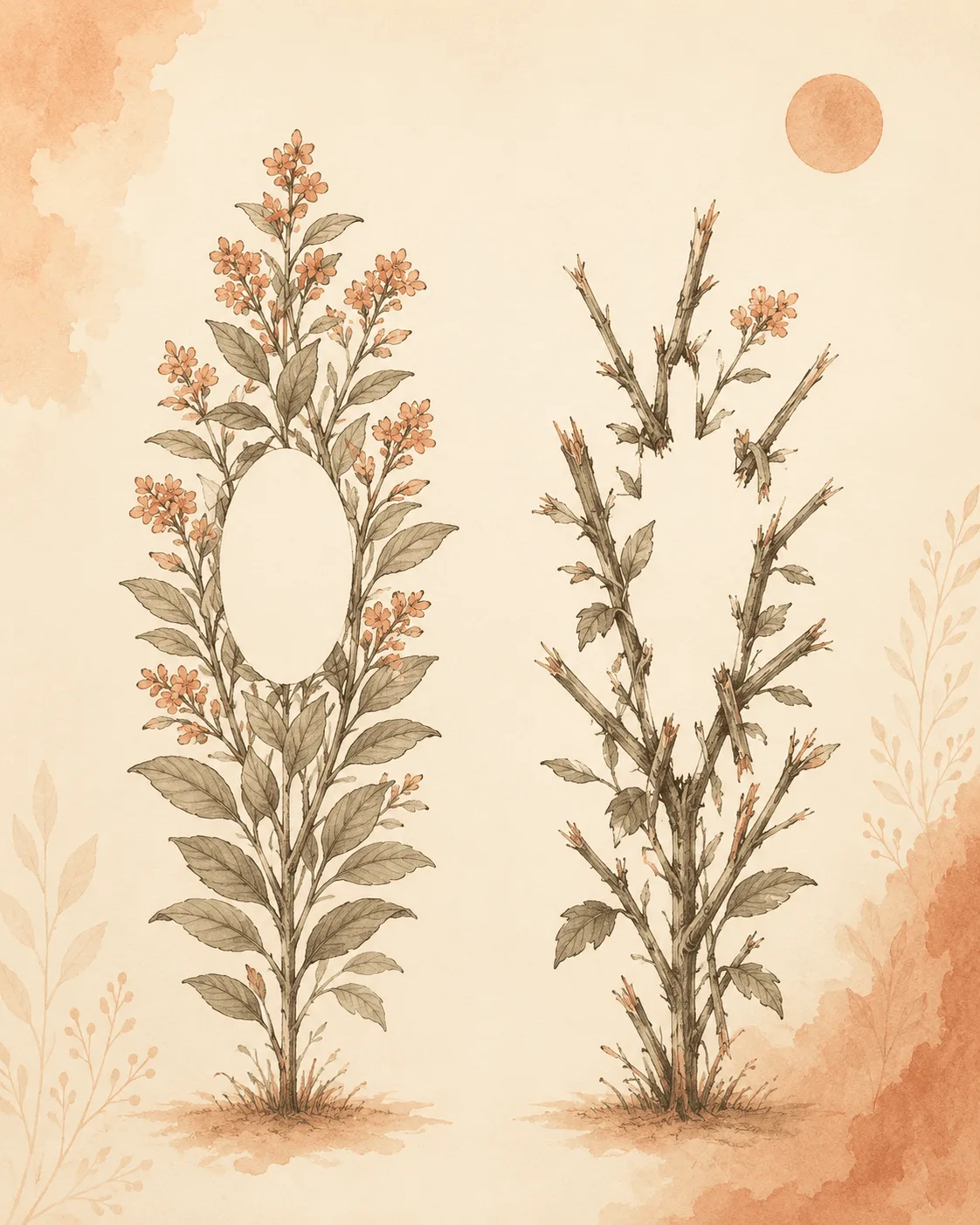
Written using peer-reviewed research including Mani et al. (2023, Indian Journal of Dermatology), Kaczorowska et al. (2021, Acta Dermato-Venereologica), Khunkhet et al. (2017, International Journal of Dermatology), and Villasante Fricke & Miteva (2015, Clinical, Cosmetic and Investigational Dermatology), alongside guidance from the US National Institute of Arthritis and Musculoskeletal and Skin Diseases.
If you've found a patch of missing hair and you're trying to work out whether it's alopecia areata or hair pulling, the useful starting point is this: the signs that separate the two are real and specific, and almost none of them are ones you can judge reliably on your own scalp.
Three things narrow it down a lot. One test, which costs nothing and takes a few weeks, usually settles it. And there's a fourth possibility that most comparison pages skip entirely, which is that both are happening at once.
This matters because the two treatments point in opposite directions. Alopecia areata is an autoimmune condition, and the work is calming an immune attack on the follicle. Trichotillomania is a body-focused repetitive behavior, and the work is changing what the hands do. Treating one as the other wastes months.
What follows is what a dermatologist actually looks at, where the popular comparison tables get it wrong, and what to bring to an appointment. It is not a way to diagnose yourself, and it isn't written as one.
What Separates Them, Side by Side
| What a clinician looks at | Points toward alopecia areata | Points toward hair pulling |
|---|---|---|
| Border of the patch | Round or oval, smooth, clearly defined | Irregular, angular, borders that don't follow a curve |
| Hair inside the patch | Usually completely bare | Hair still present, at many different lengths |
| The skin itself | Smooth, no rash, redness or scarring | Normal skin, sometimes tiny bleeding points at follicles |
| What came before | Sometimes tingling, burning or itching, then the hair falls | An urge or building tension, then relief after pulling |
| Other sites | Eyebrows, eyelashes, beard, anywhere on the body | Most often the easy-to-reach front and side of the scalp, plus brows and lashes |
| Nails | Pitting in some people, more often with extensive loss | No pitting, though nails may be bitten |
| What else runs alongside | Thyroid disease, vitiligo, psoriasis, eczema, hay fever | Anxiety, OCD, ADHD, skin picking, nail biting |
| How it regrows | Often white or gray first, then color returns | Normal color, once pulling stops |
Read that table as a set of leanings, not a scorecard. Real patches rarely tick every box in one column, and the next few sections explain which rows carry the most weight.
The Border Tells You More Than the Size
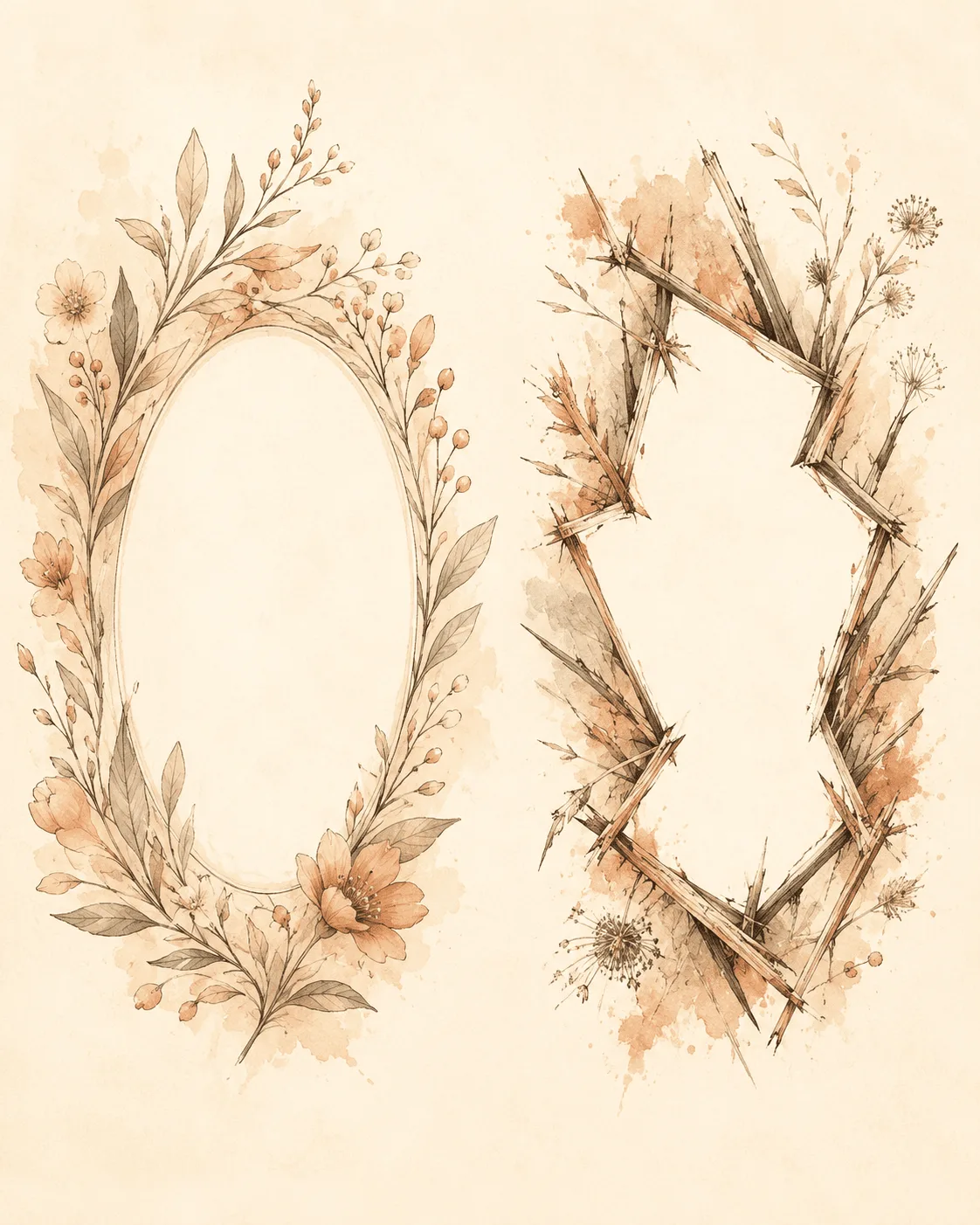
Alopecia areata typically starts as sudden loss of round or oval patches, and the edge is the giveaway. The US National Institute of Arthritis and Musculoskeletal and Skin Diseases describes the bare patch as having no rash, redness or scarring, with a defined shape roughly the size of a coin.
Hair pulling produces something geometrically different. Hands don't make circles. They make patches with angular corners, straight-ish edges, and outlines that follow where the fingers can comfortably reach. One published case describes an eight-year-old's patch as having "an irregular angulated border" with density greatly reduced rather than gone.
The extreme version has a name. When pulling clears the crown but leaves a rim of hair around the edges, clinicians call it the tonsure pattern, or the Friar Tuck sign. Alopecia areata doesn't produce that shape.
Hair Inside the Patch: The Most Useful Single Sign
This is the row that does the heaviest lifting, and also the one most often misread.
In alopecia areata, the affected area tends to go genuinely bare. In hair pulling, it usually doesn't. Hairs get broken at whatever length the fingers gripped them, so the patch keeps a stubble of many different lengths, and the tips are ragged, split or frayed rather than cleanly tapered.
In a 2023 comparative study of 50 people with alopecia areata and 24 with trichotillomania, broken hairs of different lengths appeared in 92% of the pulling group and only 10% of the alopecia areata group. Split ends showed the same split: 67% versus 6%.
This is where it gets misread. Alopecia areata patches also fill with short hairs, because that's what regrowth looks like. The difference is in character, not presence. Regrowth in alopecia areata comes in as fine, soft, upright hairs of fairly uniform length, often clustered, sometimes white. Pulling leaves hairs of scattered lengths with damaged ends. A patch of even, soft new growth is a good sign. A patch of jagged stubble at ten different heights is a different story.
What a Dermatologist Sees Under Magnification
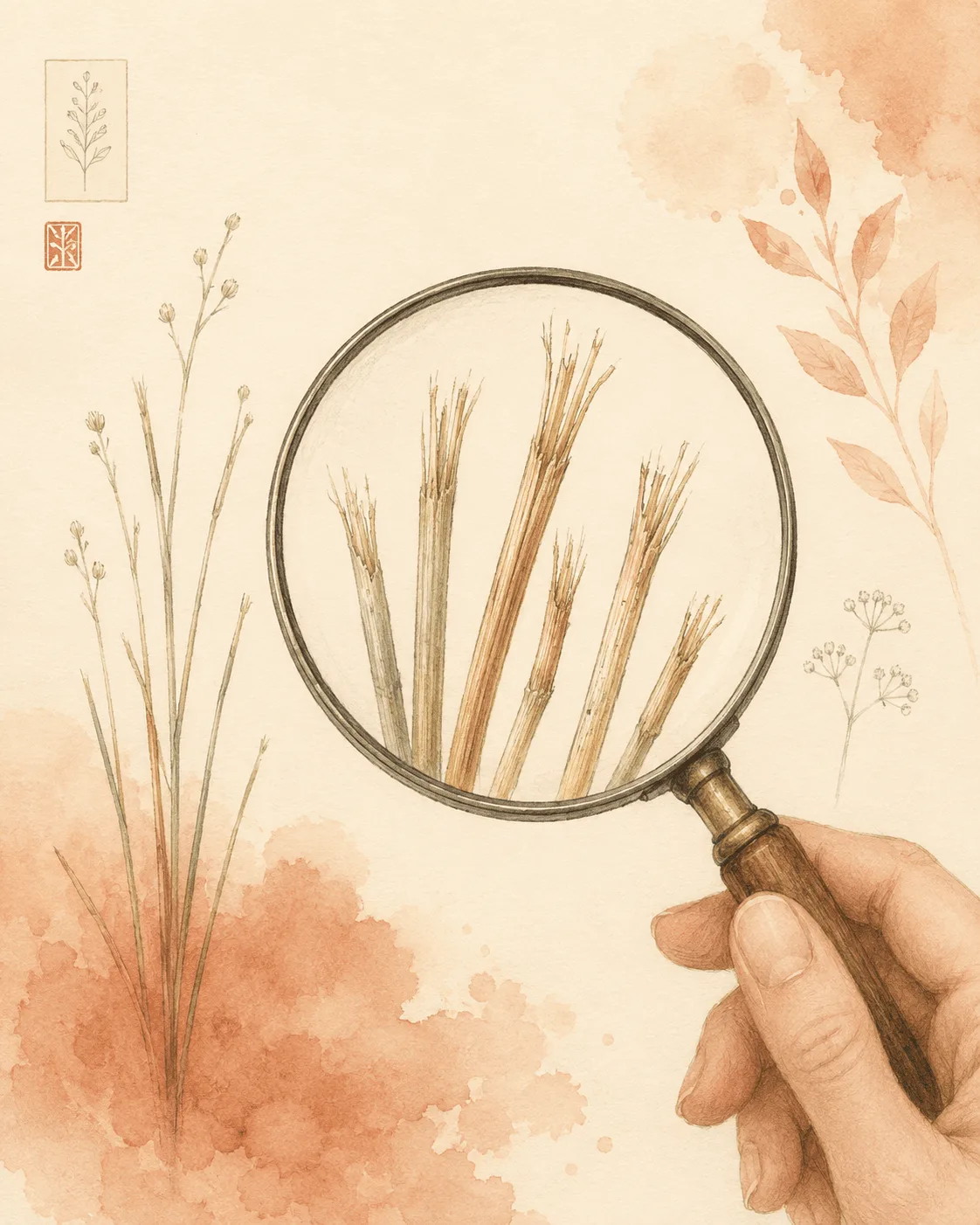
Trichoscopy is essentially a dermatoscope pointed at the scalp, usually at around 20 times magnification. It's non-invasive, takes minutes, and it's the single tool that most reliably separates these two conditions.
Numbers below come from Mani and colleagues (2023), who compared 50 alopecia areata and 24 trichotillomania patients with blinded review by two dermatologists.
| Trichoscopy finding | Hair pulling | Alopecia areata |
|---|---|---|
| Broken hairs of different lengths | 92% | 10% |
| Split ends (trichoptilosis) | 67% | 6% |
| V sign (two hairs broken at one length) | 58% | 8% |
| Flame hairs | 50% | none |
| Coiled or hook hairs | 33% | none |
| Bleeding around follicles | 25% | none |
| Exclamation mark / tapered hairs | 8% | 64% |
| Clustered vellus hairs | 8% | 80% |
| Coudability hairs | none | 48% |
| Yellow dots | 8% | 48% |
| Black dots | 58% | 96% |
A separate systematic review looked at specificity rather than frequency, which measures something different: how confidently a sign, when it is present, points one way. Hook hairs came in at 100%, coiled hairs 99.6%, the V sign 99%, hair powder 97.9%, split ends 97.5%, flame hairs 96.5%.
The Four Overlaps That Cause Most of the Confusion
Most comparison pages online present a clean two-column table and stop. The literature doesn't support the cleanliness, and these four overlaps are where self-diagnosis usually goes wrong.
1. Exclamation mark hairs are not proof of alopecia areata
They're the sign everyone has heard of: short hairs, thinner and paler at the base than at the tip, so they look like an exclamation point stood upside down. They are strongly associated with alopecia areata. They are not exclusive to it. In the 2023 comparison they showed up in 8% of pulling cases, and an earlier study of Asian patients found them in 24%. They've also been documented after chemotherapy, in tinea capitis and in traction alopecia. Dr Jeff Donovan, a dermatologist specializing in hair loss, puts it plainly: exclamation mark hairs "are frequently seen in both alopecia areata and trichotillomania and are therefore not specific."
2. Black dots appear in both
They're broken hair remnants sitting at scalp level. Common in alopecia areata (96%), still common in pulling (58%). In alopecia areata they tend to be uniform and regularly spaced. In pulling they're coarser and scattered.
3. Flame hairs aren't exclusive either
Often described as the signature of pulling, they've been found in every reviewed case of acute chemotherapy and radiotherapy alopecia, and in about a fifth of alopecia areata cases in one large image review.
4. Both are non-scarring, so both can regrow
Regrowth after a few weeks doesn't tell you which one it was.
The takeaway from the researchers themselves is that no single feature decides it. Mani and colleagues concluded that distinguishing the two is possible "if an assemblage of specific features are present." A cluster, not a clue.
When It's Both
This is the possibility the comparison tables leave out, and it isn't rare enough to ignore.
Someone can have alopecia areata and pull hair. Sometimes the two sit in different places on the same head. A published case describes a six-year-old with confirmed alopecia areata on the back of the scalp, plus several separate two-to-three-millimeter patches elsewhere with scratch marks and broken hairs, which turned out to be pulling. The authors named the harder version of the problem directly: it is "quite difficult to evidence TT within plaques of AA."
That harder version happens too. An alopecia areata patch is a smooth, novel, tempting surface, and the distress of losing hair is itself a documented trigger for pulling. Someone can start pulling at the border of a patch they didn't cause.
There is one trichoscopy sign that flags it. Small bleeding points around the follicles, called follicular microhemorrhage, appeared in 25% of pulling cases and in none of the alopecia areata cases in the 2023 study. It only shows up if hair has been pulled recently, but when it appears inside an alopecia areata patch, it suggests a hand has been there.
If you have an alopecia areata diagnosis and you also pull, both need addressing. Steroid injections won't stop the pulling, and habit reversal training won't calm an immune attack.
What Actually Settles It
The hair growth window
The most useful low-tech test isn't a scan or a blood draw. A small area of the patch is shaved and watched over the following weeks. If the hair loss comes from pulling, the shaved area grows back densely and normally, because the hairs are too short to grip. Alopecia areata doesn't respond to shaving that way.
It takes a few weeks, it costs nothing, and it's more decisive than anything you can conclude from a photo.
What a dermatologist will do
Expect some combination of a close scalp exam, trichoscopy, a hair pull test at the patch margin, and often a fungal check to rule out tinea capitis, which mimics both. Blood work is sometimes ordered when alopecia areata is suspected, because it runs alongside thyroid disease, vitiligo and other autoimmune conditions often enough to be worth checking. Biopsy is uncommon and reserved for cases that stay unclear, partly because the histology of pulling and alopecia areata overlap considerably.
The part that's on you
There's one input a dermatologist genuinely cannot get without you: whether you pull.
Doctors know this. The 2023 study's authors wrote that history-taking in trichotillomania "is challenging as it is difficult to build a rapport and the patient is usually hesitant to give a true history." Holding it back is common, and it isn't shameful. It's also the single most common reason people get worked up for an autoimmune condition they don't have, or get told to relax about a behavior that needs real treatment.
If you're not sure whether what you do counts as pulling, the diagnostic picture for trichotillomania covers where ordinary hair-fiddling ends and the disorder begins.
If Pulling Turns Out to Be the Answer
The behavioral treatment with the strongest evidence is habit reversal training, which teaches you to catch the urge earlier and do something incompatible with pulling instead. The step-by-step version of HRT walks through what that looks like in practice, and the broader guide to stopping covers the environmental changes that make it stick.
The first step in every version of this is data. You need to know when you pull, where, and what precedes it, because the answer is almost never "all the time."
Track the pulling before you try to change it
SkinAware logs episodes and urges, shows the pattern over time, and walks you through habit reversal training step by step. Built for hair pulling, skin picking and nail biting.
Frequently Asked Questions
Yes. They can occur in separate places on the same scalp, and pulling can also start inside or at the edge of an alopecia areata patch, sometimes triggered by the distress of the hair loss itself. Published cases document both scenarios. If you suspect it, say so, because the two need separate treatment.
Usually neither. Some people report tingling, burning or itching in the skin right before the hair falls out, but the bare patch itself is typically painless and shows no rash or redness.
Both conditions spare the follicle, so regrowth is possible in both. In alopecia areata the course is unpredictable; around 80% of people regrow hair within the first year, but relapse can happen. With pulling, regrowth generally follows once the pulling stops, unless long-term damage has caused scarring.
Go back and tell them. It's common for pulling to be missed when it wasn't disclosed, and it's equally possible you have both. Ask specifically about trichoscopy of the patch, and mention broken hairs of different lengths and bleeding points around the follicles if you've seen them.
Sometimes, when the presentation is typical. When a single patch is ambiguous, trichoscopy resolves most cases within minutes, and the hair growth window resolves most of the rest.
Stress can trigger or worsen either one, but it isn't a cause on its own. Alopecia areata involves a genetic and immune predisposition; hair pulling involves urge and reward pathways as well as emotional triggers. Stress is a modifier in both, not the origin of either.
Where to Get Help
A dermatologist is the right first stop for any patch of hair loss you can't explain. If you also pull, the International OCD Foundation (iocdf.org) maintains a directory of therapists trained in body-focused repetitive behaviors, which is a much shorter path than searching general therapy listings. The TLC Foundation's BFRB resources now live there too, since bfrb.org is only online through Summer 2026.
Neither condition is something you caused, and neither is something you have to work out alone before you're allowed to ask for help. Bring the patch and the uncertainty. That's enough to start with.
Continue Reading
References
- Mani S, Raut A, Neema S, et al. Trichoscopy in Alopecia Areata and Trichotillomania in Skin of Colour: A Comparative Study. Indian Journal of Dermatology. 2023;68(1):78-84.
- Kaczorowska A, Rudnicka L, Stefanato CM, et al. Diagnostic Accuracy of Trichoscopy in Trichotillomania: A Systematic Review. Acta Dermato-Venereologica. 2021;101(10):adv00565.
- Khunkhet S, Vachiramon V, Suchonwanit P. Trichoscopic clues for diagnosis of alopecia areata and trichotillomania in Asians. International Journal of Dermatology. 2017;56(2):161-165.
- Villasante Fricke AC, Miteva M. Epidemiology and burden of alopecia areata: a systematic review. Clinical, Cosmetic and Investigational Dermatology. 2015;8:397-403.
- Miteva M, Tosti A. Flame hair. Skin Appendage Disorders. 2015;1(2):105-109.
- Ise M, Amagai M, Ohyama M. Follicular microhemorrhage: a unique dermoscopic sign for the detection of coexisting trichotillomania in alopecia areata. Journal of Dermatology. 2014;41(6):518-520.
- National Institute of Arthritis and Musculoskeletal and Skin Diseases. Alopecia Areata. niams.nih.gov.
- Donovan J. How can we differentiate trichotillomania from alopecia areata in children? Donovan Hair Clinic.
Last updated: July 2026