
Group schedules, costs and availability verified July and August 2026 against the TLC Foundation's closing announcement, the International OCD Foundation, BFRB Changemakers, Picking Me Foundation, the OCD Center of Los Angeles, the published pages of each group named, and the published community rules of each subreddit named.
The page most people land on when they search for a BFRB support group is now a 404. The TLC Foundation ran the best-known online groups for skin picking and hair pulling for 35 years, and those groups stopped at the end of 2025. Its website stays up only through the end of Summer 2026. So here is the current map: which rooms are still running, when, what they cost, and which ones will show you photographs you might not want to see.
What Happened to the Group Everyone Used to Recommend
On 22 October 2025, TLC's board wrote that it "can no longer continue operating as a standalone organization" and announced a partnership with the International OCD Foundation. Three dates from that announcement matter if you're looking for a group right now.
TLC's own peer support groups, the adults' group, the teen group, the parents' group, ran "through the end of 2025." They are finished. Its online learning course sunset immediately. And bfrb.org itself stays "visible and accessible through the end of Summer 2026," which is roughly now. Every article, directory and Reddit comment that still tells you to go to bfrb.org for a support group is pointing at a door that's being taken off its hinges.
The IOCDF has picked up the BFRB work. It scheduled lived-experience and clinician programming into its Annual OCD Conference in Seattle for July 2026, and it lists BFRB peer groups in its own directory at iocdf.org/find-help.
It isn't the only organization holding pieces of what TLC used to do. The BFRB Foundation, a 501(c)(3) nonprofit, keeps a community calendar of support groups, workshops and events at bfrbfoundation.org, which makes it a useful second place to check when a group you found somewhere else has gone quiet.
If you're a clinician, or someone with lived experience who wants to sit in on the research and treatment conversation, the IOCDF also runs a BFRB Special Interest Group. It's worth knowing what that is before you sign up. It's a professional forum with monthly guest speakers and clinician-only case consultation, and it describes itself as welcoming "professionals with all levels of experience, people with lived experience, or some combination of both." It is not a peer support group. It's a good place to learn where the field is going. It is not a room where you talk about last night.
Groups That Are Actually Running
The Volunteer Discord That Replaced TLC's Groups
Who it's for: anyone with a BFRB, anywhere in the world. Cost: free. When: always open.
When TLC wound down, a volunteer team built a Discord server to hold the community together. TLC named it directly in its closing FAQ: "A new volunteer-run Discord community has been created to help individuals stay connected and preserve a safe space for peer support." The invite is discord.gg/buaMA28x8k, and the server is called The ME-FRB Collective. It was still live and accepting members when this article was checked in July 2026.
The catch: TLC said plainly that "this community is not affiliated with TLC or the IOCDF." It's volunteers. It's also small, in the low hundreds of members rather than the tens of thousands you'd find on Reddit, which cuts both ways. Fewer strangers, less noise, more chance someone recognises your name. On a quiet night there may be nobody awake in your timezone.
IOCDF BFRB Support Group
Who it's for: anyone with a BFRB, plus family, friends and, in the listing's own words, "interested individuals." Cost: free. When: the 1st and 3rd Sunday of every month, on Zoom.
One of the longer-running listings on the IOCDF directory, covering both hair pulling and skin picking. It's been virtual since 2020. The Zoom links published in the listing don't include passwords; you get those by contacting the group leader first, which is a small barrier that also does useful filtering.
NYC BFRB Support Group
Who it's for: adults 18 and over with a BFRB in the New York area. Cost: free. When: every Tuesday, 7:00 to 8:30pm Eastern. Three weeks a month on Zoom, one meeting a month in person.
Weekly, which almost nothing else in this space is, and it matters more than it sounds: miss one monthly meeting and you haven't seen your group for eight weeks. Miss a Tuesday here and you're back in seven days. It's peer-led, listed in the IOCDF directory, and new members are welcome. You email nyctrichsupport@gmail.com for the Zoom link rather than finding it posted anywhere, the same small filter the Sunday group uses.
BFRB Changemakers
Who it's for: adults 18 and over, hair pulling and skin picking. Cost: free. When: the Global Group meets the first Sunday of the month, 3:30 to 5:00pm Eastern. "Pick, Pull, Bite: Finding the Light," run by Laura Hobson, meets the first Thursday of every month, 8:00 to 9:00pm Eastern. Barbara Lally's long-running group is now part of the same organisation.
The most alive of the nonprofit options right now. Peer-led and volunteer-run, with a stated focus on "a growth mindset, learning BFRB fact from fiction, coping strategies at the moment, and life style changes for lasting recovery." They also run an in-person group in Eugene, Oregon.
The catch: they say it themselves, and it's the healthiest disclaimer in this whole space. These are "volunteer-run peer spaces and are not a substitute for professional medical or mental health treatment."
Picking Me Foundation
Who it's for: skin picking primarily, all BFRBs welcome, 16 and over. Cost: free. When: the 1st and 3rd Tuesday of the month, 6:30 to 8:30pm, on Zoom.
The most structured of the peer options. Led by Lauren McKeaney, sessions work through worksheets drawn from ACT, HRT, CBT and perfectionism work, practise keeping hands busy with fidget objects, build picking logs, and rehearse how to tell partners, colleagues and schools about a BFRB.
Obsessive Skin Pickers Anonymous
Who it's for: compulsive skin picking specifically, rather than all BFRBs. Cost: free, "fully supported by voluntary contributions from its members" in its own words. When: a rotating calendar of telephone and Zoom meetings, published at osparecovery.org.
The twelve-step option. OSPA is built on the AA model, adapted for skin picking: meetings, sponsorship, and what it describes as "one skin picker helping another with an attitude of love and hope." It's also the only option on this list with telephone meetings, which removes the camera problem entirely. Nobody sees your face or your skin.
The catch: the twelve-step frame is a real fork in the road. If the language of steps and sponsorship works for you, this is the most structured peer support there is. If it doesn't, you'll know within one meeting.
DermaMania's Groups on HeyPeers
Who it's for: skin picking, hair pulling, nail biting, cheek biting. Cost: the community meeting is free; the accountability meeting runs about $5 a session. When: the free community meeting is the 1st and 3rd Wednesday of the month, the paid "Growth & Accountability" meeting the 2nd and 4th, both at 4:30pm Pacific, 7:30pm Eastern.
Run by Tanja M., a certified peer support specialist who has been in recovery from skin picking since 2020. The two-tier structure is unusual and sensible: a free open door for connection, and a small-fee room every other week for people who want consistent accountability rather than drop-in support. Meetings run on HeyPeers, a peer-support platform, so you register there instead of getting a bare Zoom link.
Anxiety Specialists of Atlanta's Free BFRB Group
Who it's for: adults 18 and over with any BFRB. It's public, not clients-only. Cost: free. When: the first Wednesday of the month, 1:00 to 2:00pm Eastern, on Zoom.
Facilitated by Dr. Chris Noble, a psychologist at Anxiety Specialists of Atlanta, and the practice is straight about the line this article keeps drawing: "This is not a treatment group, it's a support group." A clinician in the chair for free is rare. The daytime slot is also the only one here that lands at a reasonable evening hour in Europe, since 1pm Eastern is 7pm in most of Western Europe.
AMA Behavioral Therapy's Women-Only Group
Who it's for: women with any BFRB. Cost: the listing doesn't publish one, so ask when you get in touch. When: the second Wednesday of the month, 6:30 to 7:30pm, on Zoom.
The only women-only room on this list. It's moderated by Andrea Alvarez, M.Ed., LPC-S, founder of AMA Behavioral Therapy, an OCD and anxiety practice in Texas, which makes it the second group here with a clinician in the chair. It's a closed group with limited space, so you secure a spot ahead of time rather than dropping in: ssoape@amabehavioraltherapy.com, or (210) 557-9212. The listing doesn't name a timezone; the practice is in Texas, so read those times as Central.
The catch: its public listing sits on bfrb.org, which is on its way out. If this is your group, save the contact details rather than the link.
The Center for Emotional Health's Free BFRB Group
Who it's for: anyone managing hair pulling, skin picking or another BFRB. Cost: free. When: the first Saturday of the month, 10:00am Eastern.
Run by The Center for Emotional Health, the practice founded by Dr. Marla Deibler, co-author of The BFRB Recovery Workbook. That makes it the third room on this list with a clinician in the chair, and the only one with a physical door as well: you can sit in the room at the practice's Cherry Hill, New Jersey office, or join by video. Details are on the practice's support groups page.
The catch: the video option runs on Google Meet and is open to participants in PsyPact states, which covers most of the US but not all of it. If your state isn't one of them, this becomes an in-person-only option.
BFRB Moms Support Group
Who it's for: mothers who have a BFRB themselves. Cost: free. When: the second Thursday of the month, 7:30 to 9:00pm Eastern, on Zoom.
Most rooms in this space are organised around the behaviour. This one is organised around the life it happens in. It's peer-led by Jess, Hilary and Jen, moms with BFRBs themselves, and meetings run the familiar rotation of check-ins, peer support, resources and self-care, with everyone in the room parenting through the same thing. Read the name carefully: it's for mothers who have a BFRB, not for parents of children who do.
The catch: the same one the women-only group has. Its public listing sits on bfrb.org. The group keeps its own page and newsletter signup at bfrb-moms.mailchimpsites.com, so save that and the contact email, bfrbmoms@gmail.com, rather than the directory link.
Imani: Black Young Adults BFRB Support Group
Who it's for: Black young adults, 18 to 35, with any BFRB. Cost: the listing doesn't publish one, so ask when you register. When: the third Wednesday of the month, 7:00 to 8:00pm Eastern, on Zoom.
Like the moms' group, this room is organised around who's in it, not just the behaviour, and it's the only one on this list built for Black members specifically. Imani describes itself as "fostering faith, hope, and community" for Black young adults with BFRBs, and it's facilitated by Saharra Dixon. Registration is required: you sign up through a short Google form and the Zoom link arrives by email, the same small filter several other groups here use.
The catch: the same one the women-only and moms groups have. Its public listing sits on bfrb.org, so save the registration form and the contact email, imanibfrb@gmail.com, rather than the directory link.
Three More Monthly Rooms
The first two look local on paper and aren't. The Massachusetts Area BFRB Support Group, run by Olivia, meets monthly on Zoom, is peer-led with no therapist present, free, and open to anyone with a BFRB regardless of location, with teens welcome with parental approval. Its joining page says something no other group thinks to say: "Feel free to use a fake name in form or email." Contact is oliviabfrb@gmail.com. The Portland BFRB Support Group meets virtually once a month with occasional in-person meetups in Portland, takes anyone 18 and over regardless of geography, and sends dates by email: pdxbfrb@gmail.com. The Buckeye State BFRBs group is the reverse: it really is Ohio-only. What it offers instead is an explicit teen policy, taking Ohioans from age 13, with loved ones welcome too. Peer-led, free, and virtual on the second Sunday of each month; the contact is buckeyestatebfrbs@gmail.com.
Outside the US
BFRB UK & Ireland has run peer-led support since 2015 and covers hair pulling, skin picking and nail biting: online and in-person groups with dates on the calendar at bfrbukireland.com, plus a conference, BFRB Con, in Oxford this October. In German, Skin Picking und Trichotillomanie e.V. coordinates 17 in-person self-help groups across German-speaking regions plus an online group, as of 2026, at bfrbs.de. In Spanish, GAM CRCC-España runs a free monthly online group for adults, the first Sunday of the month, 11:00 to 12:30 Central European Time; CRCC is the Spanish term for these behaviors, and the contact is crcc.es.gam@gmail.com.
What Isn't Peer Support, Even Though It Ranks Like It
The OCD Center of Los Angeles runs low-fee CBT groups for skin picking and hair pulling, and they show up high on this search. They're therapy, not peer support: adults 18 and over, an assessment before you're admitted, and open only to California residents. Genuinely good if you live there. A waste of an afternoon if you don't. For paid and sliding-scale options that aren't geographically locked, the free and low-cost therapy ladder covers what's reachable from where you are.
Reddit, Facebook, Discord: The Rooms That Never Close
Scheduled groups have one structural problem. They meet on a Sunday afternoon, and picking mostly happens alone and late, in a bathroom. The always-on communities are the only ones open when you actually need them, and they're the ones with no facilitator in the room.
r/CompulsiveSkinPicking is the larger skin-picking community and it's honest about what it is. Its sidebar reads: "All posts are allowed here, including potentially triggering content. For a trigger friendly, text post only version of this community, please visit /r/Dermatillomania."
r/Dermatillomania is the text-only one.
r/trichotillomania is where hair pulling lives, described by its own moderators as a place "to share experiences or give helpful advice." Expect regrowth photos and wig questions alongside the text.
r/calmhands takes a different angle. It's aimed at nail biting and finger picking, and it's built around recovery rather than commiseration. Its rules ban posts that are "negative that don't directly relate to getting better," and it asks members to label posts with "trigger warning" or "picture trigger warning." That second convention is unusual and it works.
The catch across all of Reddit: no professional is reading these threads. Medication advice gets traded freely and confidently. Someone will describe a technique in enough detail that you'll want to try it. And the vote system quietly rewards the most dramatic post on the page, which on a bad day is a photograph.
The Facebook groups are older, slower and more populated by people who have been at this for decades, which is worth something. Skin Picking Support, run by the community around Angela Hartlin, holds monthly topic-based meetings alongside its group. Dermatillomania Awareness is described by that same site as the largest Facebook group for skin pickers. There's a separate Dermatillomania (Skin-Picking) Support Group, and a closed group for parents of children with a BFRB.
The catch: Facebook attaches your real name to everything you write. Groups can be set to private, but "private" on Facebook has meant several different things over the years, and a group's privacy setting can change under you. If you've never told anyone in your life that you pick, this is a strange place to say it first. A few of these listings also date from 2020 and 2021 and may have gone quiet since, so check the last post date before you invest anything in one.
The Axis That Actually Matters
Forget the platform for a moment. Every one of these spaces sits somewhere on a single line, and where it sits predicts almost everything about how it'll feel.
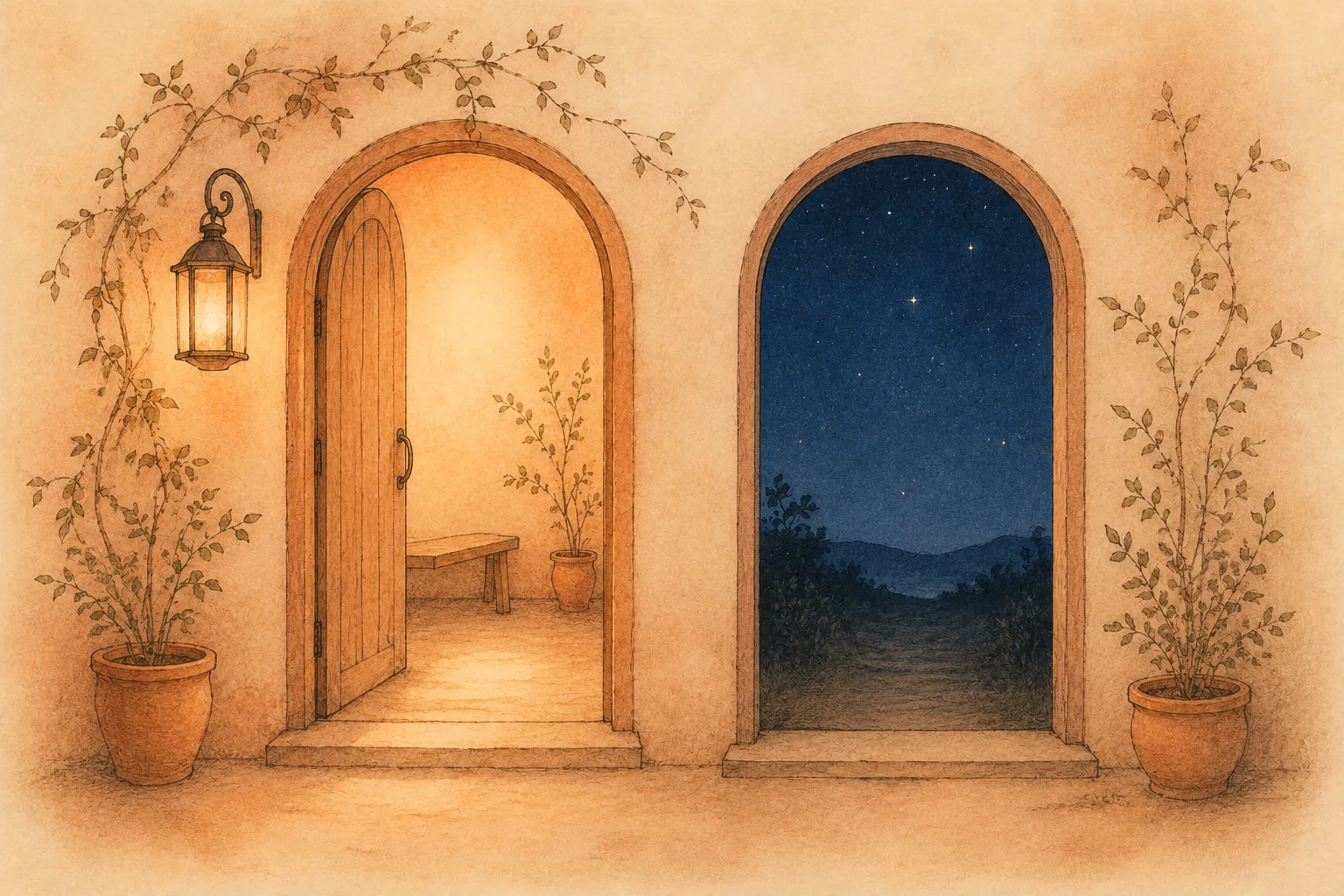
Facilitated and scheduled groups have someone whose job it is to steer the room. They meet fortnightly or monthly, so they're useless at 2am. They tend to move toward coping and forward motion, because a facilitator will redirect a spiral. You have to show your face, or at least your voice, which is a real cost for a condition built on hiding.
Open and unmoderated spaces are there at 2am, they're anonymous, and there's always someone posting. Nobody redirects anything. The conversation goes wherever the loudest current thread goes, and on a bad week that's a comparison spiral or a thread full of close-ups.
Most people who do well use one of each. A scheduled group for structure, and one always-on text-based space for the nights.
Be Honest About the Pictures
Some BFRB spaces contain a lot of graphic imagery: close-up wounds, before-and-after shots, extraction photos, hair collected on a tile floor. People post them for reasonable reasons, to prove healing, to ask if something looks infected, to show they're not exaggerating. The intention is fine and the effect on you may not be.
Seeing picking or pulling can prompt the urge directly, the way seeing someone yawn works. It also does something subtler. It turns damage into a shared currency, and when photographs get the most attention in a room, the room slowly reorganises around them.
The wider platform problem is bigger than any support group. Extraction videos, pimple-popping accounts, satisfying-removal content and even lash-extension removal clips sit in the "satisfying" corner of TikTok and Instagram, and the recommendation systems on both are extremely good at noticing that you paused. Join a BFRB group on a platform and you have told the algorithm exactly what you're interested in. The feed will oblige. This is the mechanism by which a person can join a support community and pick more.
Reading through a thread feels connecting while you're in it. The real question is whether your hands moved. If you're not sure which spaces are costing you, mapping your own triggers for a week will usually show you.
Choosing One, and Leaving One
Pick one scheduled group and one always-on space. Not five. A tab full of communities you lurk in is not support.
Give a scheduled group three sessions before you decide. The first one is almost always uncomfortable, and most people who leave after a single meeting leave because of the awkwardness rather than the fit.
Leave a space when any of these is true:
- You feel measurably worse after most visits, not just some.
- You've started comparing severity, either to reassure yourself or to disqualify yourself from help.
- Threads are trading technique, tools or "what worked to get it all out" rather than how to stop.
- Someone is offering medication advice with confidence and no credentials, and it's landing with you.
Leaving quietly is completely fine. Nobody in a support group is owed an exit explanation.
Where Peer Support Stops
Every organisation listed above says a version of the same thing about itself, and they're right to. Peer support isn't treatment. It won't teach you a competing response for the moment your hand goes up, and it won't build a stimulus-control plan for your bathroom. That's what habit reversal training does, and it's a different job.
What peer support does is remove the isolation, which for many people is the thing that made the behaviour unmanageable in the first place. That's not a small job.
If you're not in treatment yet, the practical order is usually: get into a room with other people this month, because it's free and immediate, and work on access to a clinician in parallel, because that queue is long.
SkinAware has a community feed inside the app, and it's built around the problem this article keeps returning to. It's text-only, so there are no photographs to walk into. You post under an alias rather than your name. Anyone can be reported or blocked, and heavier posts sit behind a tap so nobody gets ambushed by one. You can also add accountability friends and message them directly. It won't replace a facilitated group, and it isn't meant to. It's the always-on half of the pair, without the image feed.
Get support for picking, pulling and biting
SkinAware helps you log episodes, identify patterns, and see real progress over time.
Available on iOS, Android and in your browser.
Frequently Asked Questions
Almost all of the peer-led ones listed here are: BFRB Changemakers, the IOCDF-listed BFRB Support Group, the NYC group, Picking Me Foundation's group, OSPA, the BFRB Moms group, the Atlanta, Massachusetts, Portland and Buckeye State groups, the Center for Emotional Health's Saturday group, and The ME-FRB Collective Discord. DermaMania's community meeting is free, with a roughly $5 fee for its accountability tier. Therapy groups are a different thing and are usually paid, and some, like the OCD Center of Los Angeles groups, are restricted by state or country.
TLC wound down as a standalone organisation after 35 years and partnered with the International OCD Foundation. Its peer support groups ran through the end of 2025 and bfrb.org stays accessible only through the end of Summer 2026. BFRB peer group listings have moved to the IOCDF's directory at iocdf.org/find-help.
Yes. When TLC closed, a volunteer team created one specifically to keep the community connected, and TLC published the invite in its own closing FAQ: discord.gg/buaMA28x8k, a server called The ME-FRB Collective. It isn't affiliated with TLC or the IOCDF.
r/Dermatillomania exists precisely as the text-only version of r/CompulsiveSkinPicking. r/calmhands requires picture trigger warnings. Scheduled video groups don't circulate images at all. Facebook groups and the larger subreddits do.
Yes. None of the peer groups listed here ask for a diagnosis, and most explicitly welcome family members and people who are still working out whether what they do has a name.
The Discord and the subreddits have no geography. Most US Zoom groups meet in the Eastern-time evening, which lands late in Europe and awkwardly in Australia, but nobody is turned away for a timezone. Dedicated non-US options exist too: BFRB UK & Ireland runs online and in-person groups, Skin Picking und Trichotillomanie e.V. coordinates 17 German-language groups plus an online group, and GAM CRCC-España holds a monthly Spanish-language meeting. The IOCDF directory lists more internationally.
No, and every organisation running one says so directly. They sit alongside treatment, or ahead of it while you're waiting.