
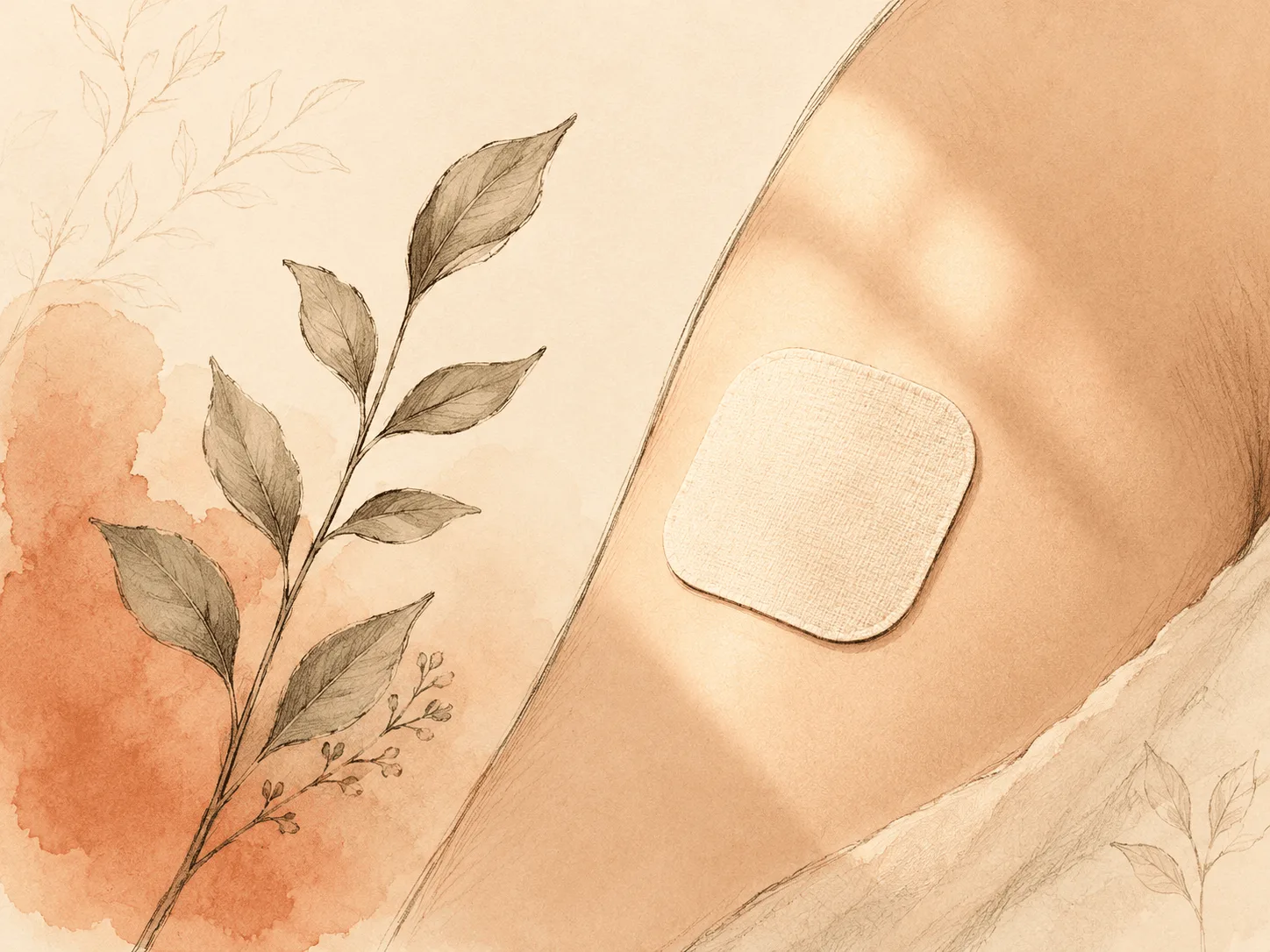
Written using wound-healing research including Winter (Nature, 1962), Hutchinson and McGuckin's review of infection under occlusive dressings (American Journal of Infection Control, 1990), a clinical review of moist wound healing in Dermatologic Surgery, and American Academy of Dermatology guidance on minor wound care.
Keep the wound moist and keep it covered. That's the whole intervention, and it's the opposite of what most of us were taught.
A wound left open to air dries out and forms a scab. A wound kept damp under petroleum jelly or a hydrocolloid patch doesn't form one, closes faster, and scars less. This isn't a wellness opinion. It's been the dermatological standard for decades, and it's why surgeons cover incisions instead of letting them crust over.
For someone with dermatillomania there's a second reason that matters more than the first, and almost nothing written on this subject says it out loud. A scab isn't a neutral bit of biology sitting there healing. It's a raised, textured, increasingly itchy object attached to your skin, and around day four it becomes the most pickable thing on your body. Preventing it from forming isn't really about healing speed. It's about not manufacturing your own next episode.
Key Takeaways
- Moist, covered wounds close faster than wounds under a dry scab, and have lower infection rates, not higher.
- A scab peaks in pickability around days four to six, as it dries, contracts and starts to itch. That's the window to plan for.
- Plain petroleum jelly plus a cover does the job. Antibiotic ointments add a real allergy risk with no benefit for a small clean wound.
- Hydrogen peroxide and rubbing alcohol kill the cells that close the wound. They belong on surfaces, not skin.
- Redness, warmth and clear-yellow weeping are normal in a fresh wound. What separates infection from healing is the direction things move over 48 hours.
Why moist beats scabbing
The finding is older than most people assume. In 1962, George Winter published a two-page paper in Nature on superficial wounds in young pigs, half covered with a polyurethane film and half left open to air, each animal acting as its own control.
So the recommendation doesn't rest on Winter. It stuck because sixty years of clinical work on occlusive dressings kept pointing the same way.
The mechanism is unglamorous. Closing a wound means keratinocytes crawling across the wound bed from the intact edges until they meet in the middle, and those cells move through fluid. A dry, hard scab sits directly in their path, so they have to burrow underneath it through the tissue below, which is a slower and longer route. Take the scab out of the equation and they travel straight across the surface.
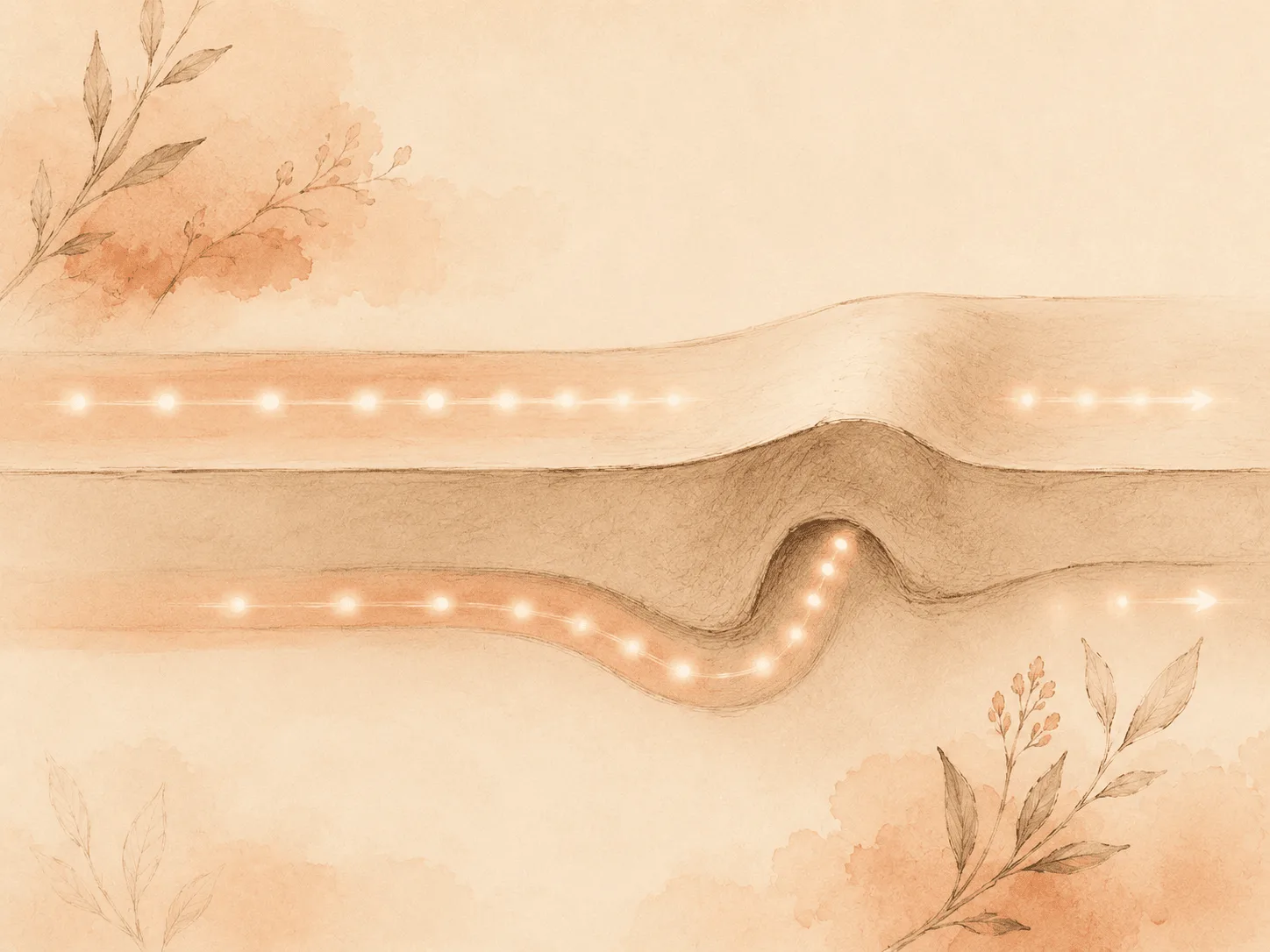
The infection question is the one that surprises people, because the intuition runs the other way. Surely sealing a wound under a patch traps bacteria against it. In practice it doesn't work out that way.
The covered wound heals faster, scars less, hurts less because exposed nerve endings stay covered, and gets infected less often. There isn't a trade-off to weigh here.
The part that's specific to picking
Everything above is true for anyone with a graze. What follows is the part written for you.
A scab has a predictable life cycle, and it maps almost exactly onto a relapse. It forms within hours as blood clots and dries. For the first couple of days it's flat, soft and fairly boring. Then it dries further, contracts, and starts to lift at the edges. Histamine released during healing makes the area itch. By day four to six you have a raised, rough, itching, slightly-lifted object on your skin with a defined edge that a fingernail fits under perfectly.
Prevent the scab and there's nothing to catch a nail on, nothing lifting at the edge, and much less itch. The wound underneath still heals. It just stops advertising itself.
There's a second effect worth naming. A patch or a smear of ointment gives you a tactile warning. Your hand arrives at the area, meets something that isn't skin, and there's a half-second where awareness catches up with the movement. Dermatologists who treat picking wounds flag this as a benefit of hydrocolloid patches rather than an accident of them.
The protocol
Nothing here needs a prescription, and the whole kit costs less than a takeaway.
Right now, if it's open or bleeding. Wash your hands. Rinse the area with cool running water or plain saline. Mild soap around it, not scrubbed into it. If it's bleeding, hold clean gauze or tissue on it with steady pressure for five minutes without lifting to check, because lifting to check restarts the clock. Pat dry rather than rubbing.
Then seal it. A thin layer of plain petroleum jelly, or a hydrocolloid patch if the wound is small and roughly round. On broken skin, ointment goes on the wound, not rubbed into it.
Cover it. A patch, a plaster, or a non-stick dressing. The cover does two jobs: it holds the moisture in, and it puts a physical layer between the wound and your hand.
Days one to three. Change the dressing daily, or sooner if it's soaked or dirty. Re-apply ointment each time. This is the low-risk stretch, and it's also when people quietly stop bothering, because the wound looks fine.
Days four to six. Don't stop bothering. This is the window, and it's the whole reason for the protocol. Keep it covered even if it looks closed underneath. Keep nails filed flat rather than clipped, since clippers leave a corner and a corner is a tool. If the area itches, press a cool damp cloth against it instead of scratching.
After it closes. Once the skin is intact the wound phase is over, and a different set of rules takes over. Sunscreen daily from this point. Actives like retinoids or acids only ever touch skin that has finished closing.
Hydrocolloid patches, used properly
They're the most useful single item in this category, and most people get at least one thing wrong with them.
A hydrocolloid patch is a gel-forming dressing that absorbs wound fluid and holds it against the wound as a moist gel. That's why it turns white and puffy. The white is absorbed fluid, not pus, and it means the patch is doing its job.
Use them on wounds that are open or weeping. They need fluid to gel. On dry intact skin or an established hard scab they do very little.
Leave them on. Twelve to twenty-four hours is normal, or until the white area reaches the edges. Changing it every two hours because you want to look is a picking behavior wearing a medical hat.
Apply to dry skin around the wound. Pat the surrounding area dry first or the adhesive won't seal, and a patch that lifts at one corner is just another edge for a fingernail.
Patches don't suit every wound. Anything large, deep, or on an awkward contour does better with ointment plus a non-stick dressing, and anything on the scalp is a lost cause for adhesives. For facial wounds specifically, the surrounding routine matters as much as the dressing, and mirrors, lighting and concealer are usually doing more work than they get credit for.
What not to put on it
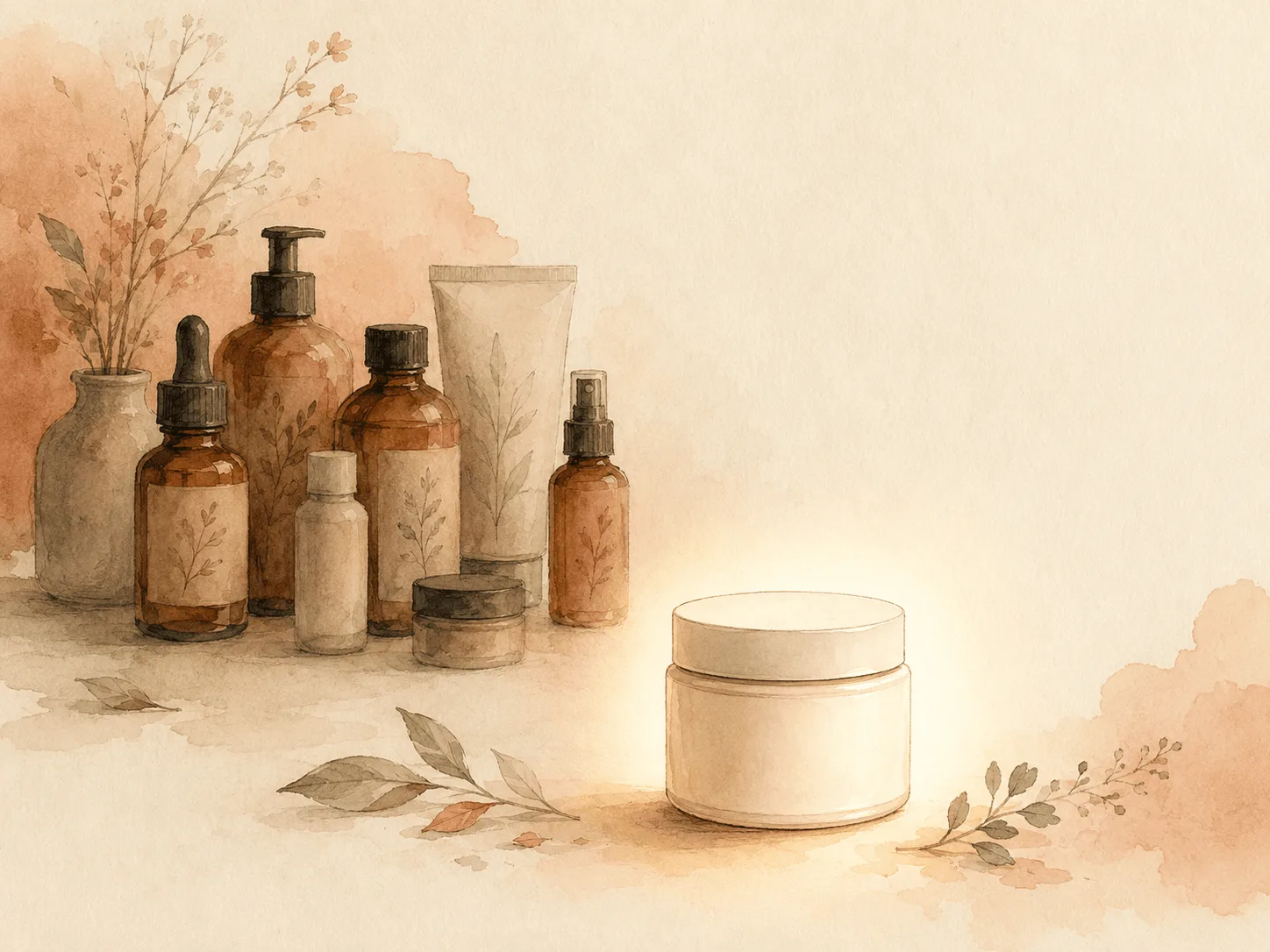
Hydrogen peroxide and rubbing alcohol. Both are cytotoxic. They kill bacteria by killing cells indiscriminately, including the fibroblasts and keratinocytes doing the repair work, so they buy a moment of sterility at the cost of a slower close and more inflammation. Plain water or saline cleans a fresh wound perfectly well.
Triple-antibiotic ointment, by default. Neosporin and its relatives contain neomycin, one of the more common contact allergens in over-the-counter skincare. An allergic reaction produces redness, swelling and itching around the wound, which looks a lot like the infection you were trying to prevent, and now the area itches too. The American Academy of Dermatology's guidance for minor wounds is plain petroleum jelly, on the reasoning that a wound cleaned daily doesn't need an antibacterial and the allergy risk isn't worth taking. A topical antibiotic prescribed by a clinician for a specific reason is a different matter. Follow that.
Anything active. Salicylic acid, benzoyl peroxide, glycolic acid, retinoids, alcohol-based toners, exfoliating anything. These are formulated for intact skin. On an open wound they cause the inflammation that drives pigmentation, and they sting enough to make the area impossible to ignore.
Tea tree oil and other essential oils. Undiluted essential oils on broken skin are a reliable route to contact dermatitis, with no wound-healing benefit worth the risk.
Air. Letting it breathe is the folk instruction that produces the scab. Skin doesn't draw oxygen from the atmosphere to repair itself; it gets it from the blood supply underneath.
Makeup, on anything open. Once the skin has closed, cover it however you like. On an open wound, concealer adds occlusion without moisture and needs the area touched repeatedly, both to apply it and to check it.
Is it infected, or is it healing?
Almost every symptom checklist online will convince you that you have an infection, because a normal healing wound is red, warm, tender, mildly swollen, and weeps clear or straw-colored fluid. Those aren't warning signs. That's inflammation, which is phase one of healing.
What distinguishes infection isn't any single symptom. It's the direction things move over roughly 48 hours.
| Healing | Infected | |
|---|---|---|
| Redness | Contracting toward the wound | Spreading outward past the original edges |
| Pain | Fading day on day | Increasing after day two or three |
| Swelling | Settling | Growing |
| Drainage | Thinning, slowing, clear or straw-colored | Thick, opaque, yellow-green, or foul-smelling |
A small infection is usually treated with a course of oral antibiotics and is entirely routine. Cellulitis, the spreading skin infection that shows up as hot, painful, swollen skin, generally responds to about a week of antibiotics, though symptoms can worsen during the first 48 hours of treatment before they improve. A rapid heartbeat, confusion, dizziness or feeling severely unwell alongside an infected wound needs emergency care rather than an appointment.
Two more things worth saying plainly. Doctors see picked skin constantly and it does not shock them. And infection is one of the main mechanisms that turns a superficial wound into permanent scarring, which makes getting it treated early the cheapest scar prevention available.
The variable that beats all of it
Every item above assumes the wound gets one attempt at healing.
The arithmetic is worth confronting. A superficial picked wound closes in roughly seven to ten days if left to it. Reopen it on day five and you're not at day five of a ten-day process, you're back at day zero, with a slightly deeper wound and slightly more collagen loss than the first time. Repeated wounding of the same site is precisely how indented scarring forms. It's also why some wounds feel like they've been there for months. In a sense they have: the same patch of skin has been restarting since March.
Which means the highest-value intervention in this whole article isn't a product. Habit reversal training is the best-supported behavioral approach for body-focused repetitive behaviors, and it works on the mechanics: noticing the urge earlier, and having something specific to do with your hands when it lands. The practical version is more concrete than most people expect. And if you're reading this mid-urge rather than calmly, there's a version written for that exact moment.
One small thing helps more than it sounds like it should: track individual wounds rather than picking in general. Knowing that the spot on your jaw is on day eleven and has been reopened twice tells you something that a vague sense of "my skin is bad" never will. It also makes healing visible on the days when the mirror insists nothing is improving.
Track each wound, not just the picking
SkinAware lets you name a wound, mark it active or healed, and watch the healing-days count climb. Link episodes and private photos to a specific spot so you can see whether it's closing or restarting.
Frequently asked questions
A superficial one, days to about two weeks depending on size, location, and whether it gets reopened. Faces heal faster than legs because of blood supply. If a wound hasn't visibly started closing after a week, or keeps reopening, that's worth showing to a clinician.
Keep it moist. A scab slows the cells that close the wound and raises scarring risk, and for anyone with a picking disorder it also creates a physical trigger that sits on your skin for a week.
No. Cover it with petroleum jelly and a dressing. It'll soften and lift on its own, and it will stay much less itchy in the meantime. Don't lift it deliberately, since the tissue underneath may not be finished.
It doesn't accelerate healing chemically. It creates the conditions in which healing runs at its natural speed instead of a slowed one, and prevents the scab that would slow it down. That's the entire mechanism, and it's enough.
That's serous fluid, and it's normal in the first days. It carries the cells doing the repair work. Thick, opaque, yellow-green or foul-smelling drainage is a different thing and needs medical attention.
Not while it's open. Once the skin has closed you can cover it as you like. Many hydrocolloid patches are thin enough to wear foundation over, which solves the appearance problem without the wound problem.
For a small clean wound, usually not. Petroleum jelly plus daily cleaning is the standard dermatological recommendation, and it avoids the neomycin contact allergy that catches a meaningful number of people. Antibiotics prescribed for a specific reason are a different matter.
Superficial ones frequently don't. Most of what people count as scarring is flat discoloration that fades on its own. The two things that decide the outcome are whether the wound gets infected and how many times it gets reopened, and both of those are more in your hands than the choice of cream.