

It's 1 a.m. and you're standing in front of the bathroom mirror again. The voice in your head is the one that said "just one bump" forty minutes ago, and your face is the one that's now red and raw. You've tried to stop. You've tried for years. You've promised yourself, googled tactics, bought the gloves, downloaded the apps, deleted the apps, tried again.
If that's familiar, the first thing worth saying is that this isn't a willpower problem. It isn't a hygiene problem. It isn't proof that you're broken or weak or weirdly self-destructive. What you're dealing with is a recognized neurological pattern called dermatillomania, also known as skin picking disorder or excoriation disorder, and roughly 1 in 29 adults has it (Farhat et al., 2023). It became a formal DSM-5 diagnosis in 2013. It responds to specific techniques most people never get taught.
This guide is the long version of the answer to "how do I stop." We'll go through what's actually happening in your brain when you pick, why "just stop" advice fails, and the four-step recovery framework that has the strongest evidence behind it. We'll be specific. We'll cite sources. And we'll be honest about the parts that are hard.
Key takeaways
- Skin picking disorder is a recognized neurological condition, not a bad habit or a moral failing. It affects around 3.5% of adults and is more common in women (Farhat et al., 2023).
- "Just stop" doesn't work because picking activates the same dopamine reward pathways as other compulsive behaviors. You're trying to override a feedback loop that's literally giving you a chemical hit.
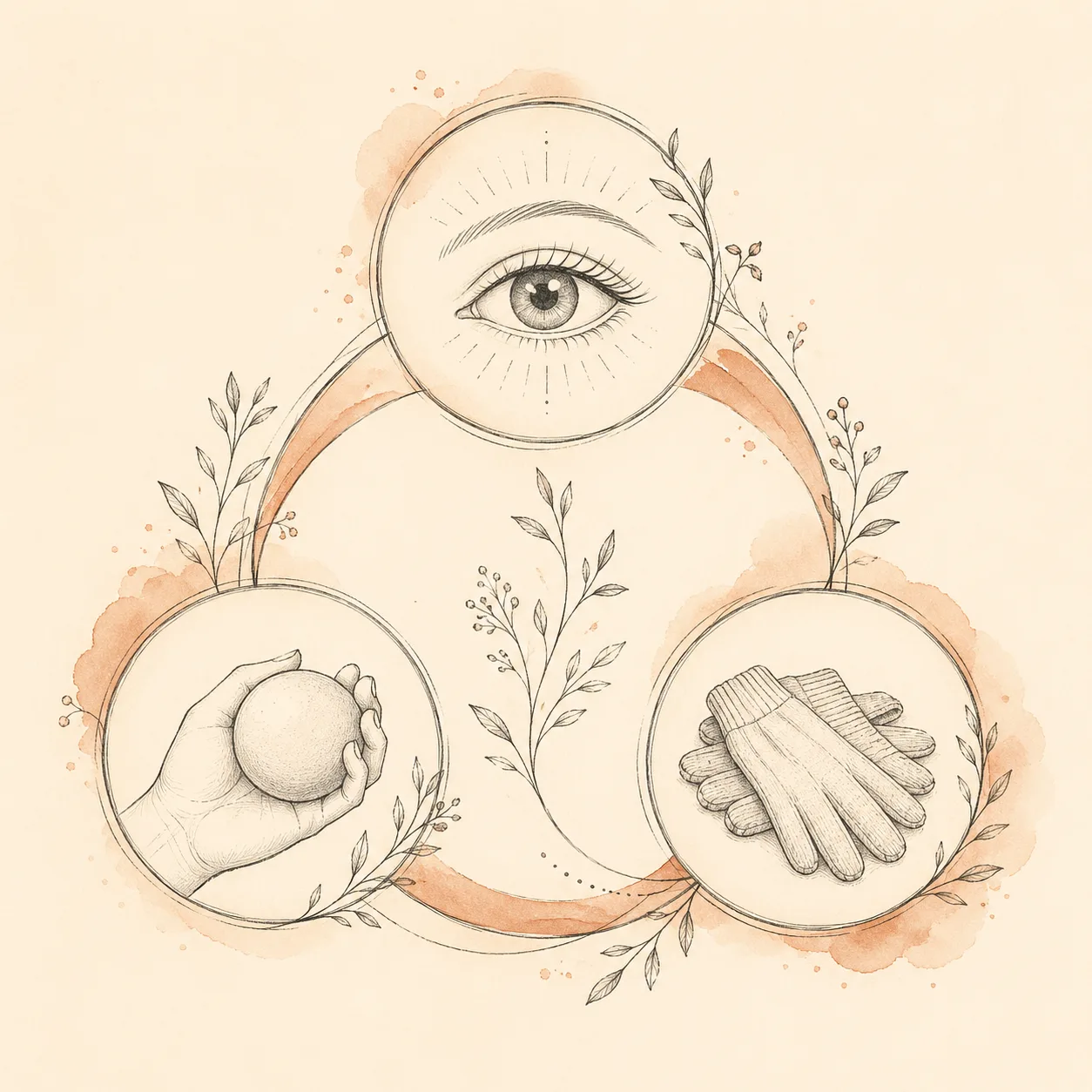
- The gold-standard treatment is Habit Reversal Training (HRT). It rests on three pillars: awareness training, stimulus control, and competing responses. Each one is a teachable skill.
- Specific tactics matter more than general resolve. Hydrocolloid patches at night, a smooth stone in your pocket, mirror-blocking, and 90-second urge surfing are concrete tools that change behavior. Vague intentions don't.
- Setbacks are part of recovery. They're data, not failure. The question isn't whether you'll slip; it's how quickly you get back to your tools when you do.
- For some people, NAC supplementation, SSRIs, or working with a therapist trained in BFRBs adds meaningful support. None of these are required, but they can shorten the road.
Why "just stop" doesn't work
Picking isn't a failure of willpower. It's a closed feedback loop that your brain has, over months or years, learned to find rewarding.
Here's what happens, roughly. You notice a bump, a scab, an uneven patch, or sometimes nothing at all. A small wave of tension or focus rises. You pick. The pick releases a tiny pulse of dopamine, the neurotransmitter your brain uses to mark "this is worth doing again." For a few seconds you feel relief, satisfaction, or a strange calm. Then come the consequences: redness, regret, shame, sometimes scarring. You promise yourself never again. The cycle resets.
The problem with "just stop" is that it treats picking as a single decision, when it's actually thousands of micro-decisions, most of them made before your conscious mind has caught up. The picking hand often moves before you've registered the urge. By the time the part of you that wants to stop shows up, the part that does the picking has already started.
This is why willpower alone keeps failing. You're not lazy. You're trying to outrun a circuit that's faster than you are.
What does work is interrupting the loop at points where awareness has time to catch up. That's the entire premise of Habit Reversal Training, which we'll get into below. First, a quick frame that helps a lot of people recognize their own pattern.
The two types of picking
Most people who pick do both of these, but usually one is dominant.
Automatic picking. You're watching TV, reading, scrolling, in a meeting, driving. Your hand drifts up. You're not thinking about your skin. You only notice when blood is involved or when your partner says something. This is what researchers call habit-mode picking, and it's run almost entirely by procedural memory. Awareness training is the most important tool here.
Focused picking. You're in the bathroom mirror, in good light, with intent. There's tension before, a kind of trance during, and shame after. The picking is doing emotional work: regulating anxiety, fixing perceived flaws, providing relief. This kind responds especially well to stimulus control (making it harder to start) and to addressing what's underneath (anxiety, perfectionism, ADHD-related dysregulation, sensory needs).
If you can identify which mode is dominant for you, the tactics that follow will land better. Most people pick automatically during the day and focused-mode at night, in front of a mirror. If that's you, you'll need a different intervention for each.
If you want a deeper foundation on what dermatillomania actually is, this overview covers it.Step 1: Build awareness
This is the hardest step and the one that everything else depends on. You can't stop a behavior you're not noticing. The first goal isn't to stop picking. The first goal is to catch yourself doing it.
Awareness training has two parts. First, you build a mental map of when, where, and how you pick. Second, you build a body alarm that fires earlier and earlier until it's firing before your hand reaches your face.
Here's how to start.
Track for one week without changing anything. This is counter-intuitive. You want to stop, not journal. But trying to stop before you can see the pattern is like trying to fix a leak in the dark. For seven days, log every episode and every urge you notice, even the tiny ones. Note the time, where you were, what you were doing, how you felt before, what you picked, and how you felt after. Don't try to reduce. Just observe.
Some people use a notebook, some use a phone notes app. The advantage of a dedicated tool like SkinAware's episode and urge logging is that it surfaces patterns over weeks without you having to do the analysis yourself, and it lets you log an urge in three taps without breaking your day. But the format matters less than the act of noticing.
After a week of observation, most people see things they didn't expect. Picking that always happens at the same time of night. A cluster around work emails. A specific chair, a specific mirror, a specific finger. The patterns are often boring. That's good. Boring patterns are interventionable.
The second piece of awareness is what therapists call closing the urge-action gap. Right now, the gap between "urge" and "action" is probably close to zero. Your hand moves before you know it. Awareness training widens that gap. It teaches your brain to say "urge" out loud, in your head, before the hand moves. Once there's a half-second of gap, you can put something in it.
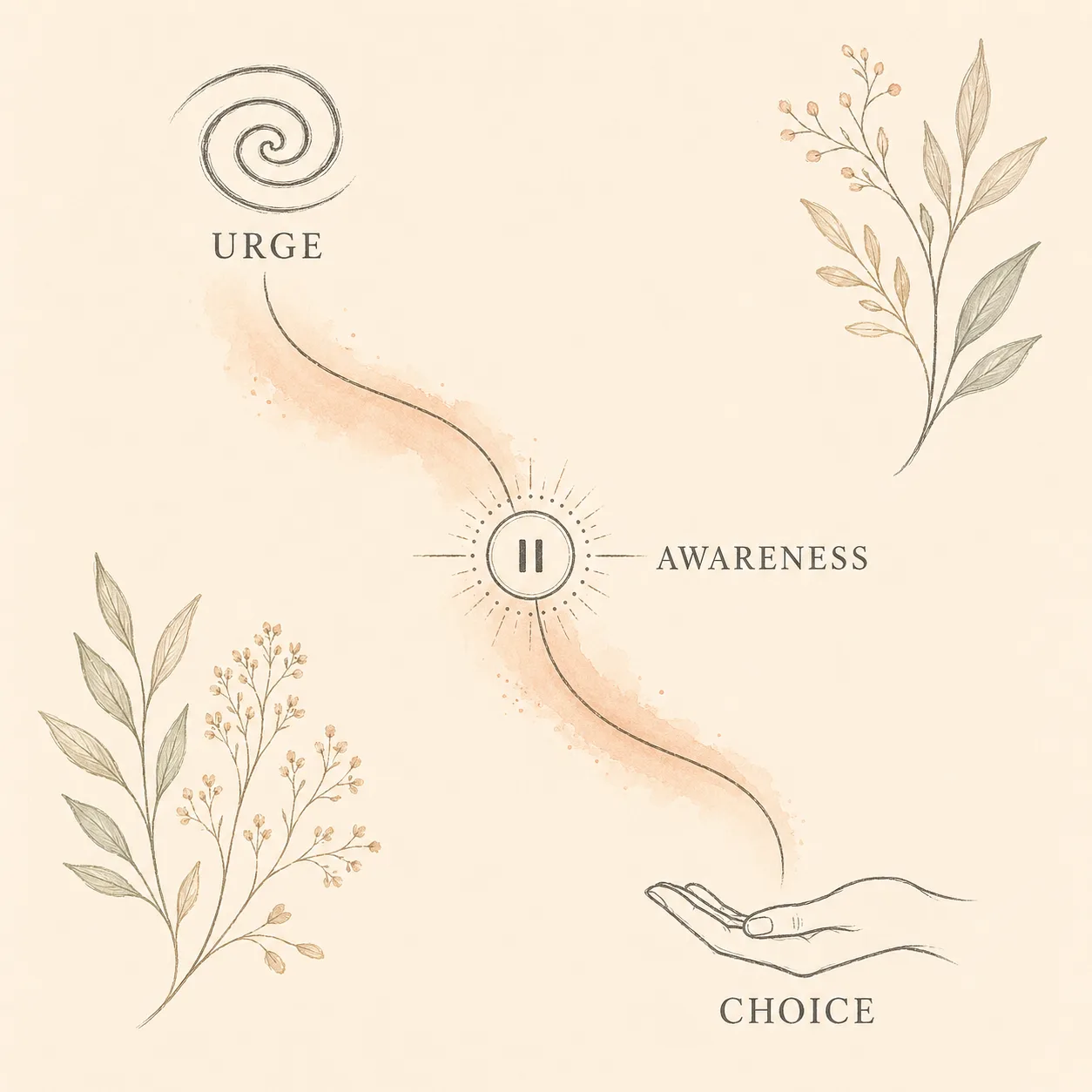
The way you train this is by logging urges that don't lead to picking. Every time you notice an urge and it passes, that's a rep. People often skip this because logging an "I didn't pick" feels like nothing. It's not nothing. It's the most important data point you can collect, because it teaches your brain that urges are events that come and go, not commands that must be obeyed.
Step 2: Identify your triggers
After a week or two of tracking, you'll start seeing the categories. Triggers usually fall into four groups.
Sensory triggers. A bump, a hangnail, dry skin, an uneven texture, the feel of a scab. The skin itself is the cue. People with sensory sensitivity, including many autistic and ADHD adults, often pick to scratch a sensory itch that has nothing to do with the actual itchiness of the skin.
Emotional triggers. Anxiety, boredom, frustration, focus, anger, even calm. Picking regulates arousal, both up and down. Anxious people pick to come down. Bored or understimulated people pick to come up. Both are real.
Environmental triggers. Specific mirrors, specific lighting, specific chairs, specific times of day. Bathrooms after showers. The car in traffic. The desk at 4pm.
Cognitive triggers. "I'll just check this one spot." "If I get this one out, my face will be smooth." Perfectionism is a huge driver here. So is the belief that picking is "fixing" something.
A practical method: at the end of your tracking week, sit down with your log and group the episodes. Most people find two or three dominant trigger categories and one or two times of day when picking concentrates. Those clusters are where you'll aim your stimulus control work.
If your log keeps surfacing one of these as a constant background, it's worth knowing that treating the picking on its own may only get you part of the way. Working on the anxiety, the depression, the ADHD, or the perfectionism alongside the picking is often what makes the work stick. This isn't a detour. It's the road.
Step 3: Make it harder (stimulus control)
Stimulus control is the unglamorous part of recovery, and it's also the part that produces the fastest visible wins. The principle is simple: every barrier between the urge and the action gives awareness another chance to intervene. You're not trying to make picking impossible. You're trying to make it slightly inconvenient.
Here are tactics that consistently help, and why they work.
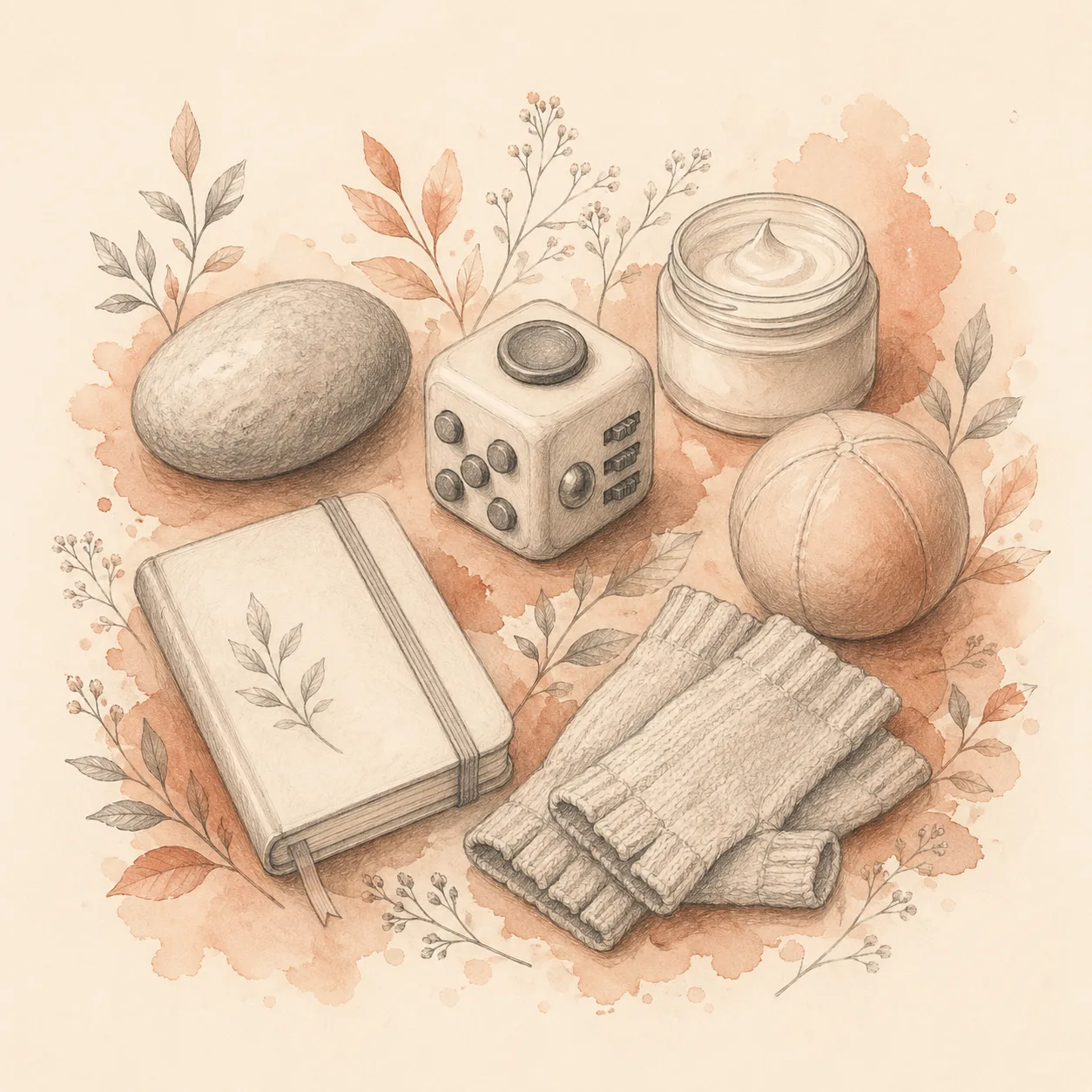
Cover the targets. If you pick fingers, wear thin cotton gloves at night and during high-risk windows like work calls or focused screen time. If you pick face, hydrocolloid patches over your most-picked areas turn a smooth target into a small physical barrier. Long sleeves do the same job for arm pickers. The point isn't shame or restriction. The point is that gloves and patches break the automatic loop. Your hand reaches your face, hits a patch, and there's a 1-second pause where awareness can show up.
Change the lighting. Bathroom mirrors with bright overhead light are the single most reliable picking trigger for face pickers. Dim the bathroom. Switch to warm bulbs. If you can, put a soft cloth over the magnifying mirror, or get rid of it. You can do skincare without 10x magnification. Most picking sessions in front of mirrors start with "let me just see" and there's almost nothing on a face that benefits from being seen at 10x by anxious eyes.
Change the room. If you pick in the bathroom at night, brush your teeth somewhere else for a month. If you pick in front of your work mirror, move the mirror. If you pick in a specific chair, move the chair. The environment is doing more of the work than you think.
Keep something in your hands. Ring fidgets, smooth stones, putty, a stress ball, a textured bracelet. The hand wants to be doing something. Give it something.
Cut your nails short. Picking with short nails is harder, less satisfying, and produces less damage when it does happen. This isn't a moral statement. It's friction.
Put barriers between you and your picking windows. If you pick at night, set a phone alarm 30 minutes before your usual picking time and use it as a cue to leave the bathroom for the rest of the night. If you pick during work calls, keep your hands occupied with a fidget. If you pick when you're tired, recognize tired as a high-risk state and add an extra layer of stimulus control during it.
Remove the tools. If you use tweezers, needles, pins, or anything else, get them out of arm's reach. Not because you'll never have access again, but because the friction of having to go find them is often enough to outlast an urge.
None of these alone will stop you. Together they will significantly reduce automatic episodes within a couple of weeks. The visible progress matters because it builds self-trust, and self-trust is what carries you through the harder layer underneath.
Step 4: Build competing responses (the heart of HRT)
This is where Habit Reversal Training, the behavioral treatment with the strongest evidence base for body-focused repetitive behaviors, becomes the central tool. HRT has three pillars, and you've already started the first two.
A competing response is a specific action you do instead of picking, when you feel the urge. The criteria are exact. It needs to be:
- Incompatible with picking. Your hands can't be doing both at once.
- Doable for at least 60 seconds, ideally up to 3 minutes.
- Not embarrassing in public, so you'll actually use it.
- Slightly demanding of your attention. Not so demanding that you can't do it while reading or watching, but demanding enough that picking can't run in the background.
The classic HRT competing response is making a fist with your thumb tucked in and clenching for 60 seconds. It works. It's also boring, which means people don't use it. Better is something that fits your life.
Some that work for different people:
- Squeezing a small stress ball or therapy putty for 90 seconds.
- Threading a piece of string between your fingers, slowly, for two minutes.
- Pressing palms together hard, then releasing, then pressing again.
- Holding a textured object (river stone, fidget) and tracing its surface.
- Splashing cold water on your face if you're already in the bathroom.
- Doing 20 slow breaths with your hands on your stomach.
- Writing the urge down in your tracker and timing it: "urge at 9:47pm, level 7."
That last one is interesting. Logging an urge is itself a competing response, because logging requires both hands and several seconds of attention. This is one of the underrated mechanics of urge tracking: the act of logging is the intervention.
The mechanism behind competing responses is straightforward. Picking releases dopamine, but so does any small task that has a clear start and finish. By giving your brain a different "I did the thing" loop, you partially satisfy the same circuit without the damage. Over weeks, the brain stops insisting on picking specifically and starts accepting the substitute.
The HRT trio (awareness, stimulus control, competing response) is the technique behind almost every evidence-based BFRB protocol, including ComB, HRT-enhanced CBT, and the structured programs run by BFRB-trained therapists. It's a method, not a magic bullet, and it works best when you do it consistently for at least eight to twelve weeks before judging whether it's working.
A deeper walkthrough of HRT and how to actually run the protocol on yourself is here.When to add support: therapy, medication, NAC
The four steps above can be done alone, and many people get a long way with them. But picking that's been going on for years, that comes with significant scarring, infection, social withdrawal, or that sits on top of untreated anxiety, depression, OCD, or ADHD, often needs more than self-directed work. Adding support isn't a sign of weakness. It just shortens the road.
Therapy
The most effective therapy for skin picking is CBT with HRT, ideally with a therapist who has specific training in body-focused repetitive behaviors. Generic talk therapy can help with underlying issues but rarely changes the picking itself. The International OCD Foundation (iocdf.org) maintains a directory of trained clinicians worldwide and now hosts the TLC Foundation's BFRB resources; bfrb.org itself is only online through Summer 2026.
If a BFRB-specialized therapist isn't available, look for someone trained in CBT for OCD-spectrum conditions. The skill set transfers reasonably well. ACT (Acceptance and Commitment Therapy) also has growing evidence as an adjunct, particularly for the shame and emotion regulation pieces.
Online and group programs run by BFRB organizations are another option, often at lower cost than weekly individual therapy.
Medication
There's no FDA-approved medication for skin picking disorder. That said, two classes have evidence and are commonly prescribed off-label.
SSRIs (fluoxetine, sertraline, escitalopram, others) are often first-line, especially when anxiety, depression, or OCD features are present. The evidence for SSRIs reducing picking specifically is mixed. They tend to help when the picking is driven by an underlying mood or anxiety disorder, less so when it's purely habitual.
N-Acetylcysteine (NAC) is an over-the-counter amino acid derivative that affects glutamate signaling. The Grant et al. 2016 randomized trial in JAMA Psychiatry tested NAC at 1,200 to 3,000 mg/day in 66 adults with skin picking disorder over 12 weeks.
NAC is widely available without a prescription, but quality varies considerably between manufacturers and it isn't actually free of considerations. Talk to a doctor before starting, especially if you take other medications.
A more detailed look at NAC, dosing, what the trials actually showed, and how to evaluate whether it's worth trying is here.What about stimulants for ADHD?
If your picking is significantly worse during understimulated, bored, or unfocused periods and you have ADHD, treating the ADHD is sometimes the single biggest intervention. There are case reports and clinical experience showing that stimulant medication, by improving attention and impulse inhibition, reduces picking in some adults. It can also worsen it in others. This is a conversation to have with a psychiatrist, not a self-experiment.
Recovery isn't linear
You will have a bad night. You will have a bad week. You will have a stretch where everything was working and then a stressful event hits and you wake up with a face you didn't want.
This is not a sign that recovery isn't working. This is what recovery looks like.
The shame spiral after a setback is, ironically, one of the strongest predictors of the next setback. The pattern looks like this: you pick. You feel terrible. You feel terrible about feeling terrible. You decide you're hopeless. You stop tracking, stop using your tools, and the entire structure you built collapses. Two weeks later you're back where you started, plus a layer of self-loathing.
The interruption to that pattern is small and unsexy: when you slip, log it, write down what triggered it, and keep using your tools the next day. That's it. The slip becomes data instead of identity.
A few specific things that help:
Treat a slip as one event, not a verdict. "I picked tonight" is true. "I always pick, I'll never stop" is not true and isn't useful even if it feels true.
Look at the trend over weeks, not days. If you pick five times this week and you used to pick fifteen times, that's progress, even if today felt awful. Visual progress tracking is genuinely helpful here, because the felt sense of "I always pick" rarely matches the actual numbers.
Care for the wounds without spiraling. Clean gently, apply something occlusive (Aquaphor, plain petroleum jelly), and cover with a hydrocolloid patch. The patch protects the spot and also makes it physically harder to re-pick the same area. Wound care isn't rewarding the behavior; it's preventing scarring while you keep doing the work.
Check what changed. Most setbacks have a cause. Sleep loss, alcohol, a hard conversation, a hormonal shift, a deadline, a fight, illness. Knowing what triggered the slip means you can plan for it next time instead of being ambushed.
When to seek professional help
You don't have to be in crisis to deserve support, and you don't need to wait until things get worse. Reasons to bring a clinician in sooner rather than later:
- Picking has caused infections, significant scarring, or wounds that aren't healing.
- You're avoiding work, school, relationships, or photographs because of how your skin looks.
- You're picking for hours per day, or losing whole evenings to it.
- The picking sits alongside untreated anxiety, depression, OCD, or ADHD that's affecting other parts of your life.
- You've tried self-directed work for several months without progress.
- You're having thoughts of self-harm beyond the picking, or thoughts of suicide. If that's where you are, please don't wait. In the US you can call or text 988 (Suicide and Crisis Lifeline). In the UK, Samaritans is 116 123. In Sweden, Mind Självmordslinjen is 90101. Your country's crisis line is one search away and the people who answer are good at this.
Finding a therapist with BFRB training matters. Most general therapists haven't been trained in HRT and will default to talking through underlying causes, which can be useful but isn't enough on its own. The International OCD Foundation (iocdf.org) maintains a provider directory and now hosts the TLC Foundation's BFRB resources, including a BFRB special interest group; bfrb.org itself is only online through Summer 2026.
Frequently asked questions
Yes. Excoriation (skin-picking) disorder has been a formal DSM-5 diagnosis since 2013, classified within the OCD-and-related disorders category. The criteria include recurrent skin picking that causes lesions, repeated attempts to stop, distress or functional impairment, and that the picking isn't better explained by a substance, medical condition, or other mental disorder. About 3.5% of adults meet criteria (Farhat et al., 2023).
There's a real overlap, though it varies by sample. In Grant and Chamberlain's 2020 community study of over 10,000 US adults, about 24% of people with skin picking disorder also had ADHD. Other studies show rates of 8% to 25%. The shared mechanism is likely impulsivity and reduced behavioral inhibition, plus the sensory-seeking that characterizes a lot of ADHD. Picking can serve as a form of stimulation during understimulated states. Treating ADHD often reduces picking, though not always.
Skin picking isn't autism, and most people who pick aren't autistic. But there's a notable overlap, especially around sensory processing. Many autistic adults pick partly as a sensory regulation behavior, similar to other forms of stimming. If you suspect you might be autistic and you pick, getting an assessment can change the framing of the work in useful ways. The picking might be doing a sensory job that needs an alternative outlet, not just a cessation plan.
It can have features of both, depending on the person. The DSM-5 places it in the OCD-and-related category because of the compulsive quality. But for many people the behavior looks more like stimming or self-soothing than classic OCD compulsions, and it doesn't follow the obsession-then-compulsion structure that defines OCD. This is part of why "skin picking is OCD" is misleading shorthand. It's its own thing, with overlap with several conditions.
There's no honest answer to this that's also short. Most people see meaningful reductions within two to three months of consistent HRT-style work, especially in automatic episodes. Stopping completely, or going long stretches without picking, usually takes six to twelve months and isn't always the right goal. A more realistic goal is sharp reduction in frequency and intensity, plus the ability to recover quickly from setbacks. Some people pick for life with manageable severity. Some don't pick at all after a year or two of work. Both are real outcomes.
The evidence is mixed but real. Grant et al.'s 2016 randomized trial showed 47% of NAC participants improved significantly versus 19% on placebo, at doses of 1,200 to 3,000 mg/day. That's a meaningful effect. It's also not a cure: half the trial participants on NAC didn't see significant improvement. NAC tends to work best as part of a broader approach, not as a standalone fix. Talk to a clinician before starting.
Most picking isn't actually about stress in the moment. Automatic picking runs on procedural memory and gets triggered by environmental cues (a specific mirror, a specific chair) and sensory ones (a bump, dry skin) more than by emotional state. People often pick most when they're slightly understimulated, like during reading or scrolling, not when they're acutely stressed. This is part of why awareness training matters more than stress management for a lot of people.
Yes, mostly. Skin is remarkably good at repairing itself if you let it. Fresh wounds heal in days to weeks if left alone. Discoloration (post-inflammatory hyperpigmentation) takes longer, often three to twelve months, especially on darker skin tones. Scars depend on the depth of the damage; superficial scars often fade significantly, while deeper ones may persist. Sun protection is crucial during healing. Hydrocolloid patches genuinely speed superficial healing. Dermatologist-prescribed treatments (azelaic acid, tretinoin, in-office procedures) can help with stubborn marks once you're not actively picking.
Where to go from here
If you've read this far, you already have more of a plan than you did this morning. The next move is small.
Pick one thing. Not five, not ten. One. The most useful "one thing" for most people is a week of just tracking. No attempt to stop yet. Just notice. After the week, you'll know more about your picking than you've known in years, and the rest of the work will have something to stand on.
If tracking urges, learning HRT step by step, and seeing your patterns over time would help, that's what SkinAware does. The episode log takes three taps. The HRT modules walk you through awareness, stimulus control, and competing responses at your own pace. The community is private, moderated, and full of people who get it.
Ready to Start Tracking?
SkinAware helps you log episodes, identify patterns, and see real progress over time.
What you're trying to do is hard. The fact that you've tried before and slipped doesn't mean it's impossible. It means you're doing one of the harder things a person can do, with a brain that's working against you, and the previous tries built skills you'll use now. Recovery from picking is mostly about stacking small interventions until they outweigh the pull of the loop. You can do this in pieces. You don't have to do it perfectly.
Start tonight if you want. Or start tomorrow. Just start.
Continue Reading
References
- Farhat, L. C., Reid, M., Bloch, M. H., & Olfson, E. (2023). Prevalence and gender distribution of excoriation (skin-picking) disorder: A systematic review and meta-analysis. Journal of Psychiatric Research, 161, 412–418.
- Grant, J. E., & Chamberlain, S. R. (2020). Prevalence of skin picking (excoriation) disorder. Journal of Psychiatric Research, 130, 57–60.
- Grant, J. E., Chamberlain, S. R., Redden, S. A., Leppink, E. W., Odlaug, B. L., & Kim, S. W. (2016). N-acetylcysteine in the treatment of excoriation disorder: A randomized clinical trial. JAMA Psychiatry, 73(5), 490–496.
- Grant, J. E., Dougherty, D. D., & Chamberlain, S. R. (2022). Characteristics of 262 adults with skin picking disorder. Comprehensive Psychiatry, 117, 152338.
- American Psychiatric Association. (2013). Diagnostic and Statistical Manual of Mental Disorders (5th ed.).