
When researchers surveyed 362 physicians about nail biting, 64.4% said they see it in their practice. In the same survey, 60.6% said they never ask patients about it, or only ask when someone brings it up first.
That gap explains a lot. Onychophagia has a clinical name, a defined place in the diagnostic manual, a documented list of medical complications, and four controlled trials behind one specific behavioral treatment. Very little of that reaches the people who actually bite. Most of us grew up being told to take our hands out of our mouths, and that was the whole intervention.
This page is the version nobody gave you.
What onychophagia actually is
Onychophagia is chronic biting of the nail plate, the nail folds, the nail bed, or the cuticle. The 2022 review by Lee and Lipner, the most current summary of the evidence, uses exactly that definition and groups the condition with the other body-focused repetitive behaviors: hair pulling, skin picking, lip biting, cheek chewing.
Body-focused repetitive behaviors are self-grooming behaviors that have run past their function. Grooming is normal. Tidying a rough edge with your teeth is normal. What makes onychophagia different is that the behavior keeps going after the grooming purpose is gone, damages tissue, and resists your own repeated attempts to stop it.
One clinical detail worth knowing, because it distinguishes onychophagia from a condition it's often confused with: biting and picking are separate behaviors. Onychotillomania is repetitive picking, pulling, or manipulating the nail unit, sometimes with tools like scissors or files. Some older dermatology pages treat nail biting as a subtype of nail picking. The current literature treats them as distinct conditions with different presentations, and plenty of people do both.
Where it sits in the DSM-5
Onychophagia is classified in the Diagnostic and Statistical Manual of Mental Disorders, fifth edition, under Other Specified Obsessive-Compulsive and Related Disorders. The manual names it as a recurrent body-focused repetitive behavior disorder, listed alongside lip biting and cheek chewing. The 2022 text revision kept it in the same place.
That phrasing matters, so it's worth being precise about what it does and doesn't mean.
Onychophagia does not have its own standalone diagnostic code the way trichotillomania (hair pulling) and excoriation disorder (skin picking) do. Those two got their own entries. Nail biting sits in the category clinicians use when a presentation clearly belongs to the obsessive-compulsive family but doesn't match a named diagnosis. So it's recognized, but recognized as an "other specified" presentation rather than as a headline condition.
The criteria
Per the review of the DSM-5 criteria, a diagnosis is met when:
- The nail biting causes clinically significant distress or impairment in social, occupational, or other important areas of functioning.
- You've made repeated failed attempts to stop or reduce it. Not one attempt. A pattern of them.
- It isn't better explained by another condition, specifically trichotillomania, excoriation disorder, stereotypic movement disorder, or nonsuicidal self-injury.
The practical consequence of the "other specified" placement is that many clinicians have never been trained on it. It doesn't appear in most screening questionnaires. Nail picking has been left out of body-focused repetitive behavior questionnaires entirely, and participants with it have been excluded from studies validating skin-picking measures. If you've had the experience of mentioning nail biting to a professional and watching it slide past them, that's the structural reason.
Habit or disorder: where the line is
Roughly a fifth to a third of everyone bites their nails at some point. Most of them do not have a disorder. The useful question isn't whether you bite your nails. It's whether your biting meets the three markers above.
Three things separate the two, and they're the same three the criteria describe.
Control. Occasional biting stops when you decide it should. Onychophagia doesn't. People with it typically describe rising tension or discomfort before biting, then relief or something close to satisfaction after. That loop is what makes the behavior self-sustaining, and it's the same loop that shows up in hair pulling and skin picking.

Damage. Chronic biters present with abnormally short, uneven nails, absent or ragged cuticles, and nail folds in various stages of healing. Occasional biting doesn't produce that picture.
Distress. This is the one people discount, and it's the one with the clearest data. A questionnaire study of 339 medical students found nail biters had significantly worse quality-of-life impairment scores than non-biters, driven specifically by the inability to stop (23.3 versus 10), visible nail deformities (19.2 versus 10), and time spent biting. Measured stigmatization was also higher for biters. In a separate cross-sectional study of university students, nail biters scored significantly higher on the Perceived Stress Scale and lower on quality of life than non-biters.
How common it is
Estimates vary widely because they're measuring different things in different populations.
The general-population figure most often cited is 20 to 30%. Among children, prevalence climbs: around 30% of children aged seven to ten, and up to 45% of children from age 10 through puberty. Roughly 45% of teenagers bite. Across the wider literature the reported range runs from 3% all the way to 46.9%, with the highest rate found among medical students.
Then it drops. Nail biting declines with age, and the paper on onychophagia in obsessive-compulsive disorder notes that although the behavior is common in childhood, it persists into adulthood in only a minority of cases, on the order of 1 to 5%.
The physician survey gives a clean illustration of that curve inside a single professional group: 24% of doctors reported having bitten their nails at some point in their lives, and 2% were still active biters.
There's a measurement wrinkle worth keeping in mind when you read any of these numbers: lifetime prevalence (ever bitten) is much higher than point prevalence (biting now). A lot of the spread between studies is that distinction, plus real geographic and cultural variation.
Why people bite
It runs in families
The genetic signal is stronger than most people expect. A twin study of 1,131 twin pairs attributed nail biting to genetic influences in 50% of pairs, with higher concordance among identical twins than fraternal ones. In that same work, children whose parents both bit their nails had a three- to four-fold higher risk than children of non-biting parents.
Survey data backs it up. In a study of 281 pediatric patients, 63% of nail biters had at least one family member who also bit. In a separate survey of 743 children, 55.8% of nail biters with siblings had a sibling or parent who bit frequently.
Some of that is inherited and some of it is imitation. Both matter, and both are reasons to look at the rest of the family rather than treating one person's nails as an isolated problem.
It's a solitude-and-load behavior, not a nerves behavior
This is the finding that reframes the whole thing, and almost nobody writing for a general audience uses it.
Researchers observed 40 undergraduate nail biters across four conditions: alone, in neutral conversation, under academic demand (twenty math questions), and under social disapproval. The biting rates came out like this:
| Setting | Average biting episodes |
|---|---|
| Alone | 6.48 |
| Academic demand | 3.15 |
| Neutral conversation | 0.25 |
| Social disapproval | 0.20 |
Biting collapsed in company and spiked in solitude and under cognitive load. Which tells you something useful: the behavior isn't primarily driven by visible nervousness, and it isn't a public behavior you happen to also do at home. It's what your hands do when nobody's watching and your attention is somewhere else.
It also explains why being told off never worked. Social disapproval suppresses biting in the moment, at 0.20 episodes, and then you go home.
Automatic and focused
As with other body-focused repetitive behaviors, biting comes in two modes. For some people it's automatic: it happens while waiting in line or reading, without conscious registration. For others it's intentional, and they'll stop what they're doing to bite. Most people have both, in different settings, and they need different tactics. Automatic biting needs awareness work. Focused biting needs a competing response you can actually reach for.
Stress, boredom, and inactivity
Stress, boredom, and inactivity are all documented contributors. So is perfectionism. The tension-then-relief pattern means the behavior gets reinforced every single time it works, which is most times, which is why twenty years of it can accumulate without a single decision to continue.
What chronic biting does to the body
This section is the part consumer pages usually skip or soften. It's not here to scare you. It's here because the medical consequences are the strongest argument for treating this as a condition rather than a manners problem, and because a few of them need a doctor rather than willpower.
Nails and fingers
In chronic biters, partial or complete loss of the nail plate can expose the nail bed. The nail bed then keratinizes, and the result is irreversible shortening of the nail plate. Repeated trauma to the nail matrix can activate melanocytes and produce longitudinal melanonychia, gray-brown bands running the length of one or more nails. Other documented changes include linear and pinpoint hemorrhages, transverse grooves, brittleness, and pterygium, which is scarring in the nail matrix.
Some of that reverses when the biting stops. Some of it doesn't.
Infection
Nail biting moves bacteria from the mouth to the fingers and back. Acute paronychia, infection of the tissue around the nail, typically comes from exactly that inoculation. It can progress to an abscess and, rarely, to osteomyelitis, a bone infection. Herpetic whitlow and subungual warts are also documented.
Mouth and teeth
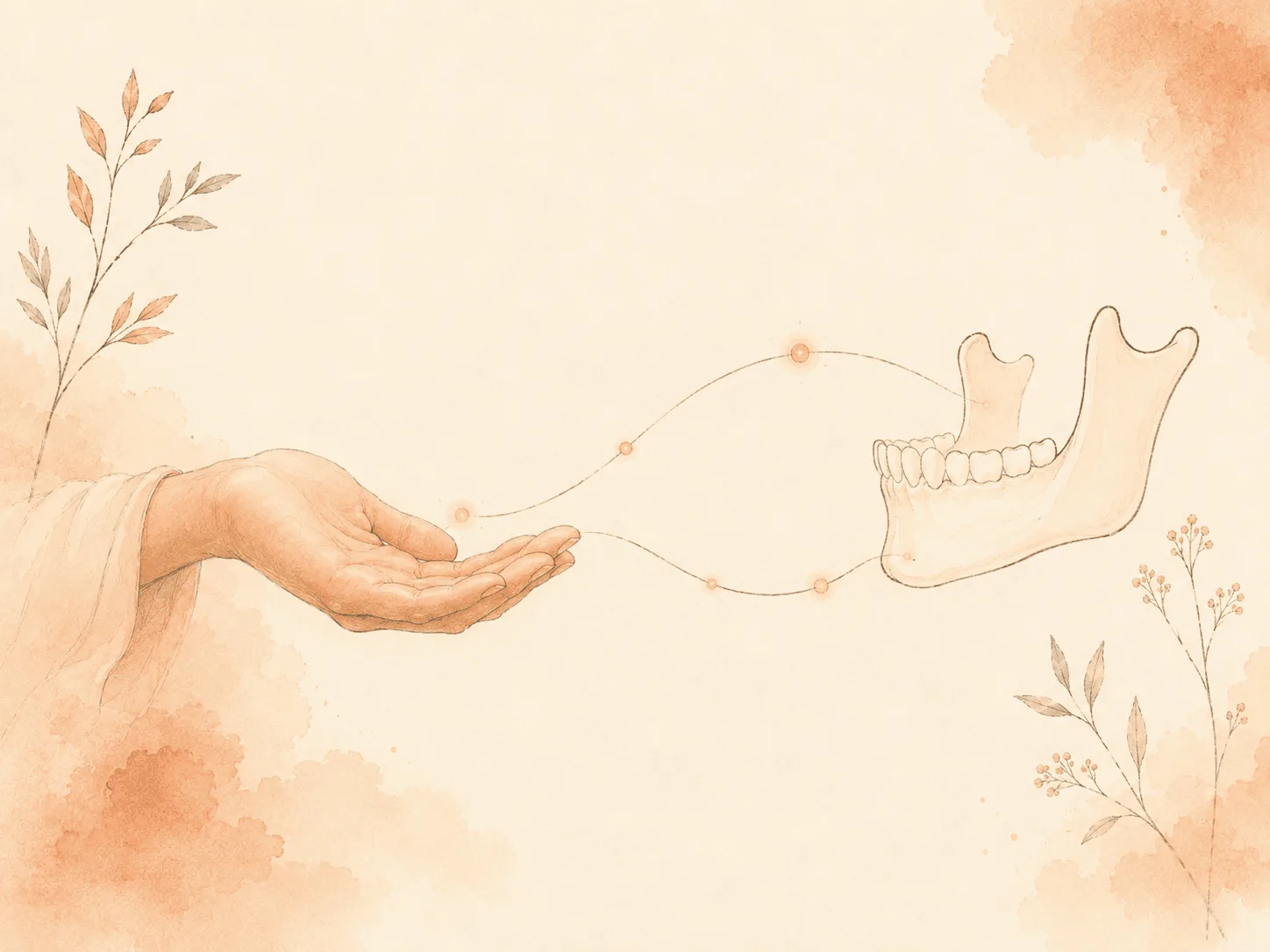
The oral consequences are well documented and rarely mentioned outside dental journals: gingival injury leading to swelling and abscess, increased incisor wear, malocclusion, apical root resorption, and rotation of the incisors. Pain and dysfunction of the temporomandibular joint have also been reported in chronic biters.
There's a microbiology finding here too. Chronic nail biters carry a higher oral bacterial burden, with colonization by Enterobacteriaceae, specifically Enterobacter species and E. coli, seen frequently. That raises the risk of local and systemic infection if there's oral trauma, or when those bacteria get swallowed.
If you bite and haven't had a dental check in a while, that's a reasonable appointment to book regardless of what you decide about the biting itself.
Conditions that travel with it
Onychophagia rarely arrives alone, but the associations are messier than most articles suggest, and the sample matters enormously.
ADHD. In a study of 63 nail biters aged 5 to 18 who had been referred to a child and adolescent mental health clinic, ADHD was present in 74.6%, along with oppositional defiant disorder (36%), separation anxiety (20.6%), enuresis (15.6%), tic disorder (12.7%), and OCD (11.1%). Read that number carefully: this was a psychiatrically referred sample, so the rates are far higher than you'd find among nail biters generally. What it does show is that in kids already in mental health care, nail biting and ADHD travel together often.
OCD. Despite the DSM placement, the link is genuinely inconsistent. One analysis found only 25% of nail biters had comorbid OCD or an anxiety disorder, and reported an OCD prevalence of 3.1% among biters, close to the general-population lifetime rate. Approaching from the other direction, a 2025 cross-sectional study of 603 OCD outpatients found onychophagia in 8.6% of them. So roughly one in twelve people with OCD bites chronically, while most chronic biters don't have OCD.
Autism. That same OCD study found autism spectrum disorder in 96.2% of the OCD-plus-onychophagia group, against 18.0% of the OCD-without-onychophagia group. That's a striking number from a single specialist clinic in Turin, and it has not been replicated. It's worth knowing about and not worth drawing personal conclusions from.
Depression and anxiety symptoms in children. A study of 147 students aged 8 to 14 found nail biting was the most common harmful oral habit at 58.7%, and that children with such habits scored higher for depressive symptoms and were more likely to show anxiety symptoms than habit-free peers.
Other body-focused repetitive behaviors. Nail biting, hair pulling, and skin picking co-occur often enough that a clinician assessing one should look for the others. Many people cycle between them over the years.
Treatment with evidence behind it
Onychophagia is in better shape than its reputation suggests. The behavioral treatment has been tested in controlled trials since 1980, and the results are unusually strong for a behavior most people consider untreatable.
The treatment is habit reversal training, usually shortened to HRT. It has three components, and all three do real work.
1. Awareness training
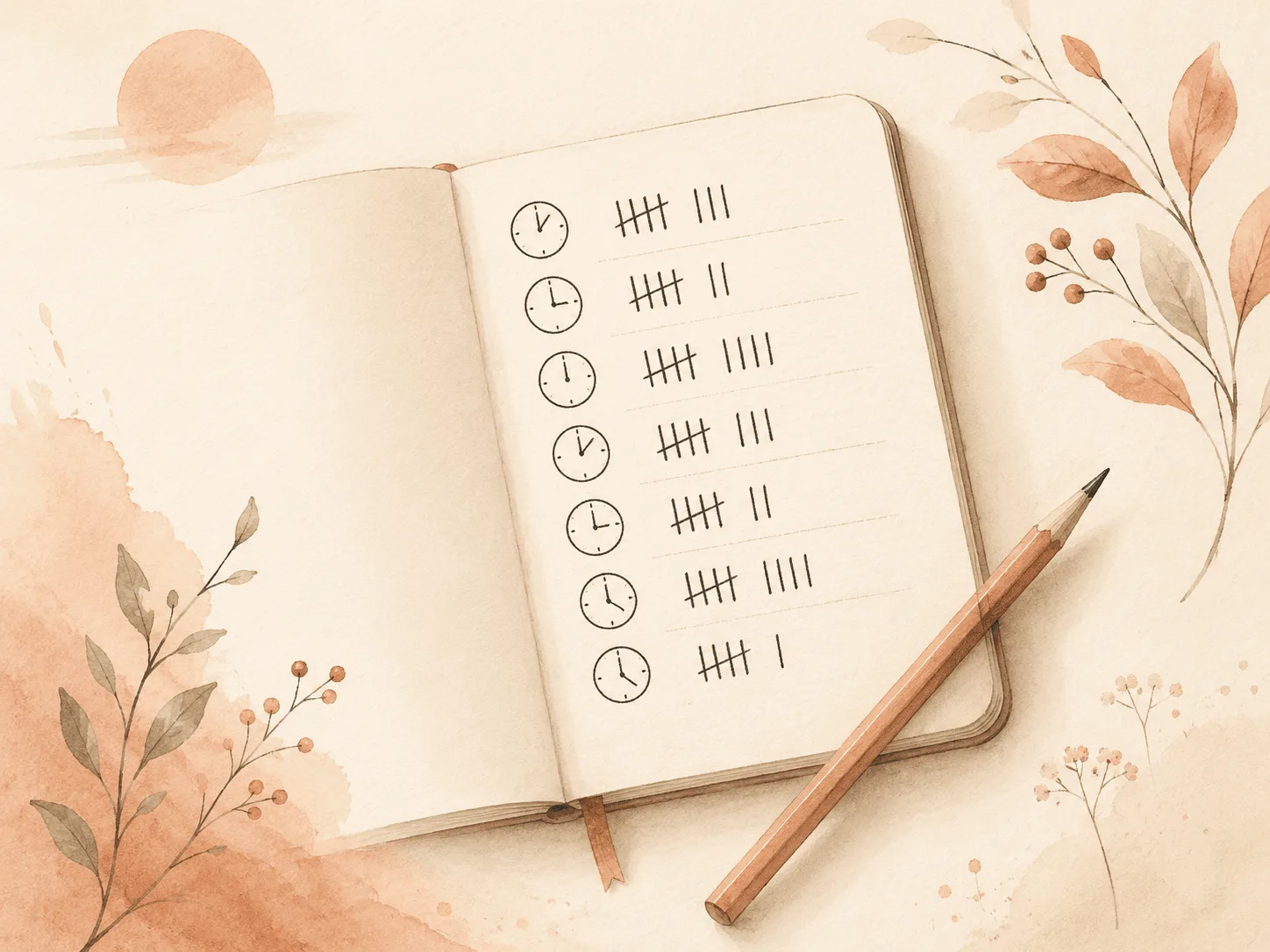
You can't interrupt a behavior you don't notice, and a large share of biting is genuinely unnoticed. Awareness training means recording when you bite, naming your triggers out loud or on paper, and noting what it costs you.
In practice this is self-monitoring, and it's the part you can start today without a therapist, an appointment, or a diagnosis. Recording the behavior tends to reduce it on its own, partly because the act of logging interrupts an automatic sequence.
This is where an app earns its place, if you want one. SkinAware runs a full nail-biting mode: one tap to log a biting episode, one tap to log an urge you resisted, and it builds out your triggers, the settings where it happens, and your peak times of day. Given the analog-assessment finding about solitude and cognitive load, seeing your own time-of-day pattern is often the moment the behavior stops feeling random. There's a walkthrough of what to look for in a tool in our guide to nail biting apps.
2. Competing response training
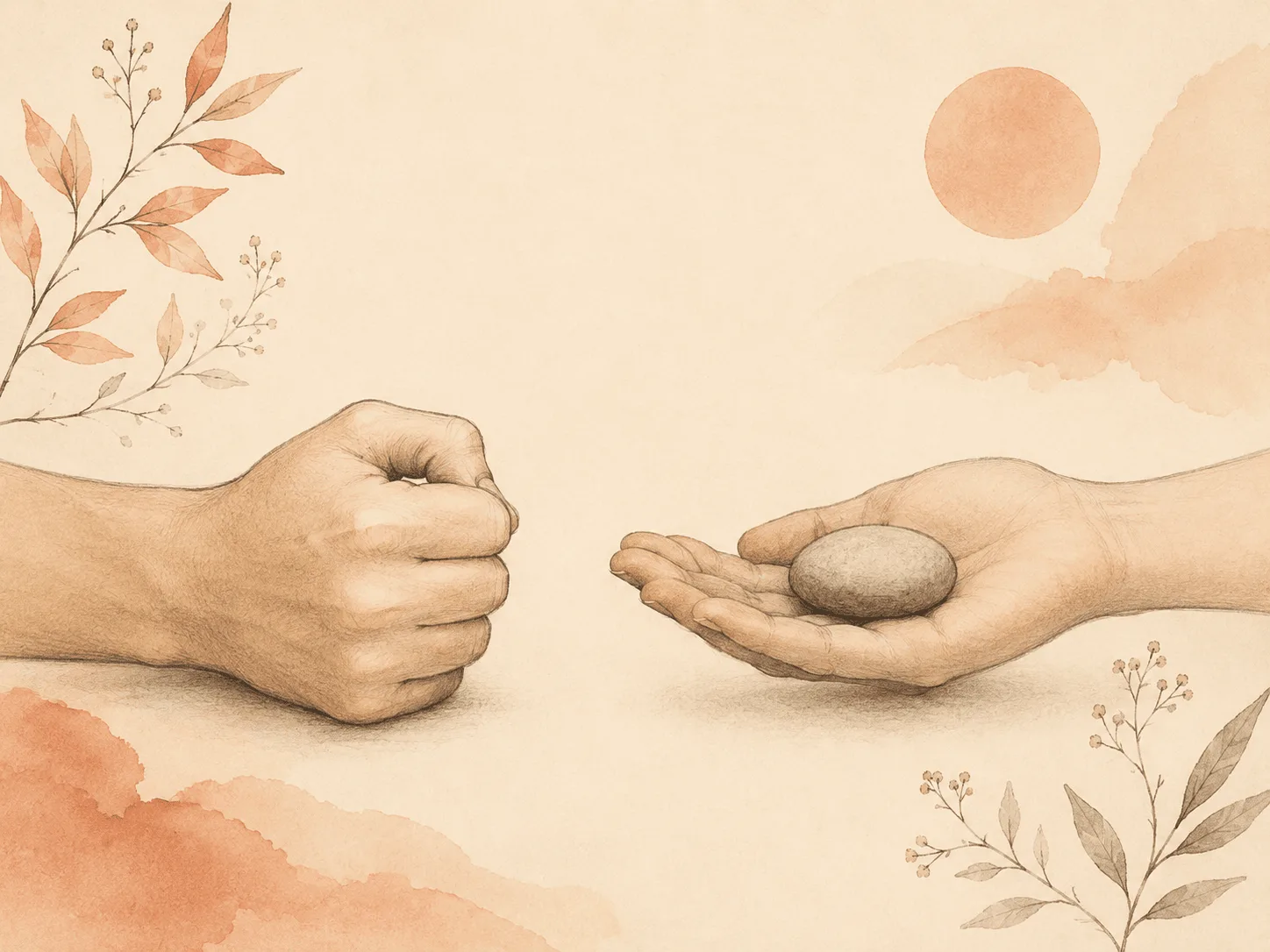
Once you can catch the urge, you need something to do with your hand that makes biting physically impossible for about a minute. The trials used fist clenching. Clapping and sitting on your hands are also documented options. The specific move matters less than that it's incompatible with getting a nail to your mouth and that you can do it anywhere without looking odd.
The evidence for competing responses is direct. A clinical trial comparing mild aversion therapy (bitter-tasting polish) against a fist-clenching competing response found both improved nail length, but the competing-response group had fewer nail fold erosions, lower biting severity, and a significantly greater sense of control over the behavior.
That last outcome is the one people underrate. Feeling in control of your own hands changes how you approach the next urge.
3. Social support
The third component is having someone who knows what you're working on: a family member, a friend, or another person working on their own habit. Their job is to notice, prompt, and encourage the competing response, not to police you. Given how sharply biting drops in company, having a person in the loop is doing more than moral support.
What the trials found
A later randomized trial of 30 adults compared HRT against a placebo control across three sessions totaling two hours. The HRT group gained 22% in nail length against 3% for placebo, and at five-month follow-up still held a 19% gain from baseline while the placebo group held none.
Two hours of structured work, measurable a year's worth of nail growth later. That's the shape of the evidence.
Stimulus control
Stimulus control means changing the environment so biting is harder to start and less rewarding to continue. From the clinical literature, the specific measures are:
- Preventive filing and trimming. Splintered edges and rough cuticles are triggers in themselves. Smooth nails give the behavior less to grab onto.
- A manicure you'd rather not ruin. This is in the review as a genuine intervention, for men and women, for two reasons: motivation to preserve it, and cover for dystrophic nails while they grow out.
- Physical barriers. Gloves, bandages, or tape make biting harder. The review is candid that many people reject these because they interfere with daily life and can deepen embarrassment when worn in public.
Bitter polish and non-removable reminders
Bitter-tasting polish is aversion therapy: it pairs the behavior with an unpleasant taste. It works for some people, and its success depends entirely on remembering to reapply it. It's discouraged in younger children, where it can trigger opposition and increase biting for attention.
For people who can't keep up with reapplication, a non-removable reminder (a wristband you don't take off) is the studied alternative. In a randomized comparison of 80 nail biters, the wristband group had a lower dropout rate than the bitter-polish group (12% versus 26%) and the two were equally effective across all participants who started. Among people who stuck with it, polish came out ahead. Both groups still had lower biting scores five months later.
Read that as a compliance finding rather than a superiority finding. The intervention that works is the one you'll actually keep doing.
Medication
No medication is FDA-approved for any body-focused repetitive behavior, and pharmacotherapy is a second-line option for nail biting.
N-acetylcysteine (NAC). A double-blind randomized placebo-controlled trial in 42 children and adolescents found that 800 mg/day increased nail length significantly more than placebo at one month (5.21 mm versus 1.18 mm). The effect was no longer significant at two months. Adverse effects reported in the NAC group included headache, agitation, social withdrawal, and, in one child, severe aggression.
Clomipramine. A ten-week double-blind crossover trial of 25 adults found clomipramine outperformed desipramine on nail biting severity, impairment, and clinical progress scales. Side effects were substantial: dry mouth, fatigue, insomnia, constipation, sweating, dizziness, and abnormal liver enzymes in one patient. Eleven of the 25 participants, 44%, dropped out.
SSRIs, bupropion, and lithium have helped in individual case reports, mostly where the person also had depression or bipolar disorder that was being treated. SSRIs should be used cautiously here, since exacerbation of impulse-related behaviors has been reported.
What to do this week
If you want a starting point that matches the evidence rather than the folklore, this is the order the research supports.
-
Track for seven days before you change anything. Log every biting episode and every urge you resist. You're looking for two things: which settings, and which times of day. Awareness training is the first component of the treatment for a reason, and the recording alone tends to bring the frequency down.
-
Pick one competing response and rehearse it cold. Clenched fist for sixty seconds is the one with trial data. Practice it a few times when you're not experiencing an urge, so it's available when you are.
-
Fix your two highest-frequency settings, not your whole life. For most people that's focused work and evening downtime. Keep a file and clippers within reach so rough edges get smoothed instead of bitten.
-
Tell one person. Specifically ask them to prompt the competing response rather than comment on your nails.
-
Book a dental check if it's been a while. The oral consequences are real and easier to address early.
-
If a nail is red, swollen, warm, or producing pus, see a doctor this week. That's not a willpower issue.
For a fuller walkthrough of the day-to-day tactics, including what to do in the first ten seconds of an urge, see how to stop biting your nails.
FAQ
Frequently Asked Questions
Both descriptions apply to different people. It appears in the DSM-5 under Other Specified Obsessive-Compulsive and Related Disorders as a body-focused repetitive behavior disorder. What moves it from habit to disorder is clinically significant distress or impairment, repeated failed attempts to stop, and the behavior not being better explained by another condition such as trichotillomania, excoriation disorder, stereotypic movement disorder, or nonsuicidal self-injury.
Onychophagia is biting the nail plate, folds, bed, or cuticle. Onychotillomania is picking, pulling, or manipulating the nail unit, sometimes with tools like scissors or files. They are separate conditions in the current literature, they can look similar on examination, and some people have both.
Often, substantially. But some changes are permanent. If chronic biting has caused the nail bed to keratinize after repeated nail plate loss, the resulting shortening of the nail plate is irreversible, and longitudinal melanonychia from nail matrix trauma may not resolve. A dermatologist can tell you which category your nails fall into.
For some people, especially where biting is less severe. Its effectiveness depends on consistent reapplication, which is where most people fail. In a randomized comparison of 80 nail biters it was equally effective overall as a non-removable wristband reminder, though it had a higher dropout rate at 26% versus 12%. It is discouraged for young children, where it can trigger opposition and increase biting.
Not necessarily. The OCD link is inconsistent in the research: one analysis found an OCD prevalence of 3.1% among nail biters, close to the general-population rate. Nail biting is associated with higher perceived stress and lower quality of life, and it co-occurs with several conditions, but on its own it is not diagnostic of any of them.
Adults can be treated, and the strongest trials were run in adults. The 1980 habit reversal trial included participants aged 11 to 64, and a later trial averaged 21.5 years of age. Prevalence declines with age, but so does the number of people who are ever offered treatment.
Because most of them do not ask. In a survey of 362 physicians, 60.6% never ask about nail biting or only ask when someone brings it up, and attitudes toward whether it needs treatment at all varied widely. Bringing it up yourself, using the clinical name, tends to change the conversation.
Where to get help
The International OCD Foundation (iocdf.org) now carries the BFRB work the TLC Foundation built. It maintains a therapist directory and runs a BFRB special interest group. TLC's own site, bfrb.org, stays online only through Summer 2026.
A therapist trained in habit reversal training or CBT. When searching directories, filter for BFRBs, habit disorders, trichotillomania, or skin picking. Providers who list any of those will usually know the nail biting protocol, since it's the same framework.
A dermatologist for nail damage, suspected infection, or to find out what's reversible.
A dentist for wear, malocclusion, gum injury, or jaw pain.
SkinAware if you want the self-monitoring piece to be one tap instead of a notebook. The app runs nail biting as a full mode, with episode and resisted-urge logging, trigger and time-of-day insights, an interactive habit reversal course, and accountability partners.
Ready to Start Tracking?
SkinAware helps you log episodes, identify patterns, and see real progress over time.