
Written using peer-reviewed research including Ghanizadeh, Bazrafshan, Firoozabadi & Dehbozorgi (2013, Iranian Journal of Psychiatry), Lynch et al. (2016, Pediatrics), Odenrick & Brattström (1985, British Journal of Orthodontics) and Chinnasamy et al. (2019, Journal of Clinical and Experimental Dentistry), alongside parent guidance from Nationwide Children's Hospital, Kaiser Permanente, University of Utah Health and the TLC Foundation for BFRBs.
About half of all children bite their nails at some point, most start around three or four, and most stop without anyone doing anything clever. That's the baseline worth holding on to before you decide whether your child's hands are a problem to solve.
What follows is written for you rather than for your child, and it's organized around the two questions parents actually arrive with: whether this needs action, and what to do tomorrow if it does. There are sentences you can say word for word, because the wrong sentence is most of what makes this worse.
How Common This Is
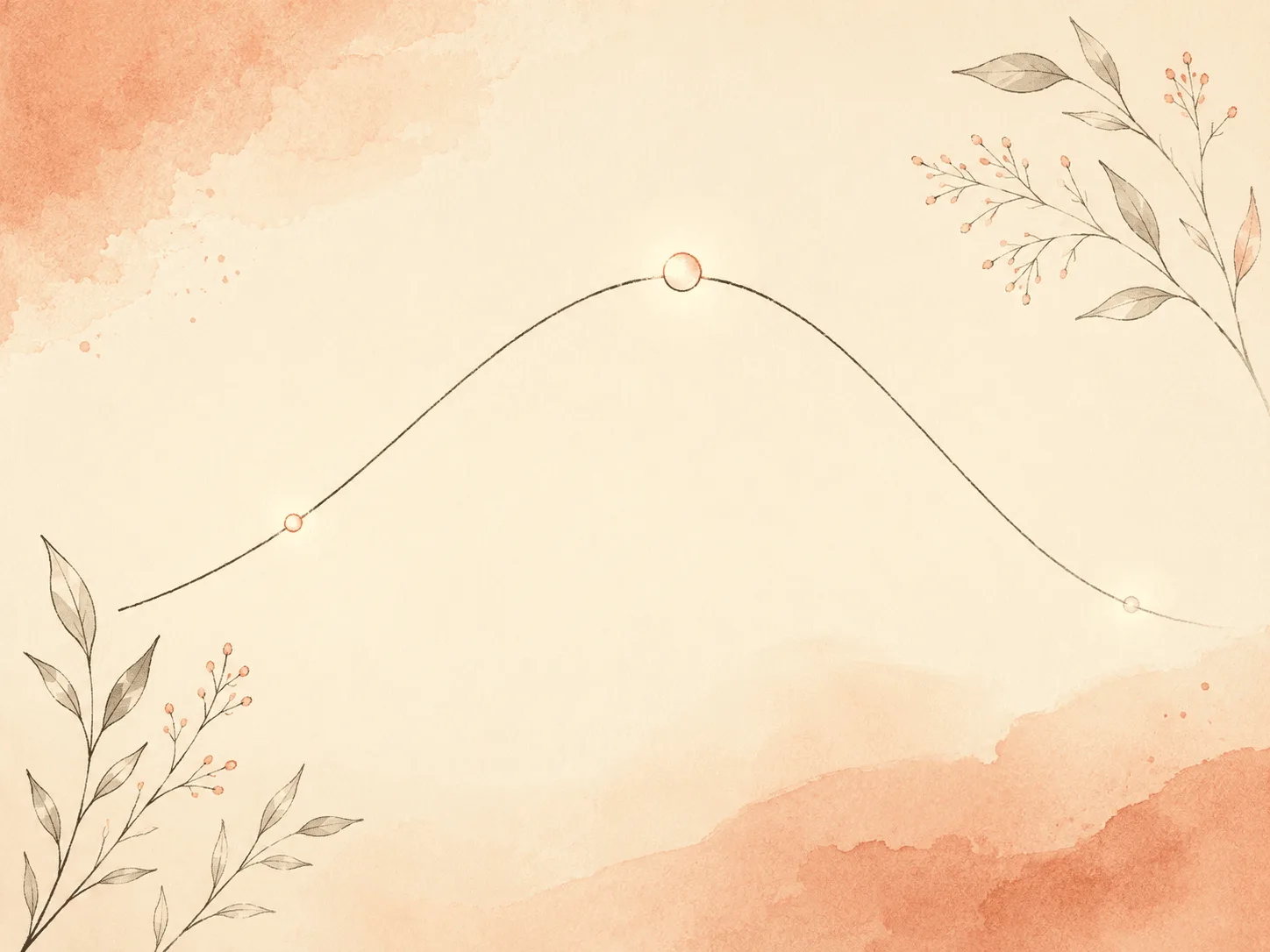
Nail biting usually shows up around three or four years old, climbs through primary school, and peaks somewhere around puberty. Then it falls away. Nationwide Children's Hospital puts it at more than 75% of teenage biters stopping by their mid-thirties, and only a small minority of adults are still active biters. If you want the full prevalence picture and where the numbers come from, the guide to onychophagia covers it properly.
So the odds are genuinely on your side. That matters, because a lot of parental energy gets spent on a behavior that was going to fade anyway, and the spending itself has costs.
One fear worth putting down first. Most parents' instinct is that the real danger is germs going into the mouth. The best long-term data on that points somewhere unexpected.
That isn't a reason to encourage nail biting, and it changed nothing about asthma or hay fever. It's a reason to stop treating the mouth-hand route as the emergency. The real medical concerns with nail biting sit in the fingers and the teeth, and both are covered further down.
The Three Things That Change the Answer
Most nail biting doesn't need managing. Three things move it into the category that does, and none of them is about how the nails look from across the room.
The skin is breaking. Sore fingertips, bleeding cuticles, or a nail bed that gets chewed past the free edge. Once biting has moved from the nail plate to the skin around it, the behavior has stopped being cosmetic and has become a recurring wound.
It's traveling with other behaviors. Hair pulling, skin picking, cheek biting, or movements your child doesn't seem to be able to stop. Two or more body-focused repetitive behaviors at once is the pattern most likely to persist, and it's the single clearest reason to get a professional opinion rather than manage it at home. If hair pulling is part of the picture, the parent's guide to trichotillomania in children covers that side.
It's costing your child something socially. Hands kept in pockets or sleeves. A refusal to hold hands, or to be in photos. Comments from other children. Distress after a bad session. A child who is embarrassed about their hands is dealing with a bigger problem than their nails.
What Makes It Worse
Almost every parent runs the same three interventions before finding a page like this one, and all three have a documented tendency to backfire in children.
Telling them to stop
The clinical guidance here is unusually consistent. Kaiser Permanente's care instructions say punishing, nagging, or embarrassing a child "may make it worse." The pediatrician answer from University of Utah Health is that punishing or shaming a child for nail biting "is not helpful," full stop.
The mechanism is worth understanding rather than just accepting, because it explains why the results look like progress at first. Correction does suppress biting in the moment. What it doesn't do is remove the urge, and a child with an unresolved urge and a parent who reacts learns to bite somewhere the parent isn't. Nationwide Children's puts the outcome plainly: punishments are unlikely to stop the biting, but they may teach a child to be sneakier about it.
There's a second cost. Some children discover that biting reliably produces attention, and negative attention still counts. For a child in a house where attention is scarce that week, you've accidentally built a lever.
Bitter nail polish
Bitter polish is aversion therapy in a bottle, and it has a real but narrow use. When it has been compared head to head against a competing response, the competing response came out ahead on nail length and on the child's own sense of control.
Where it does earn a place is as a reminder rather than a punishment. Nationwide Children's frames bandages, gloves and bitter polish as awareness tools: their job is to make the child notice the hand arriving at the mouth, not to make the arrival unpleasant. That's a different product from the one the pharmacy shelf is selling, and it's a different conversation with your child. If you use it, say what it's for.
"This isn't to punish you. It's so your brain notices when your hand goes up, because right now it doesn't."
Rewarding clean nails
Sticker charts for a bite-free day are on every parenting page, and they contain a design flaw. Paying for an outcome your child can't reliably control turns a normal slip into a failure with a price attached, and it puts you in the position of inspector. Children who care about the chart start hiding.
Reward the strategy instead. A point for reaching for the putty when the film starts. A point for using the code word back at you. Those are things a child can actually do on demand, and they're the behaviors you want more of anyway.
What to Say
Two messages need to land before any tactic will work: that you've noticed, and that nothing about how you see them has changed. Everything else can wait.
For a younger child, keep it very short and physical:
"I saw your fingers go in your mouth. Here, hold this for me."
No comment on the nails, no explanation, no follow-up. You're interrupting a sequence, not opening a discussion.
For a school-age child, the opening conversation:
"I've noticed you bite your nails quite a lot. You're not in trouble and I'm not annoyed. Loads of people do it, including plenty of adults. I just wondered if you wanted to do something about it, or whether you'd rather leave it."
Then let them answer honestly, including "leave it." A child who says leave it and gets left alone is far more likely to come back to you in two months than one who gets overruled. Kaiser's guidance is that letting the child help choose the approach makes it more likely to work, and that's the whole reason.
If they're embarrassed:
"It's not a gross habit and it doesn't mean anything's wrong with you. It's just a thing hands do. There are ways to stop it that work, whenever you want them."
And the piece that does the most work, borrowed from Nationwide Children's habit-reversal protocol: replace correction with a signal.
"Instead of me saying anything, can we have a signal? I'll just tug my ear. That's all it means. You don't have to say anything back."
The Home Version, and How Well It Works
Here is the part most parenting pages leave out, and it's the reason to be optimistic about doing this yourself.
The only randomized trial run specifically in children and adolescents with nail biting recruited 91 participants through schools in Shiraz, Iran, and split them three ways: habit reversal training, object manipulation training, and a wait-list. Habit reversal meant awareness training, a competing response the child performs instead of biting, and a named support person. Object manipulation meant the same awareness work and the same support person, but instead of a competing response the child simply held or played with something, a pencil or a small toy.
Both were taught in a single thirty-minute session with one booster a month later.
The gap between a formal behavioral protocol and "give the child something to hold, help them notice, and have someone in their corner" was one child. That's the argument for starting tonight instead of starting after a referral.
The three ingredients, in the order the trial used them:
1. Awareness before anything else. Your child cannot interrupt something they don't know they're doing, and a large share of biting is genuinely unnoticed. For a child of seven or older, three days of tallying is enough to find the pattern. Not a diary. A folded piece of paper with four boxes on it: TV, homework, car, bed. A tick each time. You'll usually find two windows carrying most of it.
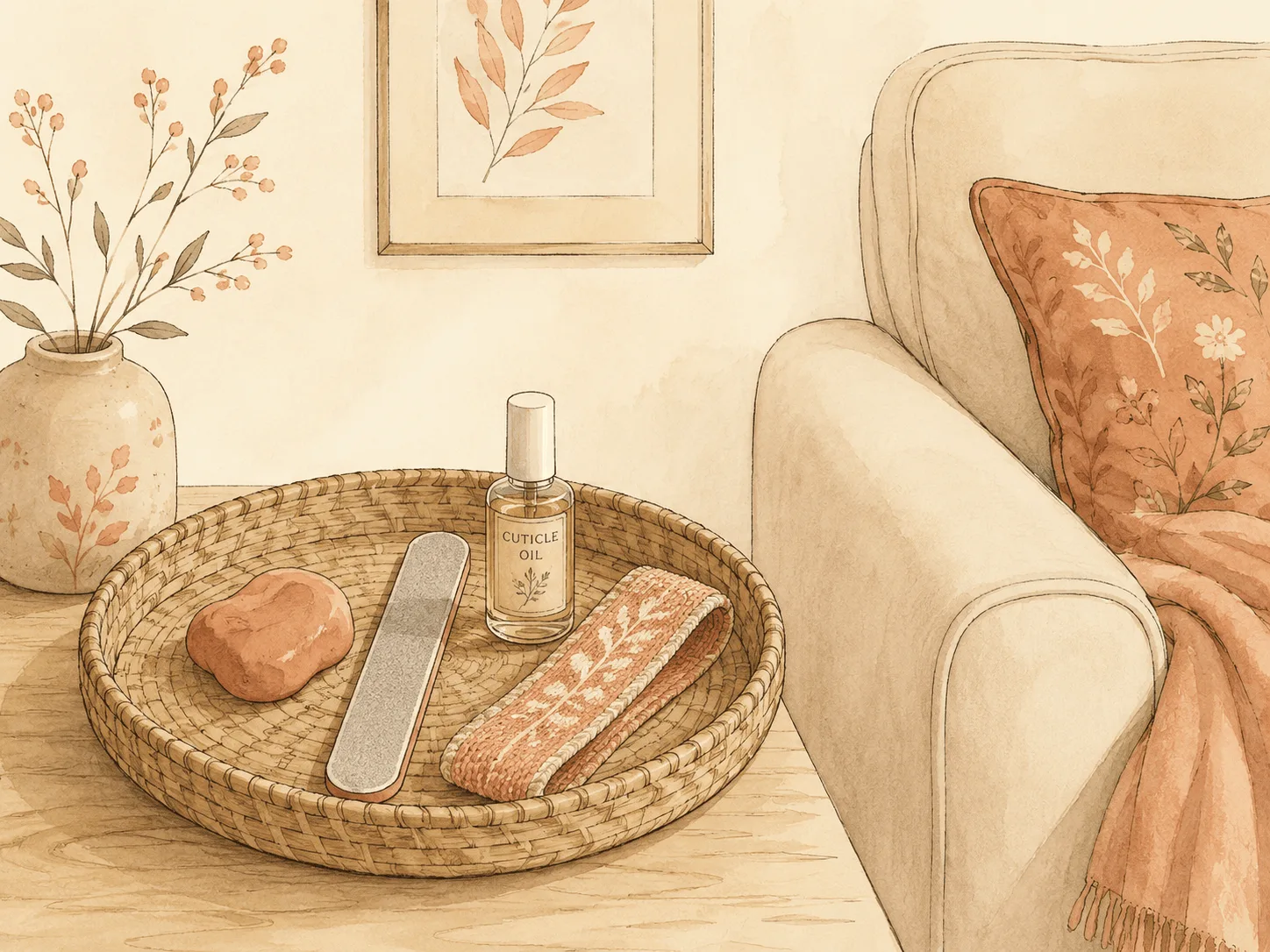
2. Something in the hand, ready before the window opens. The object needs to be there before the trigger, not fetched once the hand is already up. If the biting happens during screen time, the box lives by the sofa and gets opened when the program starts. Match the texture to what the child is after: some want the pressure of chewing, in which case crunchy snacks or chewable jewelry do more than putty; some want fine picking, in which case a nail file, cuticle oil, or a textured band works better.
3. One named person who prompts, and doesn't police. In the trial this was a specific role, not general encouragement. Their job is to give the signal and reward the substitution. Nothing else. If that person is you, you'll need to actively stop yourself commenting on the nails themselves.
By age
Toddlers and preschoolers. Redirect physically, say almost nothing, and don't set up a program. At this age the behavior is usually exploratory or self-soothing, and the intervention that works is a different thing in the hands plus a bit more of your attention generally. Skip bitter polish entirely.
Roughly five to nine. This is where the awareness work and the code word land best. Children this age enjoy the conspiratorial element and haven't yet built shame around it. Keep the tally short and make the object theirs to choose.
Ten to thirteen. The peak years, and the years where teasing starts. Advice lands better if it arrives as information rather than instruction: what the behavior is, why it happens, and that they get to run it. Offer to buy the file and the cuticle oil, and then stay out of it.
Teenagers. Hand it over completely. A teenager who wants to stop should own the tracking, the tools, and the decision, and a parent inspecting the results is the fastest way to end the attempt. The step-by-step guide to stopping is more useful to them than this page is. If they want a tracker of their own, SkinAware has a nail-biting mode that logs bites and resisted urges and teaches habit reversal module by module. It's built for the person doing the behavior rather than for a parent to monitor, which for a teenager is the point.
The Teeth
This is the risk parents underestimate, partly because it's slow and partly because dentists don't always ask.
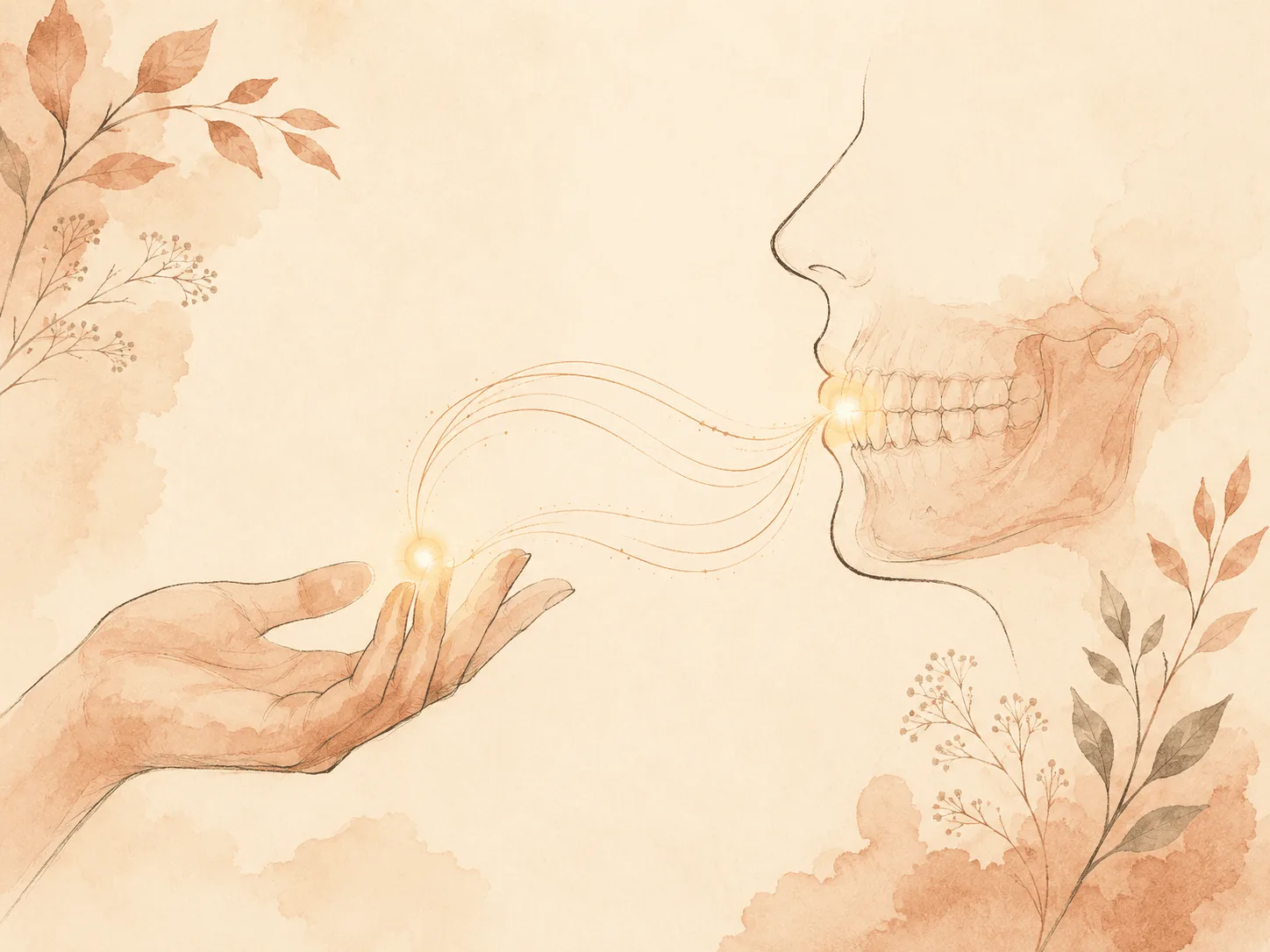
Grinding a nail between the front teeth applies repeated force to teeth designed for a different job. The documented consequences in chronic biters include enamel wear and chipping of the incisal edges, gum injury around the front teeth, shifting and rotation of the incisors, and pain or dysfunction in the jaw joint.
The one with the sharpest edge involves braces. Apical root resorption, where the root of a tooth shortens, happens to some degree in most orthodontic patients. A Swedish study compared 21 severe nail biters against 21 orthodontic patients without the habit, matched for age, sex, overjet, and the length and type of fixed appliance treatment, and found more apical root resorption in the biters both before and after treatment. That's a small study and it dates from 1985, so treat it as a reason to mention the habit to an orthodontist rather than as a settled number.
There's a second braces interaction with better recent data. In 150 children aged six to seventeen split by nail biting and fixed appliances, oral Enterobacteriaceae were found in 72% overall, and the group with both nail biting and braces carried the highest bacterial loads while the group with neither carried the lowest. Klebsiella and Enterobacter cloacae turned up only in the groups wearing appliances.
The Fingers
Nail biting damages skin that is unusually good at getting infected, and this is the part of the article with an actual same-week threshold in it.
Acute paronychia is an infection of the skin fold around the nail, and biting is one of the classic ways children get it. It usually starts as redness and tenderness along one edge, then swells, then collects pus. Caught early it's straightforward. Left alone it can form an abscess needing drainage, and rarely it spreads deeper. Warts around the nail beds are the other common one, and they spread from finger to finger through the same route.
On the parasite question, since it comes up: nail biting is often listed as a risk factor for pinworm, and the hand-to-mouth logic is obvious. The actual evidence is mixed, with several population studies finding no significant association. Worth normal hand-washing habits, not worth a scare.
Bringing In a Professional
Book an appointment if any of the three signals earlier apply, and particularly if two or more repetitive behaviors are running at once.
What to ask for. Use the words "habit reversal training." It's the treatment with the trial evidence behind it, and it's a specific protocol rather than general counseling. Ask any prospective therapist directly whether they've worked with body-focused repetitive behaviors in children. A skilled general therapist who hasn't is not the same appointment.
What good treatment looks like from the outside. Your child learns to catch the behavior earlier, practices something incompatible with getting a finger to the mouth, and you get taught the home half of the work rather than sitting in the waiting room. It is not a long course. The pediatric trial ran on one session and one booster.
On medication. There isn't a drug for this. Pediatricians report parents arriving having found one online, and nothing is approved for nail biting in children. N-acetylcysteine has been tested in children and adolescents, where 800 mg a day beat placebo on nail length at one month but the effect had faded by two, and reported side effects in that trial included agitation and, in one child, severe aggression. Medication may still be appropriate if your child has anxiety, ADHD, or another condition that warrants treatment in its own right, which is a separate conversation with a prescriber.
Ask about ADHD if the picture fits. Nail biting and ADHD show up together often in children already referred for mental health care. That figure comes from a referred clinical sample rather than the general population, so it's a prompt to mention other symptoms you're already noticing, not a reason to read anything into biting on its own.
Frequently Asked Questions
Sometimes, and less often than parents assume. Stress and boredom both raise it, and biting frequently increases around a house move, a new class, or a friendship going wrong. Plenty of children bite while relaxed and absorbed in something, which is the pattern that has nothing to do with worry. If biting is one of several things you're seeing, including sleep trouble, new fears, or other repetitive behaviors, that combination is worth raising with your GP or pediatrician.
Age matters less than three signals: broken skin, other body-focused repetitive behaviors, and social cost. Biting that starts in the preschool years and stays cosmetic usually fades. Biting that is still drawing blood at eleven, or that your child is actively hiding, warrants a conversation regardless of age.
It's specifically discouraged for younger children, where it tends to produce opposition and can increase biting for attention. In older children it can work as a reminder rather than a punishment, and only alongside awareness work and a replacement for the hands. Used on its own it's asking a bad taste to do the job of noticing.
Chronic biting is associated with enamel wear, chipping, gum injury near the front teeth, incisor shifting, and jaw joint discomfort. The clearest concern is in children with fixed braces, where nail biting has been linked to more apical root resorption and to a higher oral bacterial load. Tell the dentist or orthodontist that your child bites.
Treat that as the threshold rather than a worse version of ordinary biting. Keep the nails filed short so there's less to catch on, cover a currently damaged finger, and book a GP or pediatrician appointment. Watch for redness spreading, swelling, warmth or pus, which need same-week attention. Bleeding usually means the biting has moved into the skin around the nail, which is both the painful version and the one most likely to persist without help.
It genuinely helps. Nail biting clusters in families through both inheritance and imitation, and a child being asked to stop by someone who does it is being handed a contradiction. Doing it together, without turning it into a competition your child can lose, works better than either of you doing it alone.
In the only randomized trial run specifically in children, the children who stopped completely did so within three months, off a single thirty-minute teaching session and one booster, and the biggest gains showed up in the first month. Set the expectation with your child that they're aiming for fewer bites rather than none, and count a week with fewer as a week that worked.
The most useful thing in this whole article isn't the file or the putty or the code word. It's that a child whose parent knows about the biting, doesn't flinch at it, and doesn't mention the nails is a child who never has to hide their hands at home.
If you only change one thing this week, change the correcting. Replace "stop biting your nails" with a tug of the ear and something to hold, and give it a fortnight before you judge whether it's working. That single swap does more than everything else on this page combined, and it costs nothing.