
Written using before-and-after survey data from 460 people with body-focused repetitive behaviors, a nail-BFRB study measuring symptoms into the post-peak period, and a three-timepoint longitudinal study with pre-pandemic baseline data on skin picking.
Picking goes up when life gets heavy. That much is well documented, and if you've just come out of a brutal month and found your hands back where they were a year ago, you're looking at the most predictable thing this condition does.
What almost nothing written on the subject tells you is the useful part: how much it goes up by, whether it comes back down on its own, how to tell a load spike from a genuine deterioration, and which single piece of your plan is worth defending when you have nothing left to spend. Those are the questions a hard month actually raises, and they have better answers than "stress is a trigger."
What load does to picking, measured
The pandemic gave researchers something they can't usually get: a before-and-after reading on a large group of people who all hit the same acute stressor at the same time.
In July 2020, researchers surveyed 460 people with a diagnosed body-focused repetitive behavior and asked them to rate their symptoms before and during. Two thirds said it had got worse. On the Skin Picking Scale-Revised, the group's average rose from 12.5 to 14.7 out of 32. Hair pulling rose too, from 13.5 to 15.1 on the MGH scale. Urge frequency, urge intensity, time spent, control over the behavior and physical damage all moved in the wrong direction, every one of them significant.
A second study did the same thing with 105 people who pick or bite their nails, and found the same shape: half self-rated a worsening at the peak, with urge frequency, urge intensity and distress all up and control down.
So the pattern is real, it's measurable, and it's the majority experience. If your picking climbed during a hard stretch, you did the normal thing.
Then there's the study that complicates it, and it's worth knowing about because it changes what you should conclude.
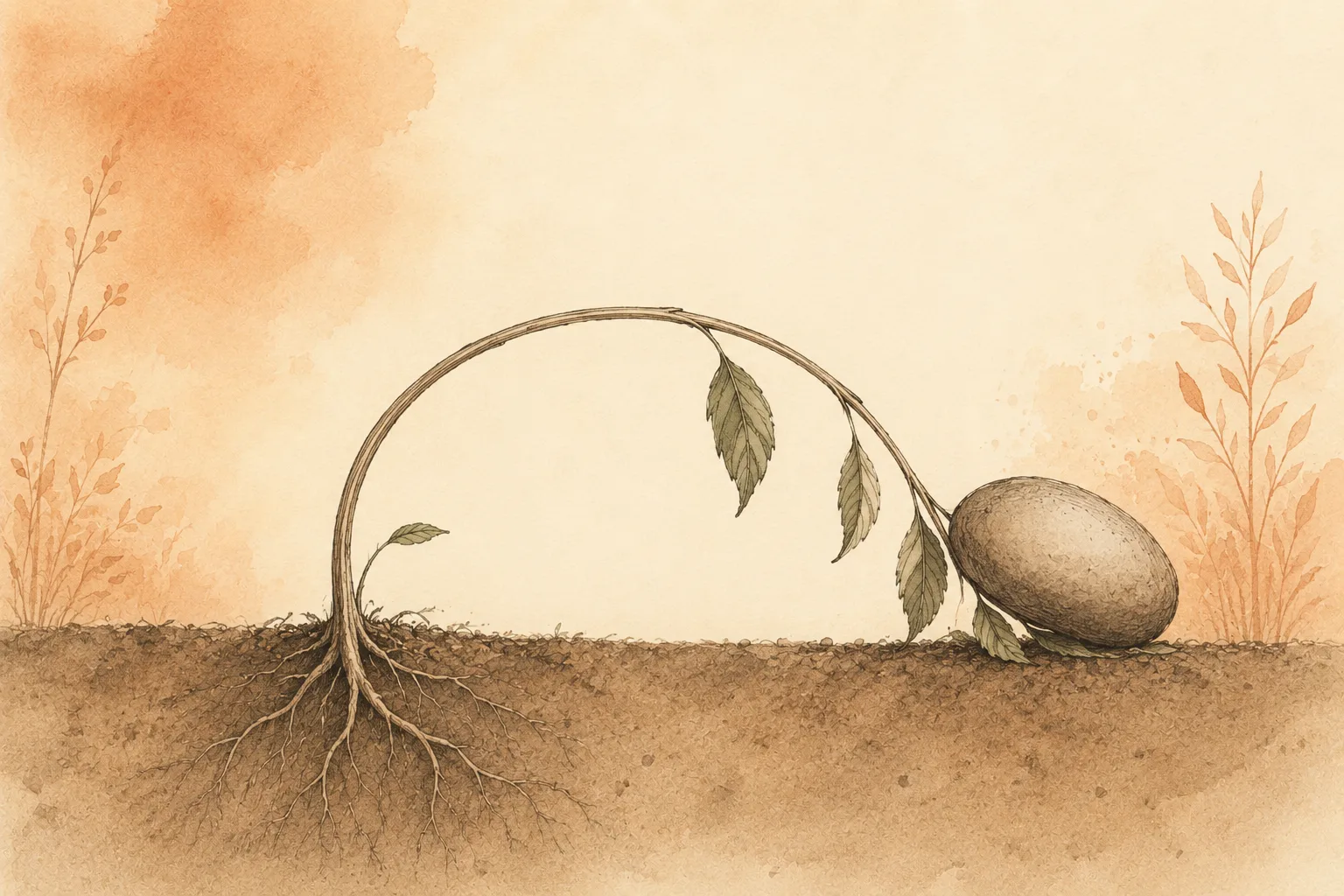
Two datasets, opposite results. Read together they say something more precise than "stress makes picking worse." What predicts the flare isn't the size of the event. It's whether the things that were holding your picking down are still standing while the event happens.
That's a more useful frame, because the event is usually not negotiable and the scaffolding sometimes is.
The scaffolding is what actually breaks
Look at what a hard month does, itemised.
Sleep goes first, usually. Then the routine that put structure around your evenings. Then the exercise or the walk or whatever was burning off arousal. Then the appointment gets moved, then moved again. In the 460-person study, 37.9% of people who had been in active treatment had that treatment interrupted. Not because their motivation failed. Because the world closed.
Then the hours change shape. Deadline weeks and bereavement weeks both produce long stretches of sitting still with a mind that's occupied and hands that aren't, which is close to a laboratory setup for automatic picking.
And the tracking stops. Almost always, and almost first, because logging is the thing with no immediate consequence for skipping it.
The tool that stops working under load
That longitudinal study found one more thing, and it's the most practically useful result in this literature.
The researchers measured cognitive reappraisal, meaning the habit of reinterpreting a situation to change how it lands emotionally. Before the pandemic, people who used it more picked less, both the deliberate kind and the automatic kind.
During the pandemic, that protection held for focused picking. For automatic picking it disappeared entirely, and the statistical test for that change was decisive.
Which means the standard advice to manage your stress better during a hard stretch is aimed at only half the problem, and possibly the smaller half. If your picking during the flare is mostly happening while you're on calls, at your desk, or in bed unable to sleep, the fix is physical and environmental, not cognitive. Our piece on the difference between anxiety-shaped and automatic picking goes further into why the two need different tools.
Spike or slide
Reassurance without a test is worthless, so here's the test.
A spike has four properties. It has an identifiable start you can name. Its shape follows the load, so the worst days are the worst-load days. The behavior itself hasn't changed character, meaning you're picking more of what you already picked, in the same places, in the same way. And the scaffolding is bent rather than gone, so you're still logging badly, still going to the appointment late, still telling someone.
A slide looks different in ways worth knowing before you panic about the wrong thing. New body sites appear. Duration per episode goes up rather than just frequency. The picking detaches from the load, so it keeps its level on the good days too. Tools you're using go quiet, meaning you've stopped logging entirely rather than logging badly. And concealment expands, so you're cancelling things or dressing around it in ways you weren't three months ago.
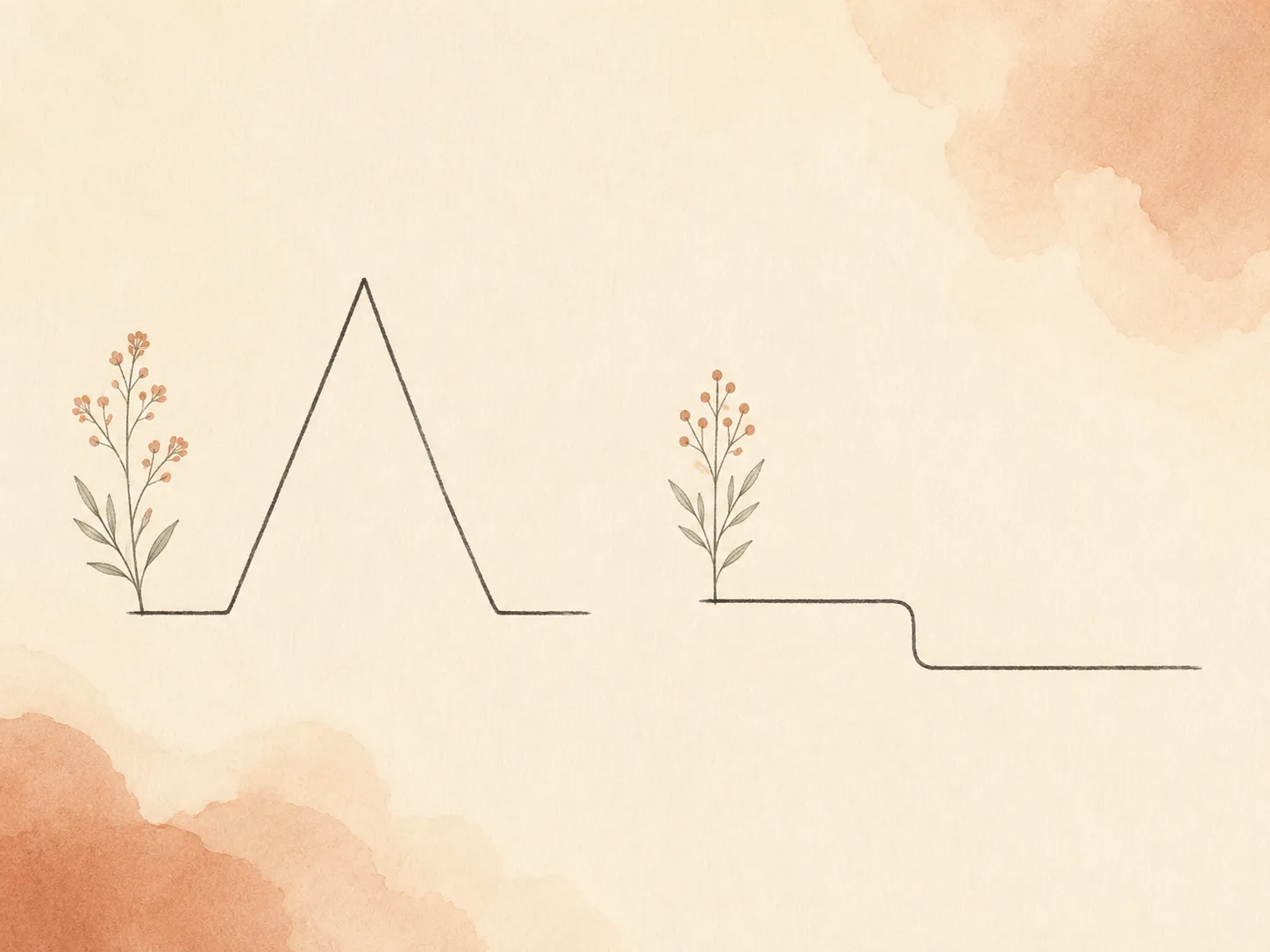
The single most informative line in each list is the fourth one, and it's about the record rather than the skin. People whose records go quiet are the ones who lose the thread, because without them the spike and the slide are indistinguishable from the inside afterwards. Six weeks later, "it was a bad month" and "everything fell apart" feel identical in memory, and only one of them is true.
Keep one thing, not all of it
When capacity collapses, the instinct is to keep the whole plan on reduced power. That fails reliably. What works better is picking one component of habit reversal training and running it properly.
Choose it by matching the shape of the flare, not by picking whichever is easiest.
If your flare is happening in the empty hours, meaning long calls, passive evenings, insomnia, the sitting-still stretches a hard month produces, keep stimulus control. Cover what you go for before the meeting rather than during. Change the bathroom bulb. Put the tweezers somewhere annoying. It's the only component that keeps working after you stop paying attention to it, which is exactly the property you need when attention is what you've run out of.
If your flare is happening at the peaks, meaning it tracks your worst hours and you can feel the tension arrive before your hand does, keep the competing response. You have a window and it's worth using. Physical down-regulation belongs here too, and specifically: cold water on the face, an exhale longer than the inhale, something with weight across your lap. The target isn't calm in general. It's dropping arousal in the two or three minutes that matter.
If you can only do one thing at all, keep the record. One line a day: roughly how many, roughly how long. No triggers, no mood ratings, no body map. A rough number every day beats a detailed one for four days and then silence, and it's the only thing that makes the spike-or-slide question answerable in a month's time.
If the low-capacity state isn't a hard month but a persistent one, the calculation changes. Our piece on picking during a depressive stretch covers the version where reduced capacity is the baseline rather than the weather.
The flare outlasts the stressor
This is the part almost nobody is warned about, and not knowing it does real damage.
Behavior lags load. The deadline passes on Friday and the picking doesn't stop on Saturday, because during the hard stretch the behavior got practised. More repetitions, more reward, more automaticity. That takes time to unwind regardless of how the calendar looks.
The reason this matters is what people conclude when it happens. The stressor was the explanation, the stressor is over, the picking continues, so the explanation must have been wrong, and therefore the real problem is them. That conclusion is the one that ends recovery attempts, and the research on what turns a bad stretch into a long one points squarely at the story you tell about it rather than at the behavior.
Expect a tail. Two to four weeks of the flare running past the end of the load is ordinary. Judge the state of things after that, not during.
Rebuilding
The mistake at this point is the overhaul: new plan, new app, fresh start Monday, everything at once. Overhauls raise the stakes so the next slip breaks something bigger, and hard months come around again.
Add back in this order, one item a week.
Week one, the record only. Back to whatever your normal log was before, and backfill the flare if you can stand to. The count is almost always lower than the memory, and you need the real numbers for the comparison you're about to make.
Week two, the environment. Undo whatever the hard month did to your physical setup. The mirror you stopped covering, the tweezers that migrated back to the bathroom, the lamp.
Week three, the awareness work. Competing responses, urge work, whatever your version of habit reversal was. This goes third deliberately. It's the most attention-expensive component and the one most likely to fail if you restart it while you're still depleted, and a failed restart costs more than a late one.
Week four, the person. Whoever you stopped telling. Social support is a formal component of habit reversal training and it's the one people quietly drop first, which is unfortunate given the null result in that Polish sample was attributed to exactly this.
Then run the comparison that tells you what actually happened. Not this week against your best week. Total picking-free days in the last 28 against the same window before the stressor. If the two numbers are close, you had a spike and it's over. If the second is substantially worse, you have a slide worth taking to someone, and you'll have the evidence in hand rather than an impression.
Planning for the next one
Some hard stretches are visible in advance. Exam season, a house move, a court date, the anniversary of a death, the first month of a new job.
This is the part SkinAware is built to carry when everything else has been dropped. Logging an episode takes a few taps, resisted urges are logged the same way episodes are so the nights you got through register as entries rather than blanks, and the daily check-in is one screen when a full log is more than you have. The habit reversal course is there for the rebuild, in the week you're ready for it and not before. It's $5.99 a month or $34.99 a year, with a two-week trial on iOS.
Keep the record through the hard stretch
SkinAware logs episodes and resisted urges in seconds, keeps a one-screen daily check-in for the days a full log is too much, and shows you a 28-day picture you can compare against.
When to get help rather than wait
The tail is normal. These aren't.
Wounds that are hot, spreading, weeping, or come with a fever belong to a doctor now, not to a recovery plan. Picking that's taking hours out of most days, or that's grown new sites and stayed there well past the load, is worth a professional look. So is being unable to keep a one-line daily log going for three consecutive days, which usually means something bigger than a busy month is happening. And if the stressor was a bereavement, a trauma, or something you're still not sleeping over, the picking is the smaller problem and treating it first is the wrong order.
The TLC Foundation for Body-Focused Repetitive Behaviors keeps a directory of clinicians who specifically treat BFRBs.
FAQ
Frequently Asked Questions
Not on the evidence, and it's a meaningful distinction. Stress is best understood as a load variable that raises or lowers an existing pattern rather than as the cause of it. When researchers followed a non-clinical sample through the pandemic they found no significant increase in picking, and attributed it to participants' stress scores not actually rising and to their having social support at home. Meanwhile a clinical sample measured across the same period showed two thirds worsening. Same event, different outcomes, and the difference wasn't the size of the stressor.
There's no clinical number. What the post-peak data suggests is that the behavior lags the load: in one study, urge intensity and distress were still above pre-pandemic levels after the peak had passed. A practical working rule is to expect two to four weeks of tail after the stressor ends, and to judge where you are after that rather than during.
Probably not, if the flare tracks the load, the picking hasn't changed character, and you haven't gone completely silent on the tracking. Those are the markers separating a spike from a genuine slide. New body sites, longer episodes, picking that holds its level on the good days, and expanding concealment point the other way. The more damaging move at this point isn't the picking, it's the conclusion drawn from it.
Because it got practised. A flare adds repetitions, and repetitions build automaticity, which doesn't unwind on the same schedule the calendar does. Recovery from picking generally looks like shorter and fewer episodes before it looks like none, and that's true coming out of a hard month as much as anywhere else.
Stopping entirely is the option with the worst outcome, mostly because of what it does to the record. Keep one component. If you can only manage one line a day, keep that and drop everything else deliberately rather than by drift, because a paused plan restarts and an abandoned one usually doesn't.
It may fix part of it. In one longitudinal study, cognitive reappraisal stayed protective for deliberate picking throughout, but its protective link with automatic picking vanished during the pandemic period. The suggested reason was that automatic picking under those conditions was being driven by physical understimulation rather than emotion. If most of your flare is happening while your mind is elsewhere, environmental and physical changes will do more than emotional regulation will.
Skin healing runs on its own timeline and a flare sets it back, temporarily. The skill doesn't work like that. Your awareness of triggers, the competing response your hands have half-learned, and the knowledge of which situations are dangerous were never stored in your skin, and none of it went anywhere during a hard month.
Continue Reading
References
- Pathoulas, J. T., Olson, S. J., Idnani, A., Farah, R. S., Hordinsky, M. K., & Widge, A. S. (2021). Cross-sectional survey examining skin picking and hair pulling disorders during the COVID-19 pandemic. Journal of the American Academy of Dermatology, 84(3), 771–773.
- Gu, L., Pathoulas, J. T., Widge, A. S., Idnani, A., & Lipner, S. R. (2022). Exacerbation of onychophagia and onychotillomania during the COVID-19 pandemic: a survey-based study. International Journal of Dermatology.
- Kłosowska, J., & Prochwicz, K. (2021). Cognitive reappraisal and types of skin picking: a longitudinal study with pre-pandemic and COVID-19 pandemic data. Journal of Obsessive-Compulsive and Related Disorders, 28, 100614.